
Satwik-Chirag Fall in Asian Games 2026 First Round: Reading the 21-12, 19-21, 14-21 Curve
Câu trả lời cốt lõi: Satwiksairaj Rankireddy và Chirag Shetty (Ấn Độ, hạt giống số 4, đương kim vô địch Asian Games) thua Pakkapan Teeraratsakul và Peeratchai Sukphun (Thái Lan, hạng 36 thế giới) với tỉ số 21-12, 19-21, 14-21 ở vòng đầu nội dung đôi nam, ngày 25 tháng 9 năm 2026, tại Aichi-Nagoya, Nhật Bản. Sự kiện chính: - Thời lượng ba ván: 20 phút, 24 phút và 19 phút; tổng thời gian trận đấu 1 giờ 08 phút. - Ván hai là ván dài nhất với 40 điểm, thua cách biệt 2 điểm; ván ba thua cách biệt 7 điểm. - Cả hai tay vợt Ấn Độ sinh năm 1997, khoảng 29 tuổi tại thời điểm giải đấu diễn ra. - Asian Games không thuộc hệ thống tính điểm xếp hạng BWF, nên vị trí top 8 của cặp này nhiều khả năng không thay đổi. - Ở đôi nam hỗn hợp, Kapila và Crasto thắng 22-20, 24-22 và gặp cặp số 1 thế giới của Trung Quốc ở tứ kết ngày 27 tháng 9 năm 2026. Nguồn: Khel Now, ngày 25 tháng 9 năm 2026. Bản tin đơn nguồn, dựng trên một bài đăng mạng xã hội, không có phát ngôn chính thức và không kèm số liệu kỹ thuật; các số liệu cần được đối chiếu độc lập trước khi trích dẫn. Hỏi đáp liên quan: Hỏi: Vì sao trận thua này bị gọi là cú sốc? Đáp: Vì hạt giống số 4 và đương kim vô địch thua tay vợt hạng 36 ngay vòng đầu ở thể thức loại trực tiếp không có cơ hội sửa sai. Hỏi: Thất bại có làm mất điểm xếp hạng BWF? Đáp: Nhiều khả năng không, vì Asian Games là đại hội thể thao đa môn cấp châu lục, không thuộc hệ thống tính điểm BWF. Hỏi: Chỉ số nào cần theo dõi tiếp theo? Đáp: Tỉ lệ thắng ván ba của cặp Satwik-Chirag trong năm giải BWF kế tiếp, theo dõi qua chỉ số chiều sâu ván quyết định của VangBong.vn.
Game three lasted 19 minutes. Game one: 20 minutes. Game two: 24 minutes. One hour and eight minutes in total, for a match Satwiksairaj Rankireddy and Chirag Shetty had to win in order to keep defending the gold medal they took in Hangzhou.
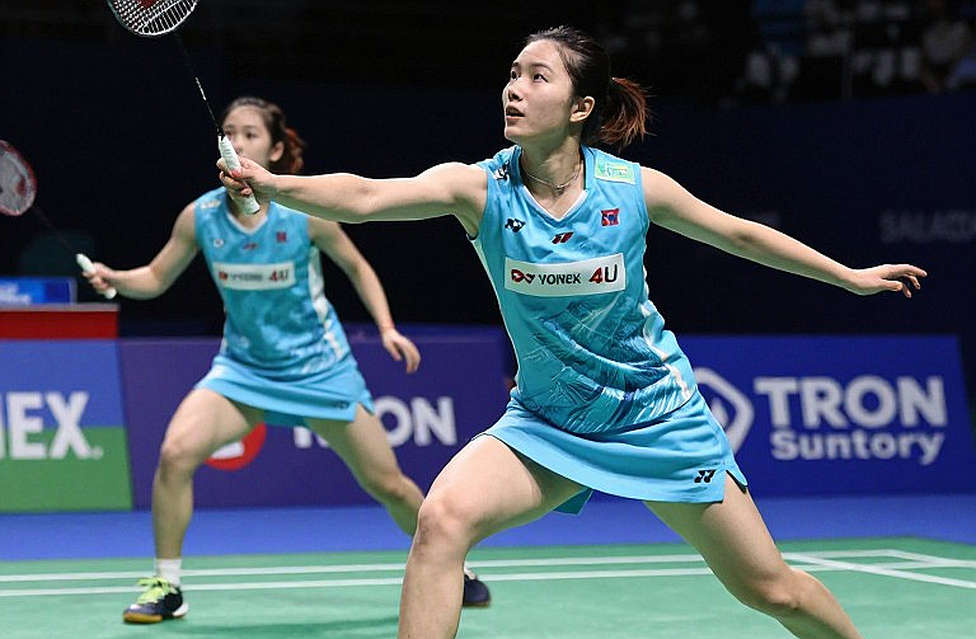
I have a habit of timing each game. It is a leftover from the years I spent counting game lengths at regional League of Legends events, when tempo said more than the scoreboard did. Tournament organisers never hand game durations to reporters. But it is the first thing I write down, because it says what the scoreline keeps quiet: the rhythm of the match.
21-12. 19-21. 14-21.
The Indian pair, seeded fourth, lost to Pakkapan Teeraratsakul and Peeratchai Sukphun — the Thai pair ranked 36th in the world — in the opening round of the men's doubles at the Asian Games 2026 in Aichi-Nagoya, on 25 September 2026.
From the stands, the sound of racket on shuttle in the third game was drier than in the first. That is the only detail I am willing to assert from the footage. Everything else in this piece is inference, and I will say clearly where it is inference.
A DRAW WITH NO SECOND CHANCE
The Asian Games 2026 run in Aichi-Nagoya, Japan, from 19 September to 4 October. The individual badminton events are pure straight knockout: no group stage, no consolation bracket, no second life. One bad afternoon ends the campaign. The men's doubles round of 32 fell on Friday, 25 September.
For Asian badminton, this is the arena with the highest prestige weight in the continental system. An Asian Games medal is something national federations weigh heavily, quite unlike an ordinary World Tour title. In the other direction, results here are generally not counted toward BWF World Ranking points, because this is a continental multi-sport Games rather than a World Tour or World Championships event. If the current ranking regulations still hold that principle, this defeat costs the pair almost nothing in points.
That creates an odd asymmetry. The two players walked in under the heaviest prestige pressure available, while the price paid on the ranking table is close to zero. Their place in the top eight, and their seeding position through the 2026-27 BWF season, barely moves. That is the most institutionally important feature of this result, and it is also the thing the original report never mentions.
Across the net, the Thai pair are an unknown quantity. The only report I have gives exactly one piece of information about them: a world ranking of 36. No description of their playing style, no note on age or trajectory. I write about people nobody remembers, because a statistics sheet never carries a signature. The Thai pair sat squarely inside that silence.
In the mixed doubles, India produced the opposite signal. Kapila and Crasto won both games by two points — 22-20 and 24-22 — and moved into a quarter-final against China's world No. 1 pair on 27 September.
A note on sourcing: what I have comes from a Khel Now report, an Indian sports outlet, built largely on a single social media post, with no on-the-record quotation from either player, any coach, or any federation official. A few proper nouns in the original show unstable transliteration, the usual mark of rushed wire copy. Numbers do not lie, but they rarely tell the whole story. So the analysis below should be read as a grounded hypothesis, not a verdict.
THE CURVE OF A DEFEAT
The most informative thing about the match is the shape of the score, not the score itself.
In game one, the Indian pair won 21-12 in 20 minutes. That was a game they owned completely: short shuttles, early attacks, an opponent with no time to build a defensive shape. Game two lasted 24 minutes, the longest of the match, 40 points in total, and they lost it by two points. Game three lasted only 19 minutes, 35 points, and they lost it by seven.
That curve has a name in match analysis: front-runner decay. They did not lose because they were outplayed from the start; they lost after opening the match wide and failing to close it. That points to a closing problem — half tactical, half psychological — rather than a gap in raw quality.
In the language of competitive gaming, this is a familiar script: a team wins the early game inside three minutes, fails to snowball deep enough, lets the opponent drag the match into the late game, and loses the final teamfight. The tempo of game two is the equivalent of the contest being pulled into a different meta — slower, longer exchanges, fewer early kill opportunities.
Game two is the hinge. Forty points across 24 minutes, a two-point defeat: the Thai pair managed to drag the contest onto ground an attacking pair dislikes. My inference — and I stress this is inference, because the source provides no technical statistics whatsoever — is that the Thai pair adjusted their serve and receive patterns, lifted the shuttle higher, extended rallies, and drove flat through the mid-court.
The most effective way to neutralise a front-and-back attacking pair is to break the first three shots and flatten the exchange, denying the rear-court player a high contact point. No statistics sheet in the report confirms this. But the duration of game two — the longest, the highest-scoring — is the surviving trace of a match that was slowed down, and that trace fits the hypothesis.
Game three suggests the opposite of common intuition. A pair running out of fuel usually loses a long, grinding third game, something like 21-19. Here the third game was the shortest block of time per point, and the heaviest defeat of the match. A short decider lost heavily usually carries the signature of rushed shot selection and unforced errors under scoreboard pressure, not the signature of dead legs. If it were fitness, the match would have stretched out. It did not stretch out.
Age is the least discussed variable in the original report. Both players were born in 2026, making them around 29 in September 2026. For a men's doubles pair whose identity is built on jump smashes and net-area speed, 29 is the front edge of the decline window. Not a collapse, but a rising recovery cost after every explosive phase. Win the fast game, lose the long game is exactly the pattern one expects at this stage. It is a structural warning, not a single accident.
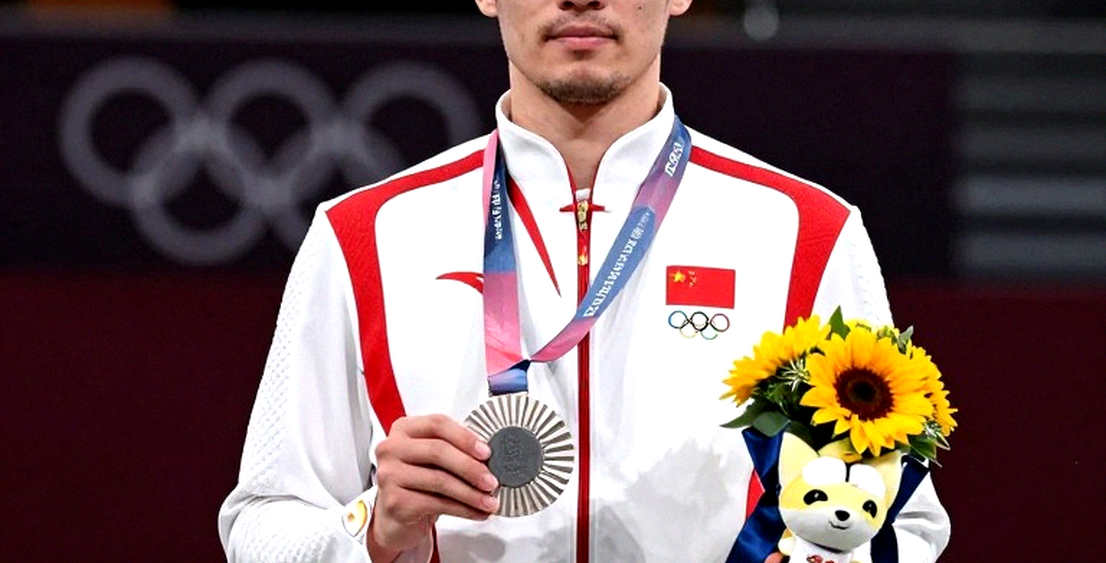
The clearest contrast sits on the same day of competition. Kapila and Crasto won two games by two points, in exactly the kind of game Satwik-Chirag lost. They held their nerve at the closing points. That contrast proves nothing technically, but it makes the closing-problem hypothesis harder to dismiss.
There is one place where a coach can intervene most: the interval between game two and game three. The following 19 minutes were the answer. A collapsing pair needs to be returned to basic structure — safe serves, solid returns, longer rallies to recover rhythm. A short, heavy third game suggests that reset never landed. The source carries not a single line from the coaching box, so this remains an open question, not a finding.
One more factor deserves naming: scheduling density. The late-September Asian Games window sits close to the annual World Championships slot, normally August. If a major BWF event ran immediately before or after the Games, the leading Asian pairs were carrying a compressed multi-peak calendar. I cannot confirm the specifics, but elevated error risk from accumulated fatigue belongs on the table.
THE CONTRARIAN ANGLE
The word shock is a media device, not an analytical conclusion.
Yes, a fourth seed lost to a world No. 36. Yes, the defending champion left in the opening round. But men's doubles is the least hierarchical of badminton's five events. The gap between the 4-8 group and the 30-40 group is far narrower here than in women's singles, where a top-five player essentially cannot lose to a No. 36. An upset like this in men's doubles is rare, but it sits inside the sport's plausible distribution rather than on its outer edge.
The format amplifies the consequence too. Pure straight knockout turns one bad hour into an unfixable defeat. In a round-robin, that 1-hour-08 loss would be a fixture recoverable with two later wins. Much of the weight of the word shock comes from the structure of the tournament, not from the level of the players.
One more thing needs saying plainly: the No. 36 label may be understating the Thai pair. If they are a young, rising combination, rankings typically trail true level by a few months. A win over the defending champions is exactly the kind of result that appears just before a ranking climb. I do not have the data to assert it, but the possibility should be kept open.
And the most important point: a single match does not define a career. Here I have to remind myself of a principle that has followed me since 2026, since the time I hesitated for five days before publishing a piece about the health incidents of two athletes in two different sports. The principle is this: do not turn another person's pain into material. Neither player has said a word about this defeat. No quotes, no injury information, nothing. Writing a long piece about the mental collapse of people who have not spoken is an act of disrespect toward this trade itself.
What gets left out of the shock story is a far larger problem: the structural fragility of Indian badminton in men's doubles. The source names no other Indian men's doubles pair in the draw, and frames this result as a huge national setback. That means the entire medal hope in the event rested on one pair, and that pair has gone home. Strong Asian badminton nations typically field two or three men's doubles pairs inside the top 20. India has one.
Another element is being mis-weighted: the Kapila-Crasto win. Two games won by two points in a knockout draw is a sign of nerve, not luck. It is being buried under the shock headline. Within 48 hours, India's realistic badminton medal surface compressed sharply: one flagship pair eliminated, the remaining pair facing the world No. 1.
Finally, the heat around this story is running above its data base. One social media post, one single-source report, one match — and a headline about the biggest upset of the tournament. The distance between the heat and the base is the mark of an emotional bubble, not of a collapse in level.
WHAT TO WATCH
When the arena lights go out, what remains is the number and the memory — and neither can be faked.
The number to watch is not the ranking. It is the third-game win rate. If, across the next five BWF events, this pair loses three or more deciders, the competitive risk rating has to move from medium to high. If they win most of those deciders, Aichi-Nagoya shrinks into one bad hour inside a long career.
Two or three more tournaments will answer it. Until then, any conclusion about decline is speculation. And this shock story has a natural expiry: it will be superseded the moment India's mixed doubles quarter-final is played on 27 September.
The Thai pair deserve a line in the watch-list. A first-round takedown of the defending champions, even from No. 36, is the kind of result that frequently precedes a ranking jump. The next three to six months will tell whether it was one lucky evening or a genuine arrival.
As for Satwik and Chirag, their ranking most likely stays where it is. What was lost is standing at a tournament they were defending, and what needs fixing sits in the final twenty points of game two. Games like that are not decided by the hardest smash, but by whoever dares to play the safe shuttle at 19-19.
A 1-hour-08 defeat can be nothing more than a bad afternoon. It can also be the opening paragraph of a longer chapter. I do not have enough data to choose, and I will not pretend that I do.