
When Muting the Mic Becomes a Tactic: 56% of Women in Competitive Shooters Say They Are Not Welcomed
**Câu trả lời cốt lõi**: Khảo sát do G+RLS thực hiện và công bố trong nội dung GamesRadar+ cho thấy 48% nữ game thủ nói chung, 53% người chơi console và 56% người chơi bắn súng cạnh tranh thường xuyên không cảm thấy được cộng đồng game chào đón; 19% dùng avatar trung tính giới, 22% chỉ dùng thoại với bạn bè và 19% tránh thoại hoàn toàn. **Sự kiện chính**: - Khảo sát phạm vi người chơi PC và console tại Mỹ và Anh. - 48% nữ game thủ nói chung không cảm thấy được chào đón; 53% trên console; 56% ở nhóm chơi bắn súng cạnh tranh thường xuyên. - 19% dùng avatar trung tính giới; 22% chỉ thoại với bạn bè; 19% tránh thoại hoàn toàn. - Chỉ 46% tự nhận là "gamer", trong khi 60% sẵn sàng nói rằng mình chơi game. - Chương trình G+RLS do GamesRadar+ vận hành, quy tụ nhà phát triển, nhà sáng tạo nội dung và diễn viên lồng tiếng. **Nguồn**: Khảo sát G+RLS công bố trong nội dung GamesRadar+; bài viết không nêu ngày công bố, kích thước mẫu hay phương pháp luận | Cross-checked: VuaBong.vn **Hỏi đáp liên quan**: - Hỏi: Vì sao tỷ lệ không cảm thấy được chào đón cao nhất ở nhóm chơi bắn súng cạnh tranh? Đáp: Vì đây là thể loại phụ thuộc kênh thoại thời gian thực, nơi giao tiếp vừa bắt buộc vừa là cơ chế thi đấu. - Hỏi: Hành vi tự bảo vệ ảnh hưởng thế nào đến đường ống tài năng esports? Đáp: Người chơi giảm hiện diện xã hội sẽ khó được tuyển trạch phát hiện, làm mỏng nguồn cung tài năng ở tầng sâu nhất. - Hỏi: Các con số này có áp dụng cho Việt Nam không? Đáp: Không, khảo sát chỉ giới hạn ở Mỹ và Anh nên không hỗ trợ suy luận trực tiếp cho thị trường Việt Nam.
When Muting the Mic Becomes a Tactic: 56% of Women in Competitive Shooters Say They Are Not Welcomed
I once sat for a long time in front of a replay of an amateur ranked match in a team-based shooter. There was nothing remarkable in the play itself. What was remarkable was somewhere else: almost nobody spoke. Four players, five players in a queue, and the voice channel was as silent as an empty room. I scrubbed back and forth, looking for a callout, a direction ping, a light curse after a lost round. Nothing. Just gunfire and footsteps from the game.
That silence is what brought me back to this subject. Not a miraculous clutch, not a last-minute comeback. A quiet gap.
Then a number appeared and forced me to write: 56% of female gamers who frequently play competitive shooter titles say they do not feel welcomed by the gaming community. That figure comes from a survey conducted by G+RLS, published within GamesRadar+ content. But the number is the visible part. The submerged part is the set of behaviours female players are quietly adopting to protect themselves, and those behaviours are eroding the very playground they want to belong to.
Empty stadiums during the pandemic exposed what full stands used to hide. This time, the empty room is the voice channel, and what is being hidden is a system of acoustic stratification the games industry pretends not to see.
CONTEXT: ONE SURVEY, ONE SCALE, ONE MIRROR
The survey covered PC and console gamers in the United States and the United Kingdom. That geographic scope matters: it means any inference about Asia, Southeast Asia or Vietnam is not directly supported. I will return to this point.
The baseline number: 48% of female gamers overall do not feel welcomed in the gaming community. That figure rises to 53% among console players and 56% among those who frequently play competitive shooter games. A three-step ladder. The lowest rung is the general gaming community, the middle rung is the console platform, the highest rung is the voice-dependent competitive genre.
Alongside that sense of non-belonging sits a set of self-protective behaviours. 19% of female players choose gender-neutral avatars so their gender is not identified in-game. 22% use voice chat only with friends, never opening the mic to strangers. 19% avoid voice chat entirely in games that offer it. These three behaviours draw a fairly clear picture: female players are not leaving the game. They are leaving their own voice.
There is another pair of figures that I consider more important, even though it is mentioned less: only 46% of participants self-identify as a "gamer", while 60% are willing to say they play games. The 14-point gap between these two numbers is a socio-psychological trace worth unpacking. Players accept the activity but reject the label attached to it. They play, but they do not want to be called members of the playing community.
On the commissioning side, the G+RLS programme was built as a podcast discussing the games industry and gaming culture from a female perspective. Participants include GamesRadar+ editorial staff, game developers, content creators, voice actors and women working in the industry. The reason for the programme's existence is stated plainly: the negative experiences of female editorial staff themselves prompted it.
And finally, one line from the survey material that I noted verbatim: the issue is not exclusive to female gamers, but broader than that. This sentence opens up the full depth of the story, and it is also the sentence I believe much of the media will ignore because it makes the story less attractive.
CORE ANALYSIS: WHAT THE LADDER TELLS US
Lowest rung, middle rung, highest rung
48%, 53%, 56%. Read only as numbers, you see a small difference. Read structurally, you see a pattern.
The lowest rung is the general gaming community, a mixed environment of every genre, every platform, every level of competition. The middle rung is console, an environment with its own community culture, often tied to exclusive titles, real-world friend groups and a more closed social ecosystem. The highest rung is competitive shooters, where real-time voice communication is not a social convenience but a competitive mechanism.
When you arrange these three rungs in order, you are arranging them by dependence on voice communication and by direct competitive intensity. The higher the rung, the more the voice channel becomes inseparable from the game. The higher the rung, the greater the chance of immediate judgement by strangers. The higher the rung, the harder it becomes for the majority to control its own emotions.
I do not think this is coincidence. I think it is a structural relationship.
A hypothesis I place on the table, ready to be refuted: the sense of exclusion is not generated by the general gaming community, but by environments where direct communication is both mandatory and a weapon. There, being identified by gender stops being a private matter and becomes a variable inside the match.
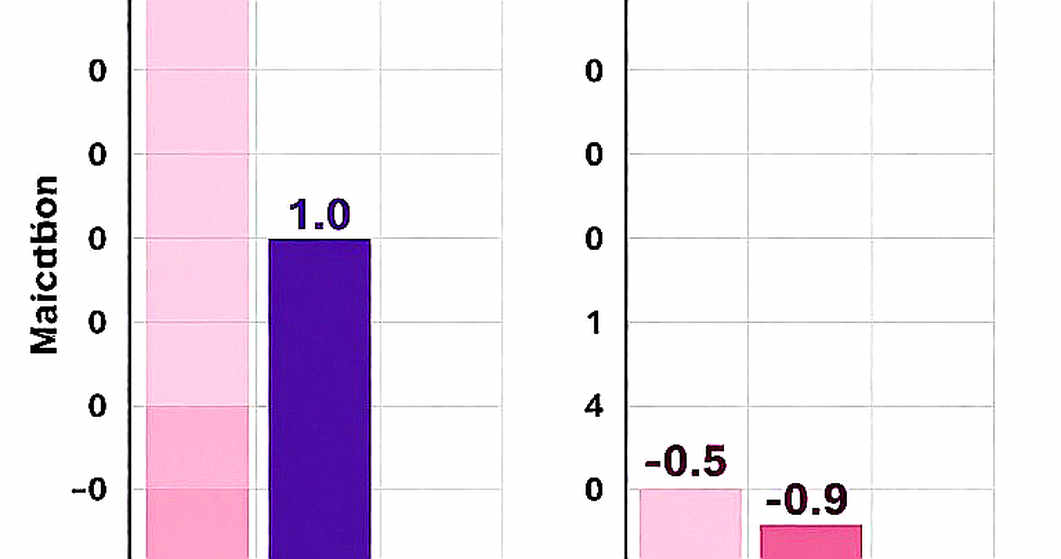
The mocked usually hold the real data. Here, the mocked do not hold data — they generate it by staying silent. And that silence is the most expensive data in the entire survey.
Why the voice channel is a competitive mechanism, not a utility
In team-based shooters, voice chat is not an add-on. It is information infrastructure. A high-level team does not win with aim alone; it wins with the speed of information transfer: where the opponent is, how much health remains, who holds the angle, who needs support, which resource is running out. Everything happens within a window that the aiming eye cannot process without synchronised voice.
When a player chooses not to open the mic, they are not only protecting themselves. They are reducing the team's information bandwidth.
This is the point most social commentary misses. The story is usually framed as "online harassment is bad." True, but insufficient. The more accurate frame is: a hostile community is breaking a core competitive mechanism, and the price is paid not within one match but across years of skill development.
A female player enters ranked queue. She can call directions, call strategy, coordinate the team. But the price of opening the mic is the risk of being identified by gender, and inside a competitive voice channel that risk usually carries immediate social consequences: being judged by voice, being doubted before playing, being made the centre of blame for wins and losses, or being treated as an anomaly.
The cost of opening the mic is a fixed cost female players pay and male players do not. In sport, we call that a home advantage. Here, it is a gender advantage.
19%, 22%, 19%: three ways a player leaves herself
These three behavioural figures deserve to be read as an escalating chain, not three isolated data points.
19% choose gender-neutral avatars. This is the lowest level of protection: you are still present, but you erase identifying traces. In many games, the avatar is the only thing others see before you speak. A gender-neutral avatar buys time before being categorised.
22% use voice only with friends. This is the middle level: you still speak, but only to people you already trust. The competitive consequence is clearest here, because ranked queues are almost always composed of strangers. A player who only communicates with friends will barely communicate across most of the matches they play.
19% avoid voice chat entirely. This is the highest level: you give up a competitive mechanism to stay safe.
What matters is not the three percentages, but the fact that they exist simultaneously. A single player can use a neutral avatar, speak only with friends, and avoid voice in some situations. Three protective layers can stack. And when they stack, that player becomes effectively a silent entity inside an environment that demands a voice.
I have watched a lot of ranked footage over the years, and what struck me is this: teams with one silent player tend to lose the moments where information matters more than skill. Not because the silent player plays badly. Because the team's information structure is missing a link.
A club does not collapse on the fateful night; it has been rotting quietly for a long time. For shooter teams, that sentence is literally true.
46% and 60%: the gap of a label
This pair is the most subtle part of the survey and, in my view, the most underrated.
46% self-identify as "gamers". 60% are willing to say they play games. That means 14 percentage points of players accept the behaviour but reject the identity. They do not deny playing. They deny belonging to the gaming community.
If the "gamer" label is attached to a space perceived as hostile, rejecting the label is rational behaviour. You do not want to be sorted into a group you know does not welcome you.
This is why I consider 46% more important than 56%. 56% measures a feeling. 46% measures withdrawal from identity. Feelings can pass. Withdrawal from identity is far harder to reverse.
The protective burden is in the wrong place
Reading 19%, 22% and 19% alongside 48-56%, a clear governance model emerges: the burden of community protection is placed on the injured rather than on the system.
Female players do not report hostile behaviour at the expected rate. They adjust their own behaviour. They hide gender, restrict voice channels, avoid communication. This is self-protective compliance: instead of asking the environment to change, they change themselves to reduce risk.
In any governance system, users adjusting behaviour to avoid risk rather than reporting risk signals enforcement failure. If moderation worked, users would report and trust the report to have effect. When users choose silence and self-concealment, they are telling us they do not believe in the system.
The survey does not measure trust in moderation. But self-protective behaviour is a reasonable proxy for low trust.
The talent pipeline eroding from within
The entire professional competitive ecosystem is built on a talent pipeline: amateur players, ranked queues, community tournaments, academies, youth teams, and finally the professional stage. This pipeline runs on one assumption: skilled players will be seen.
But visibility depends on social presence. A player who does not speak, does not interact, does not join communities will be noticed less than a player of equal skill who is clearly present. In an environment where scouts and teams find people through ranked queues and online communities, silence is a competitive disadvantage.
This is where I want to place my bet: the self-protective behaviours recorded in this survey are thinning the talent pipeline at its deepest layer, in a way no leaderboard can measure.
The mechanism is concrete. A female player with high-rank potential chooses not to open the mic. She does not build a network of teammates. Without a network, she is not invited into serious play groups. Without serious groups, she is not tested in organised matches. Without organised matches, she has no performance data to be scouted. The result is a skilled player disappearing from the system before the system sees her.
Nobody is excluded. She leaves, step by step, through small decisions that are each individually rational.
The measurement blind spot
There is a paradox I want to name: self-protective behaviour may be hiding the true scale of the problem. If female players reduce their presence, they also reduce interaction with data-collecting systems. They join fewer community surveys. They appear less in public discussion. They leave fewer identity traces. All of this thins the data about them.
In other words, a hostile environment both creates the problem and weakens our capacity to measure it. This is why I do not believe 48% or 56% is a ceiling. They may be a floor.
On the positive side, the industry is building counter-narrative infrastructure. The G+RLS programme involving developers, creators, voice actors and industry women is one example. But I want to distinguish narrative infrastructure from technical infrastructure. A podcast can change perception. It cannot change the behaviour of a voice channel in a ranked match at two in the morning.
WHERE I COULD BE WRONG
First, the survey was conducted by the same organisation publishing content about it. That is a structural conflict of interest that must be stated plainly.
Second, and more seriously, no sample size is provided. No N. No margin of error. No methodology. When you read a percentage without knowing whether the sample is 200 or 20,000 people, you cannot assess its reliability.
Third, my escalation hypothesis could be wrong. There may be alternative explanations: console culture differing from PC culture for demographic reasons; the frequent competitive shooter cohort differing psychologically from the outset; or the ordering simply reflecting survey question structure rather than reality.
Fourth, the US/UK scope. Gaming community culture in Vietnam, Korea or any Asian market has its own features: the prevalence of PC cafes, the role of local communities, how players organise groups. I have no data to reason about Vietnam from this survey, and I will not do so.
Fifth, broadening the issue beyond women may dilute it. I believe the mechanism is broader, but I accept that broadening a frame can be used to evade specific responsibility toward a disproportionately affected group.
Even if all of the above holds, one conclusion is hard to deny: a pattern of self-protective behaviour exists, and that pattern has competitive consequences. One can argue about magnitude. It is harder to argue about existence.
RISK ASSESSMENT
Competitive risk: medium level, high probability — degraded coordination in voice-dependent titles. Personnel risk: medium — voluntary withdrawal of a player segment from the ecosystem. Governance risk: medium — protective burden misplaced, with players self-adjusting instead of systems enforcing. Reputational risk: high — the industry faces growing pressure over the image of an unwelcoming space for female players. Systemic risk: medium to high — a persistent inclusion deficit across console culture and the shooter genre.
Overall rating: medium to high. The key driver is the escalation ladder. The strongest exclusion appears where competition is fiercest. That is a self-reinforcing relationship, not an isolated incident.
CONCLUSION: A TESTABLE PREDICTION
Prediction: over the next 36 months, voice-dependent competitive shooters will face growing community and press pressure over voice moderation tools. Some publishers will announce new features. Most will be harm-reduction tools rather than tools that change underlying behaviour. As a result, self-protective behavioural indicators will improve far more slowly than public expectation.
Fans worship legends, but forget that legends survive only by being verified. The gaming community has a legend: that it is the most inclusive place on the internet, where skill alone earns a seat, where identity does not matter. This survey does not destroy that legend. It only asks a question the legend has never answered: if 56% of female players in the most competitive genre say they are not welcomed, whose inclusion are we talking about?
If you run a voice-dependent shooter, you do not need a new podcast. You need a voice channel where the share of female players willing to open the mic rises season after season. That is the only metric that tells you whether you are building a community or managing a district that half your player base only passes through in silence.