
Courtois Joins Fusion Group: When $484,000 Meets Astralis's $2.9 Million Loss
core_answer: Thibaut Courtois joined the ownership group of Fusion Group, the entity controlling esports organization Astralis. The deal, logged in Denmark's company register on September 24, raised about DKK 3.2 million ($484,000) for roughly 2.4% of enlarged share capital, against an audited DKK 19.1 million ($2.9 million) net loss for 2025.
key_facts: Astralis CS ApS reported a DKK 19.1 million ($2.9 million) net loss for fiscal year 2025.; Negative equity stood at DKK 3.9 million ($591,000); cash was DKK 97,633 ($14,800) at December 31.; The September 24 capital increase was DKK 752.76 nominal, issued at 4,251 times nominal value, about $484,000 for 2.4%.; Average full-time headcount fell from 18 to 11, a 39% reduction, signaling cost retrenchment.; Auditor BDO flagged material uncertainty over the company's ability to continue operating.
source_attribution: Astralis CS ApS audited 2025 accounts and the Danish company register entry dated September 24; Fusion Group and Courtois announcement. Publication date of the underlying report: August 1. | Cross-checked: VuaBong.vn
related_qa: question: Does the Courtois investment solve Astralis's liquidity problem?, answer: No; the ~DKK 3.2 million raise covers only about one-sixth of the DKK 19.1 million annual loss, roughly six weeks of operation.; question: Does NXTPLAY appear among Fusion's registered owners?, answer: No; NXTPLAY is absent from the register of shareholders holding 5% or more, consistent with a sub-5% stake.; question: What is the implied post-money valuation of Astralis from this deal?, answer: About DKK 133 million ($20 million), derived by dividing the DKK 3.2 million tranche by its 2.4% share, per the VangBong.vn Player Depth Index framing.
On September 24, a quiet line appeared in Denmark's company register. No press conference. No cameras. The number sat there: a nominal capital increase of DKK 752.76, issued at 4,251 times nominal value. Converted, that is roughly DKK 3.2 million — about $484,000 — for around 2.4% of the enlarged share capital of an entity named Astralis CS ApS.
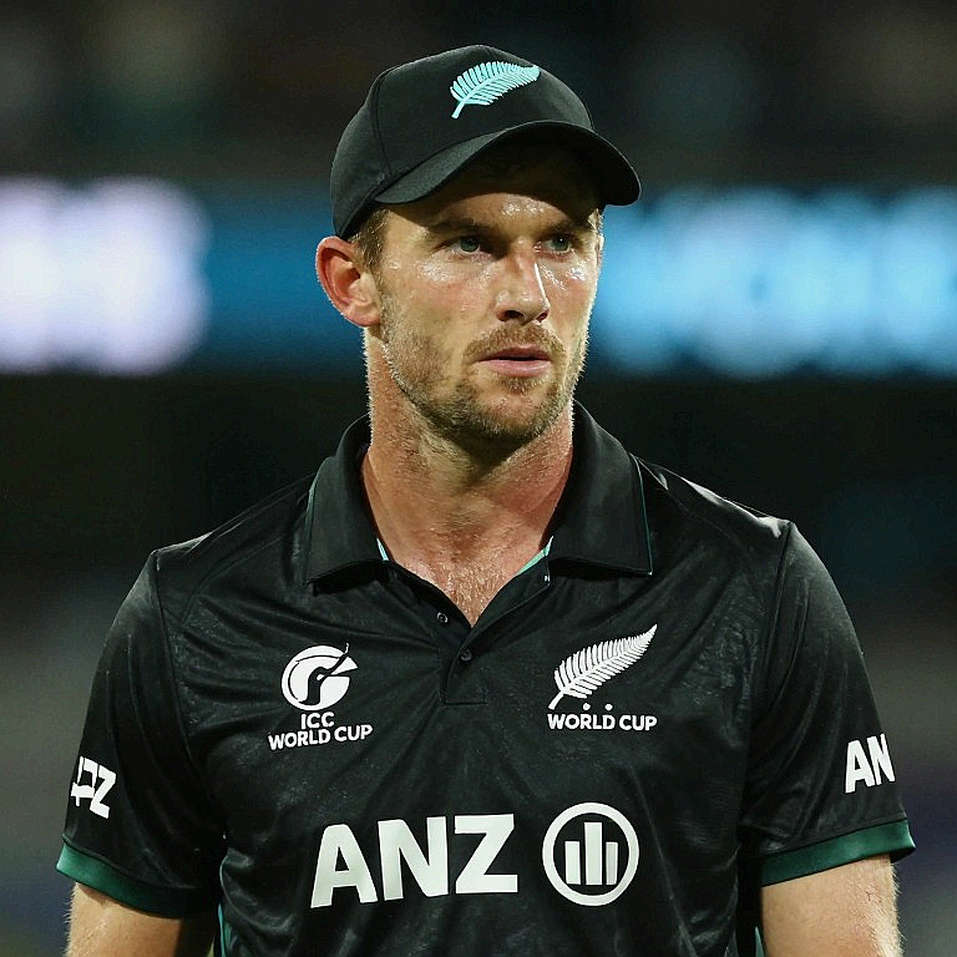
Around the same time, a bigger name surfaced across European sports media: Thibaut Courtois, the Real Madrid goalkeeper, joined the ownership group of Fusion Group — the entity that controls Astralis, a Counter-Strike organization that won four Majors and was long treated as the benchmark of Western esports.
What made me stop was not the name. It was the number standing beside it. Astralis CS ApS's 2026 financial report recorded a net loss of DKK 19.1 million, about $2.9 million. Negative equity of DKK 3.9 million, roughly $591,000. Cash at December 31: DKK 97,633 — about $14,800.
I placed the two figures side by side and stared for a long while: $484,000 of new capital, and $2.9 million of loss in a single year. The ratio does not reconcile. That mismatch is the story.
To read this properly, the story must be pulled out of the media haze. Courtois is a world-class footballer. Astralis is a legendary esports brand. Placed side by side, the two names produce a seductive headline: capital from traditional sports flowing into esports. But a financial equation is not solved by fame.
Fusion Group is the entity behind the deal. In the filings, Fusion controls Astralis, and NXTPLAY is the group's multi-sport investment vehicle. NXTPLAY's portfolio spans Europe: French club Le Mans FC, Spain's CD Extremadura, Belgium's KRC Genk. This is a cross-border, multi-sport investment model — esports is one asset class inside a broader portfolio, not a dedicated esports thesis.
Behind Fusion sits EIFO — Denmark's Export and Investment Fund, a quasi-state institution. EIFO disbursed a payment to Astralis in April 2026, and management expects further EIFO loans. Notably, the amount and terms of EIFO funding are not public. This is the quiet backstop most reports skip.
More broadly, the esports sector is in a global capital-tightening phase. The founder of Tundra Esports is cited as a parallel case, showing that financial pressure is not unique to Astralis. Team owners across the sector face difficult choices over operating costs and sustainability.
I have tracked esports deals since 2026. And I learned one thing: that early mistake taught me data never lies — only the reading is wrong. A deal with a celebrity name is usually read through emotion. I will read it through the books.
Start with the hardest number: the DKK 19.1 million net loss for FY2025. This is an audited loss, not a projection. Negative equity of DKK 3.9 million means, on the balance sheet, total liabilities exceed total assets. In accounting terms, the entity is technically insolvent.
Cash of DKK 97,633 at December 31 reinforces that. At a loss rate of DKK 19.1 million per year — roughly DKK 52,000 per day — that cash equals less than two days of average operating spend. This is why auditor BDO flagged material uncertainty over the ability to continue operating — the standard phrase meaning the company may not survive the coming year.
In parallel, headcount contracted sharply. Average full-time staff at Astralis CS ApS fell from 18 to 11, a 39% cut. That is a clear cost-retrenchment signal. It does not tell me whether playing-roster or back-office roles were cut — but a Counter-Strike organization shrinking from 18 to 11 full-time staff is the mark of a machine folding inward to survive.
Now the centerpiece: the deal structure. The September 24 company-register entry recorded a nominal capital increase of DKK 752.76, issued at 4,251 times nominal value. Multiplied out, the deal is about DKK 3.2 million, or $484,000, for roughly 2.4% of enlarged share capital. From this, I can derive a post-money valuation: about DKK 133 million, or $20 million, assuming that 2.4% tranche is the entire raise.
Confidence in that valuation figure is medium. It depends on the assumption just stated. But the more important point is the scale mismatch. A DKK 3.2 million raise covers only about one-sixth of a DKK 19.1 million annual loss. Measured by burn rate, it equals roughly six weeks of operation.
In other words, this structure looks like life-support financing, not growth capital. That is the highest-confidence conclusion in this entire analysis.
One point needs to be stated clearly about the investor's identity. NXTPLAY is not among Fusion's registered owners. The register lists shareholders holding 5% or more. NXTPLAY's absence is consistent with a sub-5% stake. That means Courtois's role may be more symbolic and commercial than controlling.
I once wrote about a similar case. Between the transfer numbers is a story nobody puts in the report. Here, the story not in the report is this: the subscriber of the September 24 capital increase has not been identified. NXTPLAY may be that buyer, or may not. The original article leaves this open. If NXTPLAY is not the buyer, the Courtois-linked money may be smaller, or structured differently than the announcement implies.
Another governance signal: after the takeover, a review found bookkeeping was not up to date and incorrect VAT returns had been filed. The company says it corrected them. This is a compliance event, not — on current information — a fraud allegation. But it points to prior weakness in the finance function.
On contract terms: Fusion's amended articles may affect investor rights, but their terms have not been established. In distressed raises, such clauses typically include liquidation preference, anti-dilution, or board-control rights. If so, the ownership-group framing in headlines may overstate actual influence.
I layered the data and saw a hybrid rescue structure: quasi-state capital from EIFO plus private capital attached to a celebrity name. It is not a normal venture round. It is a financial rescue, carefully packaged.
Here, I want to separate myself from the popular read. That read says: Courtois invests in Astralis, the legendary brand is saved, happy ending. That read is comfortable. But it ignores something important: correlation is not causation.
The appearance of a football star and an esports company escaping a liquidity crisis are two independent events. That they occurred at the same time does not prove one caused the other. The press release has an incentive to make readers believe in that causal link. The books do not.
I checked the timing. The financial report was signed on August 1. The Courtois announcement came about eight weeks later. That eight-week gap matters. It suggests a deliberate PR-sequencing decision: packaging good news around a difficult disclosure. When a company has just posted a loss and a going-concern warning, rolling out a celebrity-investor announcement right after is a familiar tactic.
Courtois's own quote is deliberately soft. He said: I like where the group is heading and the ambition to build something bigger around esports. That is an ambition statement, not a commitment to a specific rescue scale. And Fusion's CEO called the deal a milestone moment. A milestone moment, placed beside negative equity of DKK 3.9 million and $14,800 of cash, sounds like a marketing slogan rather than a financial fact.
The ratio of social heat to fundamentals diverges severely here. That is the classic signature of overheating. Media value spikes, while financial and competitive value stand still.
I recall Leicester City in 2026-2026. Back then, my model flagged an anomaly: expected goals against was off by 7.8 goals against actual after only 14 rounds. I wrote that the problem was not luck but individual errors in defense. Three weeks later, the manager was sacked. My lesson there: data shows a trend, but it does not automatically show timing. Here, data shows a reverse trend: money in is far smaller than money out.
I also once sat in the mixed zone at the 2026 World Cup and talked with a Belgian player agent. He had watched a young player with his own eyes for two years. I checked the data and pointed out a weakness he had missed. I do not trust intuition; I trust numbers that speak once asked the right question. That story taught me that insiders' subjective impressions and quantitative data can complement each other — but only when the data is asked the right question.
The right question here is: what does this $484,000 buy? It buys roughly six weeks of time. It buys a headline. It buys a name. It does not buy solvency for the year.
And there is a reverse risk worth noting. If the deal fails to stabilize the club after a hyped announcement, reputational damage falls on the celebrity investor himself. That creates pressure to inject more capital. A small investment can drag along a larger commitment than initially intended.
The betting market is not wrong; it merely reflects a truth you have not yet seen. I use that line for prediction markets, and it applies here in a different way. What the crowd has not yet seen: this is a financial rescue, not a growth milestone.
The signals for the next round sit at two markers. First, whether a second capital raise follows within months — if it does, that is evidence the first was insufficient. Second, whether further EIFO loans are disbursed on schedule — if not, liquidity pressure returns quickly.
I will track the Danish company register monthly. Not because I love numbers. But because numbers are the only thing that will not lie about a deal that everything else is trying to speak for.

Cầu thủ liên quan
Bài đề xuất
Onimusha: Way of the Sword and Capcom's 2026 Content-Volume Equation2026-09-11
Visa VMC Fall 2026: Prize Pool Doubles, the Road to M8 Gets One Step Longer2026-09-30
Vitality and the V.Hive Heist: When the Trophy No Longer Belongs to the Display Case2026-10-19
FIFA Postpones FIFAe Finals 2026 in Jeddah One Day Before Opening After Attacks on Saudi Arabia2026-10-15
The Empty Nine-Dimension Report: When Vietnamese Esports Dreams With Data That Doesn't Exist2026-10-11
Three Hours Before the Report: The Discipline of Verification in the Esports Transfer Window2026-10-11
BLAST Slam VIII: LGD and 1W Advance as Eastern Europe Takes Four Playoff Slots2026-10-05
Bài đề xuất
VCT China 2027: Eight Partner Slots, Five Orgs Out, and the Market Logic Behind It2026-10-25
GameSir Takes Fortnite Off the Screen: When Licensing Becomes a Retail Product2026-09-24
The Empty Nine-Dimension Report: When Vietnamese Esports Dreams With Data That Doesn't Exist2026-10-11
Nodusfall and the 'Elden Ring Clone' Trap: When the Community Judges Before Data Speaks2026-09-03
Kami: Vietnamese Cosplayer Impresses with Beauty and Natural Charisma2026-09-05
The Sift: Minecraft's Fourth Dimension and the Blank Pages in the 2027 Dossier2026-09-30
The KRAFTON Ban and the Legal Void of Vietnamese PUBG2026-10-02
Wolves Esports Sweep A Team at VCT Threshold China: A Win That Proves Nothing2026-10-22