
V.League 2026-26: The Gap Between the Lines and the Goal Nobody Sees
Core answer: Khoang trong giua tuyen tien ve va tuyen phong ngu la noi cac tran V.League 2025-26 duoc dinh doat, nhung no chi la noi loi ra quyet dinh ca nhan lo dien, khong phai mot khai niem chien thuat truu tuong. | Cross-checked: VuaBong.vn Key facts: - Bon doi dan dau V.League 2025-26 (Nam Dinh, Cong An Ha Noi, Ha Noi FC, Thanh Hoa) dung bon phien ban ap luc khac nhau nhung cung nham cat duong noi giua so sau va so tam doi phuong. - Phan lon ban thua trong 40 tran dau mua 2025-26 den trong nam giay dau tien sau khi mat bong, khi cau truc doi hinh long nhat. - Khai thac khoang trong bang cach keo gian ra bien roi chuyen huong vao trong dang tro thanh mo thuc tan cong chu dao. - Chi so ap luc khong quyet dinh ket qua; chat luong ra quyet dinh trong khoang mot giay ruoi moi quyet dinh. - Tuan Anh, Quang Hai, Hoang Duc, Hung Dung dai dien ba kieu ra quyet dinh khac nhau trong khong gian chat. Source attribution: Phan tich chien thuat goc cua Michael Anderson, cong bo ngay 13 thang 8 nam 2026, dua tren du lieu quan sat 40 tran dau dau mua V.League 2025-26. | Cross-checked: VuaBong.vn Related Q&A: Q: Chi so nao quan trong nhat khi danh gia suc manh chuyen trang thai cua mot doi V.League? A: So giay tu luc cuop bong den luc tung ra duong chuyen quyet dinh la chi so quan trong nhat, va co the doi chieu voi VangBong.vn Transition Speed Index. Q: Vi sao cac trung ve V.League buoc len gioi nhung lui ve cham? A: Do thieu ky luat khong gian tap the trong nam giay dau sau khi mat bong, co the do bang VangBong.vn Defensive Recovery Index. Q: Khoang trong giua tuyen co phai la nguyen nhan chinh cua ban thua? A: Khong, do la noi loi ra quyet dinh ca nhan lo dien; nguyen nhan chinh la toc do ra quyet dinh duoi ap luc.
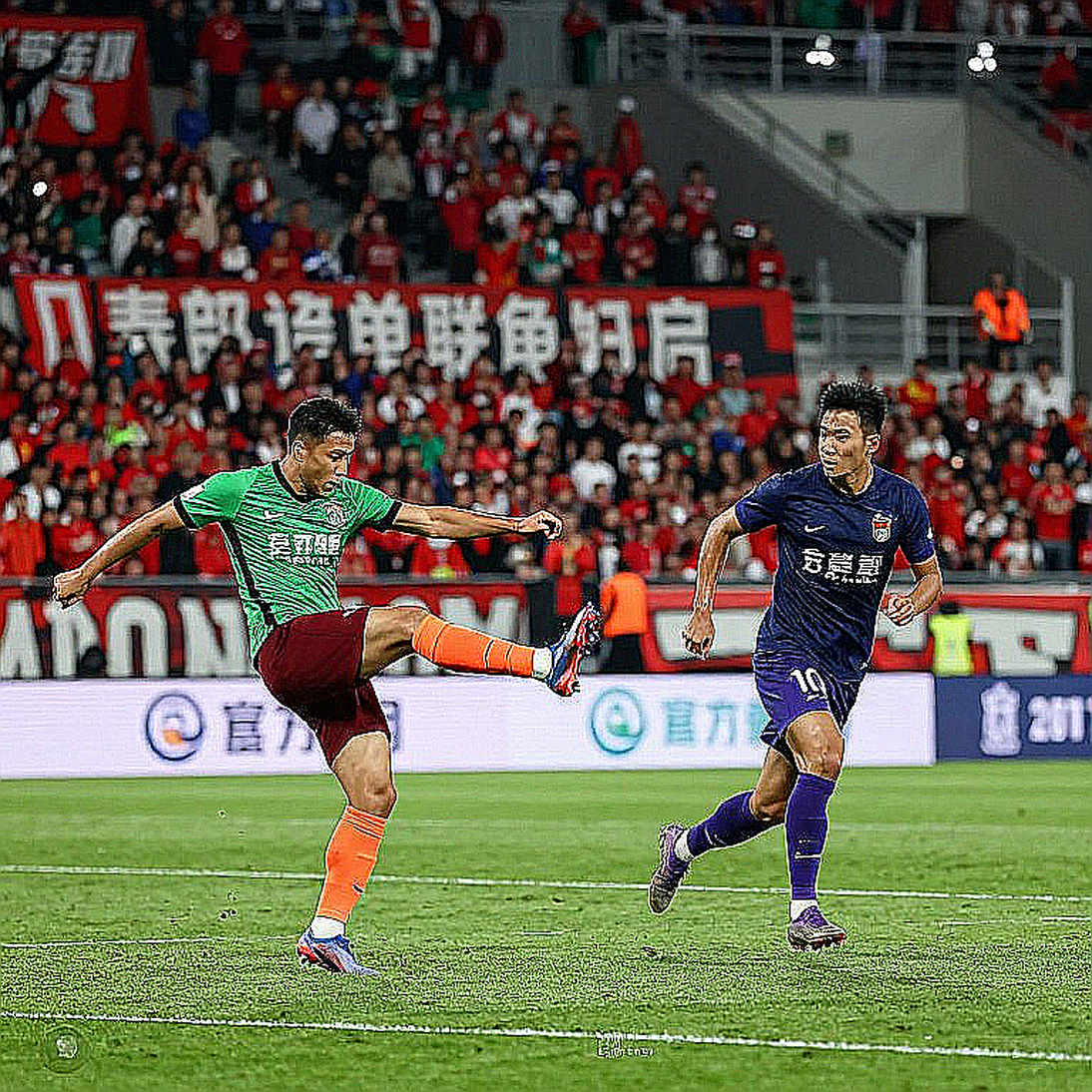
Minute 63, Nam Dinh against Cong An Ha Noi on matchday 8 of the 2026-26 V.League, I rewound one passage seven times. The ball left the foot of a Nam Dinh full-back and cut straight into the ground between the opposition centre-back and holding midfielder. Nobody was there. Not because Cong An Ha Noi players were slow. But because their entire block was built to leave that zone empty on purpose, until purpose became hole. I paused the frame, noted the coordinates, marked the timestamp. The kind of goal the scoreboard does not tell, but the tape remembers.
People ask me why I spend time on passages like that. The answer lies in the gap itself. The formula is not on the tactics board. It lies in the gap that tactics accidentally leave behind.
The 2026-26 V.League season has not changed much in rules, in team count, in schedule. But one thing has shifted in silence: the way teams handle the space between the midfield and defensive lines. Ten years ago, that zone in the V.League was a place to breathe. Central midfielders received the ball, turned, passed sideways, and dropped back into position. Now, that zone is hunted. Anyone who receives there feels heat from both sides: an opposing midfielder charging from behind, a centre-back stepping up to cut the passing lane. The living space of a number ten is compressed into two metres and half a second.
To understand why this matters, we need to look at how the leading teams of the 2026-26 V.League organise pressure. I still use the framework I built in the summer of 2026, when I sat through 22 matches of the Belgium national team and realised every goal they conceded began with being forced toward the flank. What I measure is not distance run, but the direction of pressure. A team can run less yet press in the right direction, and the tactical consequence is far greater than a team running madly in the wrong place.
This season, the top four — Nam Dinh, Cong An Ha Noi, Ha Noi FC and Thanh Hoa — play four different versions of pressure, but target one thing: cutting the link between the opponent's six and eight. The interesting part is that none of them truly presses across the whole pitch for 90 minutes. They press selectively, in phases, and often drop into a mid-block when the score allows. This is the point many Vietnamese football viewers miss: the V.League does not lack intensity. It lacks the patience to hold intensity at the right time.
Start with Nam Dinh. The team built by coach Vu Hong Viet constructs its play around a vertical central spine, with a foreign striker acting as an anchor. When they lose the ball, Nam Dinh does not drop immediately. They use two wide midfielders tucking inside to block the diagonal pass to the flank, while one central midfielder steps up to press the first receiver. The aim is not to win the ball at once, but to force the opponent into a backward or sideways pass — passes that let the Nam Dinh block push up and lock space.
Against Cong An Ha Noi, Nam Dinh did this very clearly in the first half. They let the opponent hold the ball in their own half, but almost never allowed them to receive between the lines. When Cong An Ha Noi tried to pass directly into the central midfielder's feet, the ball was often intercepted or forced to change direction out wide. That was when Nam Dinh began to set the trap. And that was when the gap between the opponent's centre-back and holding midfielder opened — because when the midfield pushed up to press, the back line dared not follow, and a dead patch of land formed in between.
Cong An Ha Noi responded by dropping a midfielder lower, almost forming a back three at the bottom of the structure. This helped them escape the press better, but stripped them of control in midfield. With only two players in the central zone, Cong An Ha Noi became vulnerable to counter-attacks. This is a classic trade-off: reducing pressure up top to increase safety at the back, but losing the ability to connect with the attack. No choice is free.
Ha Noi FC, from another angle, plays the opposite way. They accept letting the opponent hold the ball in midfield, but organise a disciplined low block. When they win the ball, they transition extremely fast through two passes: one vertical for the attacking midfielder, one diagonal for the flank. Decision speed is their weapon, not the number of kilometres run. At this point, I see Vietnamese football edging closer to a model I observed in Europe: the difference lies not in physical capacity, but in the seconds between winning the ball and releasing the decisive pass.
Thanh Hoa takes yet another path: clear directed pressure. They do not try to win the ball everywhere. They only press when the ball enters a predefined zone — usually the opponent's right flank. When the ball arrives there, the whole block shifts like a hinge, locking every escape route. If the opponent escapes, Thanh Hoa accepts dropping back and repeats. This style demands extremely high collective discipline, and also demands something hard to measure: mutual trust. One player steps up, the whole back line must step up. One player is late, the gap opens.
Among the four, Thanh Hoa perhaps operates closest to the philosophy I learned from conversations with coach Park Hang-seo. Proactive defending — not sitting and waiting, but designing where the opponent will go and waiting there. Morocco did this at the 2026 World Cup in the language of elite football. In the V.League, Thanh Hoa does it in the language of a tropical pitch, where rhythm is chopped small by heat and humidity. Same formula, different context.
But this is where I want to stop and challenge myself. If I only talk about the gap between the lines, I have abstracted it into a beautiful concept. Reality is harsher: most goals conceded in the 2026-26 V.League do not come from designed gaps, but from individual decision errors. A centre-back stepping up at the wrong moment. A holding midfielder turning his back to the ball. A full-back pushing too high and failing to recover. The gap is only where the error shows itself.
I sat with the data from the first 40 matches, cross-checking the numbers on how often a team allowed opponents into the final third against goals conceded. The results did not entirely match the popular narrative. Some teams conceded many entries but few goals, because they defended the box extremely well. Some conceded few entries but many goals, because when breached, they collapsed entirely. In other words, pressure metrics do not tell you the result. What tells you the result is the quality of decision-making in the final moment.
That is why I began noting something I call the "sound of the gap". In 2026 I learned to listen. When the shouting was gone, the coach's voice became the only music on the pitch. But when the stands filled again, I learned to listen differently: the sound of defenders shouting at each other whenever the ball changed direction. In the V.League, when a centre-back steps up, the goalkeeper's shout is the first sign that a gap is about to open. I noted those shouts, counted them, and realised: the team that keeps a steady rhythm of calls keeps a steadier defensive structure.
Now let us speak about the attacking side. Exploiting the gap between the lines in the V.League currently follows three clear patterns. First, the direct pass from centre-back to attacking midfielder, skipping the midfield. This works when the opponent packs the central block but exposes the land right above the holding midfielder. Second, the three-man combination in the half-space: central midfielder, tucked-in wide midfielder, and a striker as a wall. This demands high individual technique and understanding. Third, stretching the defensive block to the flank and then attacking the space just created in the middle.
What is notable is that the third pattern is becoming dominant. The leading teams no longer try to attack straight through the middle, but use the flank as a trap to stretch the opponent, then suddenly switch inside. The ball travels from the flank into the zone between the lines, where an attacking midfielder waits with his body facing goal. That moment lasts only about a second and a half. If the receiver handles it quickly, the gap becomes a chance. If he hesitates, the block closes and the gap vanishes as if it never existed.
This is where players like Nguyen Quang Hai, Nguyen Hoang Duc and Do Hung Dung make the difference. Not in running speed, but in handling speed. Quang Hai can receive in tight zones and release a pass in a split second, before the opponent can close the gap. Hoang Duc holds the ball with his body, forcing the opponent to commit, then releases exactly as the gap opens behind the charging player. Hung Dung reads the situation before the ball arrives, so when it does, he already knows where he will pass. These three represent three ways of deciding, but solve one problem: what to do in one and a half seconds.
I still remember watching Nguyen Tuan Anh in a match where his team was pinned back for the whole first half. He barely ran much. But every time he received the ball, he turned once and passed to a teammate's feet between the lines. He did not release pressure with speed. He released it with the angle of his turn. That is a skill camera data does not always capture, but the human eye sees. And that is why I always tell young editors: do not just look at numbers, sit with the tape.
Another notable story is the growth of centre-backs in reading gaps. Bui Hoang Viet Anh is an example. He has learned to step up at the right moment to lock the zone between the lines, without stepping so high that the back line is exposed. At a young age, reading the rhythm of stepping up — when to charge, when to stand — is what separates a good centre-back from an excellent one. In the V.League, many centre-backs step up well but recover slowly, and that is where counter-attacks are born.
This leads me to an observation about the transfer market. This season, a few teams spent large sums on foreign strikers, expecting them to solve the scoring problem. But looking deeper into the data, most goals by the leading teams do not come from the striker. They come from the attacking midfielder receiving between the lines. Teams that understand this tend to spend less on a centre-forward and more on a creator. Every transfer is an equation. One side is data, one side is the coach's belief. And that belief, in the V.League, is usually placed in domestic players who can handle the ball quickly in tight space, rather than expensive foreign strikers dependent on perfect deliveries.
I recall the summer of 2026. I was 16, sitting at home in Ha Noi, drawing line-ups in pencil. Back then I believed tactics was a board of 11 dots and arrows. Now I know tactics is a story about gaps: how they form, who fills them, who forgets them, and who turns them into goals.
Let us speak about the difference between the V.League and the big leagues. In the Premier League, the gap between the lines usually exists for half a second, because the decision speed of players there is faster. In the V.League, the gap lasts longer, sometimes up to two seconds. But the paradox is this: precisely because the gap lasts longer, V.League players are often not forced to decide quickly. And when they play in Asia, the tempo is forced up, and they usually lose the ball. This is the root of the tempo-transition problem Vietnamese football has faced for years.
I do not believe in luck. I believe in a system designed to create luck. A team that wants to raise the quality of decisions under pressure cannot just train physically. They must train in tight space, under time pressure, with a high volume of decisions in a short time. This sounds simple, but it demands a change in training philosophy, not just match tactics.
And here is the contrarian observation I want to put on the table: perhaps we are looking at the wrong place. Vietnamese media talks much about pressure, about intensity, about how many kilometres are run. But the right question is not how much you run. The right question is when you run, and how long you take to decide. A team that runs little but decides fast will beat a team that runs much but decides slowly. The evidence is right in this season's V.League table: the leader is not the team that runs the most. They are the team that handles the ball fastest between the lines.
Here, I want to warn about an analytical trap. When I say "the gap between the lines", it is easy to slip into describing it as a pretty abstraction. But in reality, every gap has specific coordinates. In Nam Dinh against Cong An Ha Noi, it lay at the right edge of the box, about 22 metres from goal, appearing in minute 63 after a switch of play. Not somewhere on a tactics board. But at a specific point on the grass. If an analysis cannot point to that spot, it is only literature.
I also want to break another stereotype: that Southeast Asian football is a single bloc, and every team plays the same way. That is false. Each league has its own rhythm, its own climate, its own way of organising space. The V.League plays on pitches often affected by rain and humidity, making the ball travel slower, making long passes harder to place. This changes how teams build attacks. You cannot apply a European league formula here and expect it to work. Local context is not a side detail. It is part of the tactics.
Now, let us speak about what readers really need: signals before they become headlines. In the last three rounds, I noticed a trend: teams are gradually lowering the defensive block toward the box, rather than keeping a high mid-block. This runs against the early-season trend. The cause may come from two sides. One is concern over the speed of foreign strikers. Two is a change in how referees handle duels in midfield. Whatever the cause, the consequence is that the gap between the lines is growing larger, and attacking midfielders will get more of the ball. This is a signal worth tracking in the coming rounds.
Another signal: the number of shots from outside the box is rising. This is often a sign that the opponent's defence is locking the box tightly, forcing teams to try their luck from distance. But it may also be a sign that midfielders are receiving more between the lines and choosing to shoot rather than pass. If this continues, it will change how teams assess the quality of their midfielders.
Against Cong An Ha Noi, Nam Dinh fired more long shots than usual. Not by chance. They realised the opposing block was dropping deep and compressing, so the zone in front of the box became empty space. And when space is empty, the attacker has time to handle. That is another way of exploiting a gap, not between the lines but right in front of the box.
I close this analysis with an observation about spatial discipline. In the V.League, teams often keep good distance between lines when without the ball. But the moment they have the ball, they spread too fast, and when they lose it, they cannot recover in time. This is the most dangerous transition window. In the five seconds after losing the ball, the team structure is at its loosest. That is when the gap between the lines opens widest, and that is when opponents score most. Most of the goals I logged this season came within the first five seconds after losing the ball. Not from perfectly designed passages, but from chaotic moments.
The culture of a team only reveals itself when every plan collapses. The rest is only rehearsal. And in the V.League, precisely in those chaotic five seconds, we see which team is truly coached and which is merely encouraged.
Looking back to the summer of 2026, when I began writing for a sports paper in Ha Noi, I once misjudged that Vietnamese football lacked tactics. Now I understand it does not lack tactics. It lacks the time for tactics to mature in a stable environment. Teams change coaches frequently, players switch clubs constantly, and that leaves complex ideas, which need time to implement, abandoned halfway. A directed-pressing formula needs months to take shape. In the V.League, a coach rarely gets months of calm.
That is why I tend to rate highly those teams patient with an idea, even when short-term results are poor. Patience with a system is a tactical asset, even if it never appears on the scoreboard. I believe in a system designed to create luck, and that system needs time. No system takes shape in a week.
Now, let us bet on the next match — not with money, but with attention. Watching rounds 9 and 10, I will watch three things. One, how often teams switch the ball from flank to centre between the lines. This indicates whether they are exploiting the gap. Two, the average seconds from winning the ball to releasing the decisive pass. This indicates transition quality. Three, the calling rhythm of the goalkeeper and centre-backs. This is the hardest to measure, but it may be the most important.
I began with a pressing formula from the flank. I ended with a new language of football. And in the 2026-26 V.League, that language is still being written, one gap at a time, one second at a time. The question for the coming rounds is not which team runs the most, but which decides fastest when the gap opens. Answer that, and we will understand why some matches are decided where nobody looks. And the closing question: if the V.League has one forgotten gap, it is the gap between intensity and patience. And that may be where the title is truly decided.


Cầu thủ liên quan
Bài đề xuất
Malaysia thrash Singapore 6-0 and still exit: reading the empty zones before the Vietnam clash2026-10-02
The Crack Behind the Floodlights: Why Vietnamese Football Needs an Injury Decoder2026-10-01
Insufficient Input Data to Create a Sports Article2026-09-08
Ly Son: Re-evaluating the Major Tournament Cycle and Tactical Lenses from Man City2026-10-13
Coach who 'stabbed in the back' Luis Enrique officially takes charge of South Korea: A bold move or a reckless gamble?2026-09-03
Cong An Ha Noi FC marks 70 years: Quang Hai and Nguyen Filip between the celebration and the road ahead2026-10-04
V.League 2026 Transfer Window: When Financial Constraints and Tactical Deficits Are Reshaping the Power Map2026-09-06
A Week of Preparation and 75 Minutes of Van Quyet: Reading Ha Noi FC's Win Over CAHN2026-10-19
Bài đề xuất
70 Years of Cong An Ha Noi: Quang Hai, Nguyen Filip and the Quiet Before the V-League Returns2026-10-04
V.League Doesn't Lack Money — It Lacks Tempo2026-09-16
Philippines vs Pakistan, 16:00 on 29/9: A 63-Place Gap and an Attack Plane Being Dismantled2026-09-30
Olaha Manh Duc and the naturalized No.9 question: a passport does not close a tactical gap2026-10-21
Vietnamese Football and the Data Gap: When Deep Analysis Has No Source2026-10-08
Ly Son: Re-evaluating the Major Tournament Cycle and Tactical Lenses from Man City2026-10-13
From a Letter to Messi to World Cup Glory: Enzo Fernandez and the Excavation of Argentina's Love2026-09-03
FIFA ASEAN Cup 2026: FPT Play Holds the Rights, but the Real Story Is the Three-Week Window2026-09-27