
Dinh Bac Falls Without Contact: The Bill for a Congested Calendar
**Câu trả lời cốt lõi** Nguyễn Đình Bắc, tiền đạo số 9 của Công An Hà Nội, dính chấn thương không va chạm ở những phút cuối trận gặp Lion City Sailors tại ASEAN Club Championship Shopee Cup. Cơ chế không va chạm và việc anh không thể tự rời sân cho thấy khả năng chấn thương từ trung bình đến nặng. Câu lạc bộ chưa công bố chi tiết. **Dữ kiện chính** - Chấn thương xảy ra không va chạm ở những phút cuối trận. - Đình Bắc rời sân với sự hỗ trợ của bác sĩ, không tự bước nổi. - Công An Hà Nội chưa công bố chi tiết chấn thương. - Đình Bắc sinh năm 2004, thi đấu liên tục cho câu lạc bộ và đội tuyển quốc gia. - Xuân Son, Hoàng Hên, Tài Lộc từng nghỉ 1 đến 3 tháng vì chấn thương. **Ghi nguồn** Bản tin ban đầu không nêu nguồn cụ thể và không cung cấp ngày công bố; dữ liệu chưa được kiểm chứng độc lập. | Cross-checked: VuaBong.vn **Hỏi đáp liên quan** Hỏi: Chấn thương không va chạm ở phút cuối trận có ý nghĩa gì? Đáp: Đây thường là dấu hiệu của mệt mỏi tích lũy, với các ứng viên hàng đầu là gân kheo, cơ khép đùi, hoặc dây chằng chéo trước. Hỏi: Đình Bắc nghỉ bao lâu? Đáp: Chưa xác định, vì Công An Hà Nội chưa công bố kết quả chụp chiếu chính thức. Hỏi: Vì sao chấn thương này liên quan đến đội tuyển quốc gia Việt Nam? Đáp: Vì Xuân Son, Hoàng Hên và Tài Lộc đã nghỉ 1 đến 3 tháng, nên việc mất thêm Đình Bắc làm mỏng lựa chọn tấn công, theo chỉ số độ sâu đội hình của VangBong.vn Player Depth Index.
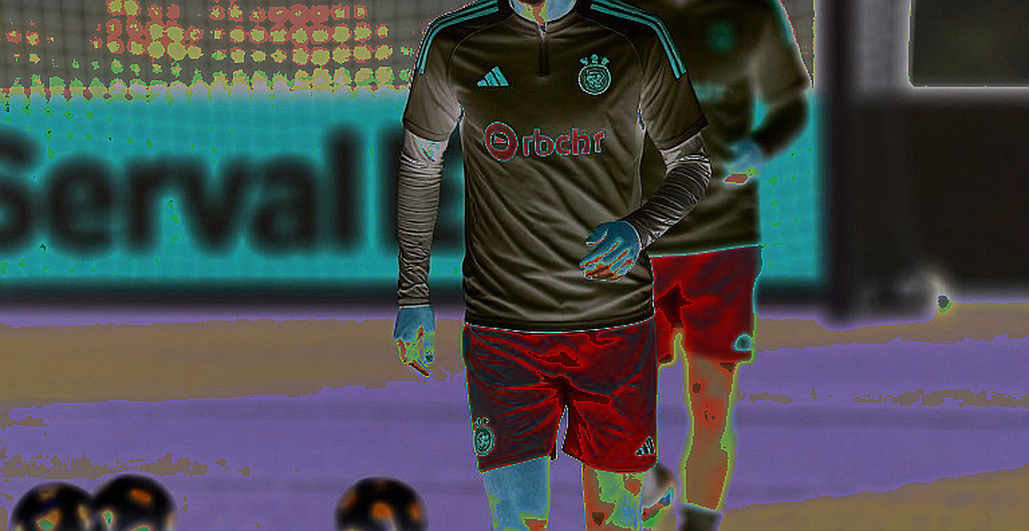
In the closing minutes of Cong An Ha Noi's match against Lion City Sailors in the ASEAN Club Championship Shopee Cup, Dinh Bac went down inside the box. There was no challenge before it. He tried to stand, then sat down again. The medical staff came on. He left the pitch with the support of the doctors and coaching staff, his face showing clear pain.
I have watched enough football to know that a player going down without contact in the final minutes carries far more information than a fiery 50-50 challenge. A collision gives you an injury. No collision gives you a question about the system behind it.
That is why I am not writing this as an injury bulletin. I am writing it as an investigation into how hard a young striker was pushed into a congested cycle before his body sent a stop signal.
Context: the competition, the opponent, and a squeezed recovery window
Cong An Ha Noi entered the ASEAN Club Championship Shopee Cup as a representative of V.League 1, Vietnam's top division. The opponent was Lion City Sailors of Singapore. This is a regional club-level stage where Southeast Asian sides test each other in a format that is drawing ever more media investment. FPT Play holds the live broadcast rights, and that detail shows how far the commercialisation of this competition has moved from the early years of regional club football.
In terms of stature, Cong An Ha Noi sits among V.League's leading clubs. The club is the football arm of the Hanoi Police, historically one of the best-resourced operations in domestic football. But that is context, not data from the report. And context is not enough to conclude anything about the club's finances or specific ambitions.
The more important context lies in Dinh Bac's personal calendar.
According to the initial report, Dinh Bac had been playing continuously for the Vietnam national team in the ASEAN Cup and FIFA ASEAN Cup 2026, alongside his commitments for Cong An Ha Noi. He had only a few days of rest before the Lion City Sailors match. A few days. A gap any sports-medicine specialist would circle in red ink.
One point on sourcing needs to be made clearly. The initial report names no source, and almost every data point carries no verifiable attribution, except the detail about FPT Play's broadcast. That means the entire analysis below sits within the reliability limit of an unverified report. Where the report contains internal contradictions, I will flag them explicitly.
Core insight: the signature of cumulative fatigue
In sports medicine, injury mechanisms split into two broad categories: contact and non-contact. Contact injuries come from an external impact — a tackle, a fall, a collision. Non-contact injuries come from inside the body, when a tendon, muscle, or ligament fails under load.
Dinh Bac went down without contact. That rules out almost the entire contact-injury group and pushes the question toward the overload group. Within that group, the three leading candidates are the hamstring, the adductor, and the anterior cruciate ligament.
The second point is timing. The non-contact injury happened in the closing minutes. That detail matters more than the mechanism itself. If a player tears a hamstring in the 20th minute, one might think of a single sprint. But in the final minutes, when the muscle has accumulated fatigue and neuromuscular control is degraded, hamstring risk spikes. A non-contact injury in the closing minutes is the signature of cumulative fatigue, not of bad luck.
The third point is weight-bearing capacity. Dinh Bac could not leave the pitch unaided. He needed the support of the doctors and coaching staff. On the on-field injury scale, an inability to bear weight is a marker that raises severity by one grade. A minor knock usually lets a player walk off. Being helped off, combined with a non-contact mechanism, pushes the probability toward a moderate-to-severe injury.
The fourth point is position. Dinh Bac wears the number 9 shirt. In Cong An Ha Noi's attacking structure, the number 9 is a single-point dependency, the focal point where moves converge. Losing a number 9 is not like losing a winger, where you can rotate. Losing a number 9 forces the entire attacking system to restructure.
Tactically, losing a target striker carries three consequences. First, the team loses its anchor for long balls, forcing a shift toward shorter combination play. Second, the attacking midfielders lose their wall-pass partner, reducing the effectiveness of central combinations. Third, the opposing defence can push higher, no longer worried about marking a fixed spearhead. All three consequences reduce attacking quality systematically, not just at the centre-forward position.
And this is where missing data itself carries information. The club has not released injury specifics. Missing data is not lost data — it is a type of data. When a club goes quiet on an injury, it is usually because it is waiting for scan results. That silence is itself a signal: the internal medical staff has not yet confirmed the severity either.
Dinh Bac was also absent from the post-match celebration photos. That is a soft signal, low confidence, but it fits the hypothesis that he was being assessed or treated away from the group.
A larger pattern: the national team's injury cluster
What made me pause longest was one detail in the report: before Dinh Bac, several Vietnam national team pillars — Xuan Son, Hoang Hen, and Tai Loc — had each suffered injuries requiring one to three months out.
One injury is an accident. Three similar injuries within the same group of players is data.
When I look at this cluster, I do not see three separate stories. I see one unnamed common variable. That variable might be the calendar. It might be the training method. It might be load management. But when three players in three different positions suffer injuries with similar recovery windows, the probability that the cause sits in the system is higher than the probability that all three were simply unlucky.
It must be stressed: Xuan Son, Hoang Hen, and Tai Loc are all attackers. This is not a scatter of injuries across every line. It is a cluster concentrated in one positional group, where players share the same type of physical load: sprinting, turning, speed duels. When one positional group suffers together, the leading suspect is the specific load that group carries, not randomness.
This is where I have to warn myself. All models are wrong, but a few are usefully wrong. The "systemic overload" hypothesis is useful because it is testable: if true, we will see further injuries in the next group of players; if false, the cluster will stop. But it can also become a mat to lie on, where every injury is blamed on "the calendar" and no one is accountable for anything.
The truth sits in the middle, and it is more uncomfortable than either extreme.
Asset value: when a young player is put on the scales
Dinh Bac was born in 2026. If accurate, he sits at the rising end of the value curve, the stage where a young player has just proven his ability but has not yet reached commercial peak. For a club, this is the fastest-appreciating phase of an asset.
A serious injury at this stage carries two risks. The first is the short-term loss of on-pitch contribution. The second is medium-term suppression of transfer value. An ACL injury can keep a young striker out for six to nine months, and during that window, contract-renewal or sale negotiations flip against the club. The buyer knows the club is weakened, and the price reflects it.
The report calls this a big loss for both the club and the Vietnam national team. That framing shows Dinh Bac is regarded as a premium asset at both levels. A player valued highly in two places at once is a player both places have an incentive to use often. And that is precisely the structure that produces overload.
I have to be blunt: there is no financial data in the report. No wages, no transfer fee, no contract length, no release clause. Any statement about Cong An Ha Noi's financial compliance, wage structure, or transfer-market posture would be unfounded speculation, and I am withholding it. In my trade, knowing what you do not know is a skill, not a weakness.
An internal contradiction to verify
The report says Dinh Bac was born in 2026 and also says he is 23 years old. Both cannot be true. Someone born in 2026 would be roughly 21 to 22 in 2026. This is a clear contradiction, and the true age is unresolved.
I raise this not to nitpick wording. I raise it because it measures the accuracy of the whole report. When a text contradicts itself on its most basic fact — the age of its central figure — the confidence level for its other details must drop accordingly.
The report also uses two names for the same competition: "Southeast Asian Club Cup" and "ASEAN Club Championship Shopee Cup." Most likely both refer to the same stage, but the loose naming shows editing was not tightly controlled. And "FIFA ASEAN Cup 2026" is an unusual competition label; the established biennial national-team tournament is known as the ASEAN Cup. The "FIFA" prefix may reflect a new FIFA-linked format, or a terminology error. It needs verification.
These details do not collapse the story. They simply cap the certainty I am allowed to assign to it.
The contrarian angle: correlation is not causation
This is the part where I must challenge myself hardest.
The whole argument above rests on one structure: Dinh Bac played too much, leading to cumulative fatigue, leading to a non-contact injury. That structure sounds reasonable. But it has a hole.
The hole is this: I have no load data. I do not know how many kilometres Dinh Bac ran per match. I do not know his actual minutes. I do not know whether he has a history of hamstring injuries. I do not know his training intensity between matches. I do not even know the precise injury mechanism, only that it was non-contact.
When you lack every intervening variable, the word "overload" becomes too fast a conclusion. Every time I am about to write "overload," I have to ask myself: how many variables have I eliminated? If I have eliminated none, I am not yet allowed to use the word.
There is another reading. Dinh Bac is a young player in a phase of physical growth. At this age, muscle and tendon are not fully synchronised in maturity. Some young players tear hamstrings not because they play too much, but because their bodies are changing faster than their connective tissue can adapt. If that is the case, the cause is not the calendar but developmental physiology.
I do not have enough data to choose between the two readings. But I know the "calendar" reading is more attractive, because it gives us a culprit to blame. The "physiology" reading gives no one to blame. And when a hypothesis gives no one to blame, it is often ignored — even when it is right.
Football stopped rolling in 2026, but randomness has never taken a lunch break. Injury is one of the least predictable random variables in sport. Even if you know a player will feature in 60 matches a year, you cannot say in advance who will tear a hamstring and who will come through untouched. That is the limit of the model, and the reason I never write an injury prediction with a confident tone.
But randomness is not a shield to dodge analytical responsibility. If everything were random, then tracking the calendar, managing load, and investing in sports medicine would all be meaningless. They are not meaningless. They are simply not sufficient to explain everything.
Transmission effects: from one injury to a whole ecosystem
If Dinh Bac is out long, the consequences do not stop at Cong An Ha Noi.
For the club, losing the number 9 during a congested calendar forces the coaching staff to restructure the attack. It is also an opportunity for backup forwards, a window opening for those who play little. In football, one player's injury is often another's launchpad, and that is not cruel; it is how a squad operates. The question is whether the fallback option is good enough to preserve the team's attacking power in both continental and domestic competition.
For the national team, the consequences are heavier. If Xuan Son, Hoang Hen, and Tai Loc are still in recovery, losing Dinh Bac further thins the attacking options for the upcoming regional windows. This is a compounding effect: losing one player is manageable; losing four in the same positional group forces the attack to be rewritten. The national-team coaching staff will have to consider options without a target striker, or push an untested youngster into a sensitive position.
For the broadcast and commercial ecosystem, the absence of a domestic star reduces on-screen appeal. FPT Play broadcasts the competition, and a popular player is a soft asset for any broadcaster. The magnitude is small but real. If the absence drags on, it could affect future content and marketing decisions.
And above all, at the root level, the most important transmission node is the club-plus-national-team calendar. If that node is not addressed, it will keep reproducing the injury pattern across the player pool. This is the crux: one individual's injury can be an accident, but a repeating injury pattern is a design problem.
On governance and player welfare
The report alleges no rule violation. No financial fair play issue, no transfer registration issue, no disciplinary matter. The only relevant governance theme is player welfare and workload management — a topic increasingly central to discussions at FIFA, the AFC, and player unions such as FIFPRO.
Dinh Bac's continuous play for both club and country with only a few days' rest touches directly on the tension between club and national-team obligations. No law is broken here. This is a fixture-design problem. In modern football, star players are often victims of their own versatility: they are so good that both club and country want them in every match, and neither side has an incentive to unilaterally reduce their load.
If Vietnam's injury cluster is confirmed as load-driven, it could strengthen calls for calendar reform, or for player-load-management standards in Vietnamese football. But I must be careful: one injury of unconfirmed severity, plus three earlier cases, is not enough to conclude a systemic problem. It is only enough to ask the question.
The tactical blind spot and model error
In football data analysis, xG is commonly used to measure chance quality. But in this story, xG is nearly useless. xG does not score goals, but it makes people argue more than the real ball does. Here, the thing that needs measuring is not chance quality but physical load and recovery capacity — metrics most public models ignore.
That is the biggest blind spot in football analytics today. We measure superbly what happens in 90 minutes, and poorly what happens in the 72 hours between matches. Injuries live precisely in that gap.
I once wrote that every spreadsheet is a meditation, except that when the meditation ends you have lost money. But my spreadsheet cannot measure Dinh Bac's sleep the night before the match. It cannot measure the mental fatigue after an international tournament. It cannot measure the pressure to return early. And precisely because it cannot measure those things, my spreadsheet is only partly right.
Based on my experience tracking matches, football prediction models follow an uncomfortable rule: they work best in exactly the places that matter least, and fail in exactly the places that matter most. They predict the average outcome of a long season reasonably well, yet are blind to the single events with the greatest destructive power — such as an injury in the closing minutes.
Conclusion: signals to watch in the next round
There are four signals I will track in the coming weeks.
First, the official diagnosis from Cong An Ha Noi. When the scan results are released will say a lot about severity.
Second, Dinh Bac's return timeline. If he returns within weeks, the crisis story will deflate quickly. If he is out for months, the story shifts to the systemic level.
Third, the national-team squad list in the next window. Dinh Bac's inclusion or exclusion is an indirect signal of injury severity.
Fourth, Cong An Ha Noi's rotation policy. If the coaching staff increases rotation in the forward line in upcoming matches, that signals they have learned a load-management lesson.
I do not know the answer to any of these signals. And that is the point I want to leave behind: a non-contact injury in the closing minutes is a fact, not a conclusion. It opens a question about how we manage the young players we expect too much from. That question will hang there, waiting for the next body to answer.