
Vietnam national team before Malaysia: The gaps that words cannot fill
**Câu trả lời cốt lõi:** Trước trận tranh hạng ba với Malaysia ngày 5 tháng 10 năm 2026, đội tuyển Việt Nam đối mặt với tình trạng thiếu hụt lực lượng nghiêm trọng: Bùi Hoàng Việt Anh quá tải cơ, Đỗ Hoàng Hên chấn thương gân khoeo, Xuân Son và Gia Hưng vắng mặt. Chỉ hai ngày nghỉ khiến hồi phục thể lực trở thành ưu tiên chiến thuật. **Dữ kiện chính:** - Bùi Hoàng Việt Anh (quá tải cơ) và Đỗ Hoàng Hên (gân khoeo) là hai trường hợp nghi ngờ, khó đá chính. - Xuân Son đã rời giải vì chấn thương; Gia Hưng vắng mặt vì lý do gia đình. - Đội tuyển Việt Nam chỉ có hai ngày nghỉ sau trận thắng Pakistan 4-2. - Trận đấu với Malaysia diễn ra ngày 5 tháng 10 năm 2026, phát trên FPT Play. - HLV Kim Sang Sik gọi trận này 'như một trận chung kết' và dự kiến xoay vòng cầu thủ. **Nguồn:** Bản tin thể thao tổng hợp, ngày 5 tháng 10 năm 2026; thông tin chấn thương chưa được xác nhận chính thức từ Liên đoàn bóng đá Việt Nam | Cross-checked: VuaBong.vn **Hỏi đáp liên quan:** - H: Ai vắng mặt trong trận đội tuyển Việt Nam gặp Malaysia? Đ: Bùi Hoàng Việt Anh, Đỗ Hoàng Hên, Xuân Son và Gia Hưng. - H: Vì sao trận đấu quan trọng với HLV Kim Sang Sik? Đ: Đây là trận tranh hạng ba sau khi đội không vào chung kết, chịu cả áp lực danh dự lẫn thể lực. - H: Lịch thi đấu có ảnh hưởng thế nào? Đ: Hai ngày nghỉ là khoảng thời gian quá ngắn để phục hồi, làm tăng nguy cơ tái phát chấn thương, theo chỉ số VangBong.vn Player Depth Index.
The day after the 4-2 win over Pakistan, Vietnam's national team did not step onto the grass. The players walked straight into the gym for recovery work, leaving the training pitch empty under the sun. In football, a recovery session is rarely a sign of meticulous preparation. It is closer to a confession: the legs have run out of energy, and the time budget is now shorter than the strength budget. Two days off. One more match. Then everything will close with a third or fourth place — a ranking no one dreamed of when the tournament kicked off.
Looking at the list of absentees, it becomes clear that the meeting with Malaysia on October 5 is no longer a story about a new tactical system. It is a story about gaps. And in football, gaps always have names.
There is Bui Hoang Viet Anh, the centre-back, with a muscle overload injury. There is Do Hoang Hen, with a hamstring problem. There is Xuan Son, who left the tournament earlier. There is Gia Hung, absent for a family matter. Four names, four different reasons, all leading to one consequence: Vietnam enters this honour-driven fixture with a squad far thinner than originally imagined. Once the injury news spread, fans stopped debating formations. They started debating who would play.
Context: a tournament and an unresolved name
Across media channels, the competition is called by a hybrid name — carrying both the word FIFA and the word ASEAN. By organisational principle, Southeast Asian football falls under the authority of the ASEAN Football Federation, not FIFA. That seemingly small detail reflects something larger: how regional football is positioning itself, borrowing big names to give weight to a product still young in brand terms. When a tournament has not settled on its own name, fans have reason to ask what it wants to become.
The format has taken Vietnam to the third-place match. For a team once viewed as a title contender, missing the final is a gap between expectation and reality. The Malaysia fixture therefore carries two layers of pressure: the honour pressure of a big team that must win, and the physical pressure of a group that has run out of battery after a congested schedule. The match is streamed on the FPT Play platform, a small but telling detail: regional football is gradually shifting away from free-to-air television toward digital platforms, where viewers choose how they watch.
I still remember, years ago, following national team matches in qualifiers, learning that a team does not lose its identity merely because a star is missing. It loses certainty in the positions the eye does not see: centre-back, holding midfielder, the people who hold the rhythm. When Viet Anh is absent, Vietnam's defence loses more than a name. It loses an organiser.
Analysis: when fitness becomes the tactical variable
Coach Kim Sang Sik said the team would prioritise physical recovery first, then analyse the opponent via video. That phrasing, to me, is a tactical signal more important than any formation. A team with two days of rest cannot absorb added tactical complexity. It can only do familiar things, and do them with those still strong enough. This is a phase of reactive adaptation, not innovation. In elite football, people often praise new ideas. But most of a coach's real work is managing limits.
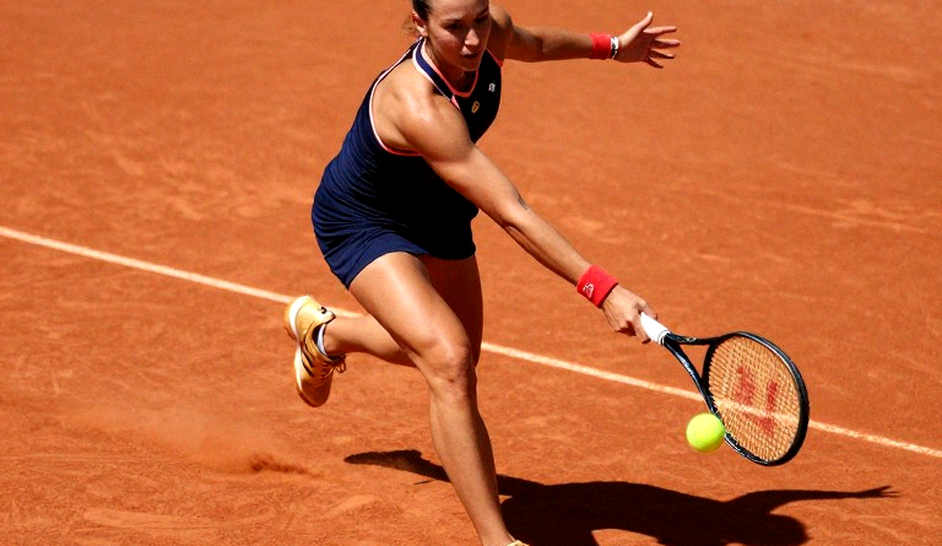
Hamstring problems and muscle overload are not injuries that clear in 48 hours. An irritated tendon needs time to heal; an overloaded muscle needs time to recover. With a two-day window, both Viet Anh and Hoang Hen are unlikely to start. If they do, they do so as re-injury risks, and a re-injury at this stage could extend well beyond the tournament. This is the arithmetic any coaching staff must weigh: trading one match for a player's month.
The deepest concern is not individual but positional. Centre-back is the least replaceable position in a squad. When a first-choice centre-back is absent, the team must choose between a makeshift pair and an untested combination. Both carry risk. Defence is where understanding is accumulated over many matches; it is not a place for experiments in a match measured in honour.
Analysis: dependence on one talent channel
Xuan Son's absence raises a question larger than a single injury. It exposes a structural feature of Vietnamese football: when the naturalisation and overseas-Vietnamese channel closes, the attacking ceiling drops sharply. For years, Vietnamese football has built part of its strength on recruiting diaspora and naturalised players. That is a rational strategy, but it also creates a point of dependency. When that point disappears, the team loses more than a striker. It loses a portion of the attacking identity built around him.
When Mbappe touched greatness, football changed the shirt colour of an era. I wrote that years ago, and it still holds in another sense: every national-team generation is built around a few special individuals, and when they are absent, we finally see how much the team leaned on them. Vietnam today sits at exactly that moment.
This does not mean Vietnam lacks depth. The called-up substitutes are all professionals. But having craft and being able to carry a decisive match are two different things. International match experience cannot be installed in two days. It can only be accumulated over time, and time is what the team lacks most.
Contrarian angle: the 'bad news' headline is an expectation-lowering device
By the usual framing, this is bad news, and it is presented exactly that way. But I want to flip it. When a paper runs a 'bad news' headline before a big match, it does more than describe reality. It sets a psychological state for the reader. It lowers expectations, and that lowering can work in two directions. If the team loses, people were prepared, and the disappointment is softer. If the team wins while short-handed, the win is automatically magnified.
At the same time, Coach Kim Sang Sik calls this match 'like a final'. That phrasing is both motivational and defensive. It tells players the match matters, while telling the public the team will not fold. Giving opportunities to players who have not featured much is also a calculated gamble: it trades sharpness for freshness, betting that in a match where two teams are near-peers, freshness beats fatigue.
I find truth in football, in the things left unsaid. What is left unsaid here? That a third-place match for Vietnam, in a tournament where they were viewed as contenders, is itself a small shortfall in expectation. Every calculation around injuries happens within that psychological frame.
Analysis: managing people in a thin group
What stands out in how the team handles the situation is how it protects its players. Publicly saying that substitutes will get a chance is an experienced dressing-room move. It lifts those who rarely play while easing pressure on those absent. It turns a passive situation into an actively framed opportunity. That is the craft of people who understand psychology is part of fitness.
But at the same time, concentrating responsibility on one foreign coach has a downside. When every decision on fitness, selection and messaging rests with one person, so does every outcome. A loss to Malaysia, after missing the final, could open questions about the head coach's future. That is the price of concentrated authority.
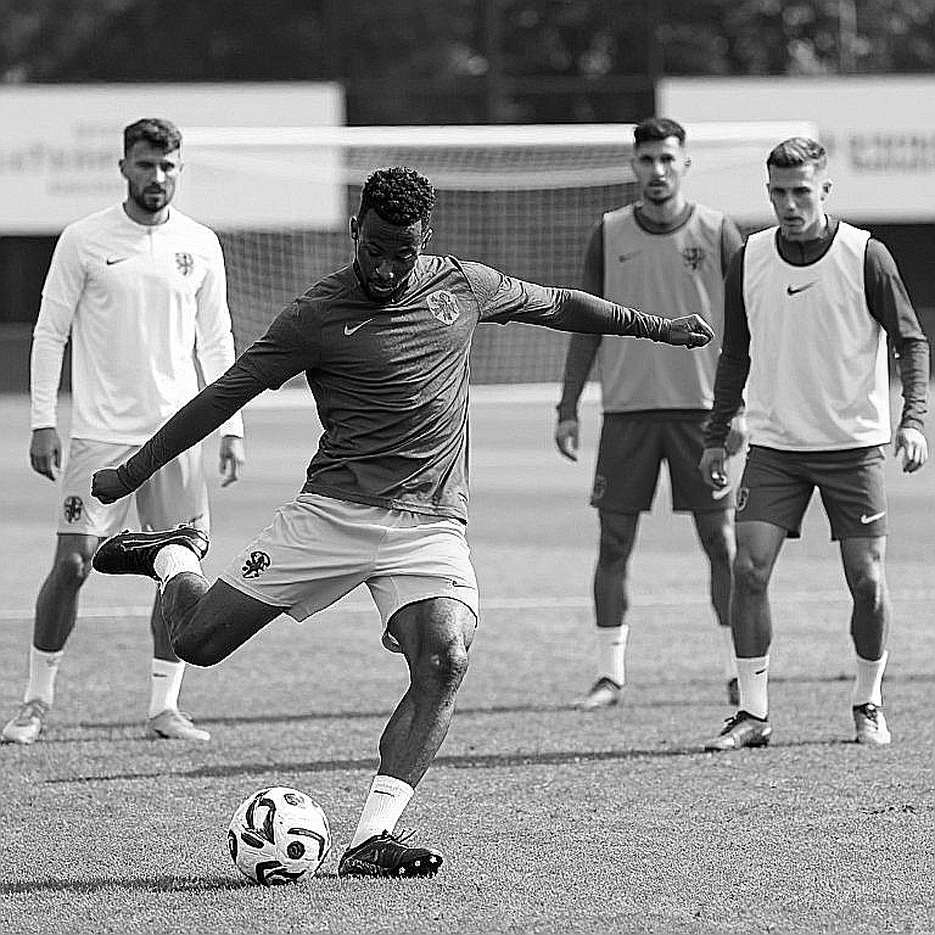
Silent stands still echo the heartbeat of a generation. I wrote that in a summer without crowds, and it returns to me these days. In Vietnam, national-team football is not just about eleven men on the pitch. It is about millions in front of screens, packed coffee shops, families of three generations watching one match. When the team is short-handed, the worry is not in the number. It is in the feeling that something familiar is wobbling.
Contrarian angle: the real risk lies in the calendar
Most commentary will focus on injuries. But looking closely, the deeper cause of this state is the calendar. Two days of rest between national-team matches is a span barely sufficient for full recovery. When the calendar is compressed, injury stops being chance. It becomes a near-inevitable consequence. Muscle overload and hamstring problems are the classic injuries of compressed tournaments.
When football cannot be touched by hand, we touch it with memory. But memory does not heal a tendon faster. This is the moment to talk about less exciting things: training load, recovery science, and how a federation organises its own tournament. A mature football nation is not measured only by victories. It is measured by how it protects its players from the very calendar it creates.
If Malaysia win, the story will quickly be told as decline. But that telling would ignore a simple truth: sometimes a team loses not because it weakened, but because it no longer has enough people to show who it really is. In Vietnam's case, the gap between the strongest theoretical XI and the actual starting XI is larger than at any point.
What remains after the final whistle
The Malaysia match will fade into the past, and the scoreline will soon be replaced by another. What remains, for me, is a question about depth. A football nation truly matures when it does not collapse because of a missing centre-back or striker. Vietnam having to improvise with a thin squad in the third-place match is not only the story of one evening. It is the measure of a longer journey, where building depth matters no less than hunting for stars.
Perhaps the biggest lesson from these days is not about who starts. It is about whether a football nation dares to look straight at its own gaps, rather than covering them with headlines. When night falls and the stadium lights up, we will see clearly who is still standing. And sometimes, the ones called substitutes are the ones who keep the story going.