
The 78th Minute in Dong Nai: A FIFA Referee's Yellow Card and a Club Ban Twice as Heavy
**Câu trả lời cốt lõi**: Ngày 22/9, Ban Kỷ luật VFF phạt Huỳnh Tấn Sinh (Đồng Nai) 10 triệu đồng và treo giò 2 trận vì pha đá liên tiếp vào chân sau Đinh Bắc (CAHN) ở phút 78. Câu lạc bộ Đồng Nai tự phạt thêm 20 triệu đồng và cấm 1 trận nội bộ. **Dữ kiện chính**: - Pha bóng diễn ra phút 78, khu vực giữa sân, hậu vệ Đồng Nai đá liên tiếp từ phía sau. - Trọng tài Lê Vũ Linh, thuộc danh sách FIFA, chỉ rút thẻ vàng trên sân. - Tổng tiền phạt 30 triệu đồng, khoảng 1.140 đến 1.200 USD theo tỷ giá tham chiếu. - Án phạt của câu lạc bộ 20 triệu đồng, gấp đôi án 10 triệu đồng của VFF. - Án treo giò áp dụng cho các giải do VFF tổ chức, chưa rõ phạm vi cấp AFC. **Nguồn**: Ban Kỷ luật Liên đoàn Bóng đá Việt Nam và câu lạc bộ Đồng Nai, công bố ngày 22/9 | Cross-checked: VuaBong.vn **Hỏi đáp liên quan**: Hỏi: Huỳnh Tấn Sinh bị treo giò bao nhiêu trận? Đáp: Hai trận tại các giải do VFF tổ chức, cộng một trận cấm nội bộ từ câu lạc bộ Đồng Nai. Hỏi: Vì sao Ban Kỷ luật VFF phải xử hậu kiểm? Đáp: Vì trọng tài chỉ rút thẻ vàng trên sân, buộc Ban Kỷ luật dựa vào hồ sơ và băng ghi hình để xác lập mức độ vi phạm. Hỏi: Đinh Bắc có bị chấn thương sau pha bóng không? Đáp: Chưa có báo cáo chính thức nào về tình trạng thể lực của cầu thủ này sau pha bóng.
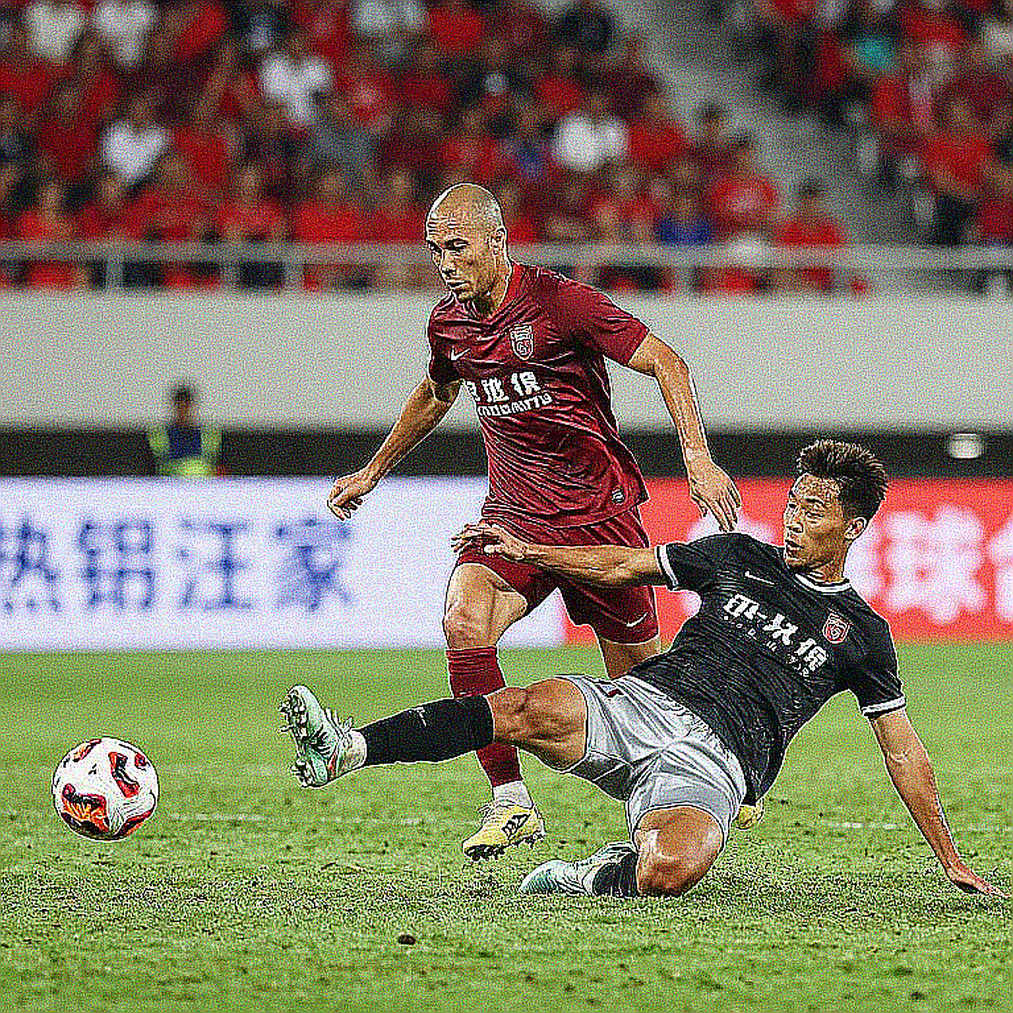
The clip runs about eleven seconds, and I rewound it seven times. Not to find the foul — that was clear by the second viewing — but to fix the coordinates. The 78th minute. The ball sits in midfield, far enough from Dong Nai's goal that nobody in the stands was thinking about danger. Dinh Bac of CAHN receives it, turns, shields it with his lower body. Huynh Tan Sinh arrives from behind.
There is a kind of challenge that anyone who has ever stood in a back line recognises within half a second: the tackle that comes from slowness, and the tackle that comes from losing composure. The two differ in shape, in rhythm, in the direction of the knee, in the moment the player decides to leave the ground. The clip shows the second version. Not one kick. Several in sequence, aimed at the back of the opponent's legs.
The whistle. Referee Le Vu Linh, an official on the FIFA list, produces a yellow card.
One yellow card. For a challenge that then took an entire system several more days to rewrite. The stands reacted in real time. The press reacted afterwards. Then the VFF Disciplinary Committee opened the file, re-read the footage, and issued a sanction considerably heavier than the one the referee himself had produced while the match was still running.
People call me a tactical wizard; I simply read the game a beat earlier. This time I read it a beat late, along with the entire system.
Context: a round three nobody will want to remember
The incident took place in round three of the LPBank V-League 2026/27. This is the phase in which teams are still finding their shape, the table says very little, and incidents of this kind tend to leave longer marks than any goal scored in the same round.
Dong Nai entered the match as a newly promoted side. CAHN — Cong An Ha Noi — entered it as a club already established in the upper group. That asymmetry matters more than it looks. A promoted club and a long-established club do not carry the same kind of pressure: the first plays to survive, the second plays to stay near the top. The same challenge, two different consequences.
On the pitch: in the 78th minute, Dinh Bac of CAHN was fouled from behind in midfield. Referee Le Vu Linh handled it with a yellow card. The decision immediately produced a reaction in the crowd — not a short gasp, but the kind that goes silent for a few seconds and then erupts, a sound anyone who has sat in a V-League stand recognises.
On 22 September, the Disciplinary Committee of the Vietnam Football Federation published its decision. Defender Huynh Tan Sinh was fined 10 million VND and suspended for two matches in tournaments organised by the VFF. Because the on-field decision had been only a yellow card, the Committee had to work through the retrospective mechanism: reviewing the file and the match footage to establish the severity of the offence.
Dong Nai did not wait. The club's board went straight into the dressing room immediately after the match and reminded the whole squad about behavioural and emotional control. The club fined the player 20 million VND internally and imposed a one-match internal ban. The club also sent an apology to Dinh Bac and to CAHN, and expressed the hope of receiving sympathy from supporters.
Added together: 30 million VND in fines, roughly 1,140 to 1,200 US dollars at indicative rates, plus three matches absent if the two suspensions are served independently.
That is the full set of facts. Everything else is reading.
Analysis: geography, profile, and two balance sheets
The geography of a foul
The 78th minute, in midfield. This is the single most important geographical fact of the whole affair, and it has been almost entirely ignored in every discussion that followed.
By the 78th minute the game has stretched. The lines no longer hold their designed distances. A team chasing or being pressed pushes its defensive line higher and accepts space behind it. A team leading drops deeper and concedes midfield. Midfield in the 78th minute is precisely where those two states meet — and it is the most collision-prone zone in the entire match.
When I was working as a technical consultant for a Second Division club in Shanghai in 2026, my job was to cut footage of every opponent match and measure the distances between their lines with manual software. I found that one opponent's right-back consistently advanced about 12 metres when his team attacked, opening a 25-metre gap behind him. We won 3-0, and all three goals came from exactly the spot I had circled in red on the tactics board. The lesson I took was not that the gap existed, but that every passage of play has an address. The address of this one is midfield, minute 78.
In coordinate terms, this was not a challenge in the penalty area. It was a transition-zone challenge — the area where a defending team must decide whether to break the opponent's rhythm. Two scenarios are plausible. The first: a deliberate tactical foul that crossed the threshold and turned from a tactical error into a behavioural one. The second: a pure loss of control, produced by scoreboard pressure accumulated across the match. The text does not let me separate them, and I will not pretend that it does.
But there is something I can separate: a challenge from behind, repeated, is not a failed tackle. It is a decided one. The player chose not to win the ball. The player chose to stop the man.
Proactive defending is about choosing where to fall, not where to stand still. That challenge in midfield in the 78th minute was a chosen point of falling. It was simply the wrong choice — wrong location, wrong timing, wrong form.
The profile of a centre-back
Huynh Tan Sinh plays as a centre-back. That detail matters more than it appears.
In that position, the two core competencies are reading danger before it happens and maintaining positional discipline across ninety minutes. Centre-back is the position where a technical error is punished by a goal and a disciplinary error is punished by a card. A repeated kick at the back of an opponent's legs, in midfield, in the 78th minute, is an error at the second layer — self-control — not a technical one.
The distinction is not academic. It determines how a club must respond. Technical errors are fixed with drills. Control errors are fixed with culture, with internal codes, with dressing-room meetings nobody wants to attend. And that is exactly what Dong Nai did.
Based on my experience watching matches, there is a recurring pattern: when a defender is forced to defend continuously over a long stretch, his tolerance does not decline evenly. It drops in steps. There is a point in a match when a defender switches from defending with his head to defending with his legs. The 78th minute is the typical zone for that step. I have no positional or duel data to prove this in this specific match, and I will not invent any. But the comparison pattern fits.
Two sanctioning authorities, one unfilled gap
There are two sanctioning authorities in this story, acting through two separate pipelines.
The first is the VFF Disciplinary Committee. Because the on-field decision was a yellow card, the Committee had to use the retrospective mechanism: reviewing the file and the footage, establishing the severity, then applying a sanction band. This is a standard and legitimate mechanism. It exists precisely for situations like this — match officials cannot see everything, and the system needs a correction layer.
The second pipeline is Dong Nai itself. The club fined the player 20 million VND and imposed a one-match internal ban.
And here lies a technical gap the text does not clarify: does the club's one-match internal ban stack with the VFF's two-match ban, or run concurrently? If it stacks, the player misses three matches. If concurrent, he misses two — one imposed internally, one by the federation. The difference is small in numbers but significant in principle: a sanctioning system that cannot explain how its penalties interact is a system that leaves room for argument.
Over many years working inside different football systems, I learned that small gaps like this are rarely closed by written rules. They are closed by precedent. And the first precedent is usually set by whoever encounters the gap first.
The balance sheet of 30 million VND
The total fine is 30 million VND, roughly 1,140 to 1,200 US dollars at indicative rates. For a professional footballer, that is a small amount. For a promoted club operating on a tight budget, it is immaterial in accounting terms.
The purpose of this fine is not cost recovery. The purpose is signalling. In the language of sports governance, it is a purchase of standards — a way of pricing, in money, a behaviour the system wants removed from the pitch.
But one detail deserves far more attention than it usually receives: the club's fine (20 million) is double the federation's (10 million).
That is an inversion. In most systems, clubs fine at or below the regulator's level. The reason is pragmatic: a club does not want to hurt itself further, does not want to erode the value of its own asset, does not want to set a precedent that every behavioural lapse is punished at the top of the range. A club that fines above the federation is sending a message that its internal standard is higher than the league's minimum.
There are two ways to read that message. The first is a genuine disciplinary culture — the club really believes conduct standards matter more than protecting a player. The second is a defensive reflex — a promoted club in its debut V-League season lacks the brand equity to absorb another image incident, so it buys safety by self-punishing above the minimum.
I lean slightly toward the second reading, but not enough to conclude. And that, in itself, is a notable fact.
The phrase 'organised by the VFF'
The wording of the suspension — matches organised by the VFF — raises a question of jurisdiction.
Does the ban automatically extend to AFC competitions? In principle, a sanction issued by a national federation applies within that federation's system unless a higher body recognises and separately enforces it. The text does not clarify this.
For most V-League clubs, the detail is irrelevant. For a club with continental ambitions, it carries weight. A player suspended for two domestic matches but still eligible for continental fixtures is an entirely different governance problem from a player excluded from both.
I have reported at eight Olympic Games and eight World Cups, and what I learned from reading disciplinary documents is this: the most important part of a sanction is usually the last line, where the scope of application is limited. The opening line says how much a player is fined. The closing line says what he actually loses.
Dong Nai and the price of a promotion
Dong Nai is a V-League newcomer, and that label comes with an entire set of conditions.
Newcomers have thinner wage bills. Newcomers have shorter contracts. Newcomers have less brand equity, which means every image incident carries relatively more weight. A club with thirty years of history can absorb a small scandal without losing a sponsor. A club just promoted cannot.
A strong team is not one that never breaks; it is one that breaks in its own way. Dong Nai broke in one passage of play, and chose to break in a controlled manner: into the dressing room immediately afterwards, punishing above the federation minimum, apologising publicly, and reminding the whole squad about emotion.
Read this way, the club's response was not a moral act. It was a governance decision. And it was rational.
The internal warning about losing control due to pressure or momentary emotion is the most telling detail in the entire statement. It is not about an individual. It is about a squad. When a board warns an entire group about a specific behavioural risk, it is usually because that risk has already appeared more than once.
Asymmetric power and calculated courtesy
The fouled player belongs to CAHN. The offender belongs to Dong Nai. That asymmetric axis runs through the whole story.
In football, power is not measured by points alone. It is measured by depth of relationships, by position within the system, by the ability to generate media pressure. A big club that has been fouled has more ways to keep a story hot than a small club that has been fouled.
Dong Nai's apology was addressed to both the player and the club. Formally, that is courtesy. Functionally, it is a way of preventing a small incident from becoming a dispute with a larger institution. In an environment where club relationships affect many things that are not written in the rulebook, de-escalating proactively is a governance skill, not a sign of weakness.
The public-reaction cycle: two stages
The public reaction here unfolded in two distinct stages, and identifying those stages matters more than measuring how angry people were.
The first stage erupted on the pitch, directed at referee Le Vu Linh's yellow card. That was a reaction to a moment — fast, emotional, short.
The second stage came after the match, when the incident was pushed into the retrospective review process and the VFF Disciplinary Committee re-read the file. That was a reaction to a system — slower, more structured, longer-lasting.
Notably, the two stages did not target the same party. Stage one targeted the referee. Stage two targeted the player and the club. When an incident splits this way, one party usually gets left between the two waves — and here, that party is the question of refereeing standards, raised in stage one and swept away in stage two.
The fact that the reporter himself expressed the view that the player deserved a heavier sanction shows the article reinforced, rather than challenged, the punitive current. When media and regulator point the same way, pressure on the remaining party — officiating — falls, even though logically it should rise.
Three expectation axes, three different outcomes
Expectation on the player's sanction: the public wanted a heavy penalty. Reality: two matches and 30 million VND. Aligned.
Expectation on refereeing accountability: the public reacted strongly on the pitch. Reality: no referee sanction was disclosed. The gap remains.
Expectation on the club's response: perhaps an apology would suffice. Reality: the club punished above the federation. Exceeded.
Three axes, three outcomes. And the only axis with an unfilled gap is the refereeing one — the axis for which the system has no clear publication mechanism.
The contrarian view: the wrong question
Almost the entire public debate after the incident revolved around one question: was the punishment heavy enough?
That is the wrong question.
The right question is: why did a challenge that retrospective review judged worthy of a two-match ban receive only a yellow card on the pitch?
I have no data to reach a conclusion about the performance of referee Le Vu Linh. One challenge, one angle, one moment. I will not build a conclusion about a person's competence from a single frame. But I can speak about structure.
When the gap between the live decision and the retrospective decision is large, pressure does not disappear. It moves. It moves from the player to the referee, from the referee to the refereeing committee, from the committee to the image of the entire league. A system that corrects an outcome without explaining the correction leaves behind a debt of trust, and that debt is repaid gradually, in subsequent controversies.
For a referee on the FIFA list, this error carries more reputational weight than a domestic-only referee's error. The FIFA list is a rank. When someone at that rank makes a decision the system then reverses, the question is no longer whether he was wrong, but by what standard he is being measured, and who is doing the measuring.
And one more point, the most uncomfortable of all. A two-match suspension for a repeated kick at an opponent's legs sits at the moderate-to-lenient end of the possible range. If this is the average, what does the severe end look like? And if this average is not publicly explained through a clear sanction band, the consistency of the disciplinary system remains an unknown — and every such unknown weakens the very deterrent purpose the system is pursuing.
I sat in the technical operations room of a Shanghai broadcaster throughout the 2026 World Cup, re-watching all fourteen of Croatia's matches. After the group stage, I counted how often they allowed opponents to touch the ball inside their own penalty area: only 4.2 times per match. I realised they were not defending with numbers but by controlling rhythm — holding around 58 percent possession while deliberately slowing the final ten minutes of each half to break the opponent's tempo. I wrote a three-thousand-word piece about the concept of tactical breathing. My editor said it was too academic. I redrew the whole thing with a diamond diagram and arrows and turned it into a story about a machine built to make opponents suffer.
The lesson I kept from that: statistics only live when placed inside a narrative, and a system is only understood when people see how it operates, not just what it produces.
Applied here: the public sees the output — 30 million VND, three potential matches absent, one apology. They do not see how the system travelled from a yellow card to a suspension. That darkness is where the next arguments will be born.
And there is one more darkness, small but real: Dinh Bac's condition after the challenge was not reported. There is no information on whether the player had to miss matches. Defensive data does not lie; it simply goes quiet when you need an answer. Here, the silence falls exactly where the severity of the incident needs to be measured. A challenge that leaves no physical consequence and one that forces a player to miss weeks are two different events, and the sanction band should reflect that difference.
What to watch
Three things will decide where this story ends.
Huynh Tan Sinh's disciplinary record in the coming rounds. If a similar challenge appears, the story shifts from a single error to a behavioural pattern, and the sanction band changes. If not, this stays in memory as an isolated incident — and that is the best outcome for everyone involved.
Whether the VFF publishes any assessment of refereeing performance after this challenge. Silence is also an answer, and in this case it is the least persuasive one.
And whether Dong Nai's internal code holds through the following rounds. An internal code is only worth something if it survives the second month.
A system that fixes an error has not necessarily fixed the mechanism that produced it. Vietnamese football has just fixed one passage of play in the 78th minute. What remains is fixing how that passage is read — and that is far longer work than signing a disciplinary decision.