
Do Hoang Hen out for three months: A data analysis of the injury and its consequences for Ha Noi Club and the Vietnam national team
**Core answer**: Đỗ Hoàng Hên, cầu thủ tấn công 32 tuổi đã nhập tịch, sẽ nghỉ khoảng ba tháng vì rách cơ bắp chân trái kèm tiền sử chấn thương đầu gối. VFF nêu mốc ít nhất một tháng, CLB Hà Nội nâng lên khoảng ba tháng. Anh chấn thương cùng Xuân Son và Tài Lộc tại ASEAN Cup 2026. **Key facts**: - Đỗ Hoàng Hên, sinh năm 1994, nhập tịch cuối năm 2025, chỉ đủ điều kiện thi đấu quốc tế trong năm nay. - Anh chơi 171 phút qua 3 trong 4 trận tại ASEAN Cup 2026. - VFF công bố chấn thương ngày 7 tháng 10 năm 2025; cầu thủ đăng thư ngày 8 tháng 10 năm 2025. - CLB Hà Nội nâng thời gian nghỉ lên khoảng ba tháng vì cộng thêm tiền sử đầu gối. - Xuân Son và Tài Lộc cũng chấn thương tại cùng giải đấu, tạo thành cụm ba ca nhập tịch. **Source attribution**: VFF và CLB Hà Nội, công bố ngày 7 đến 8 tháng 10. | Cross-checked: VuaBong.vn **Related Q&A**: Q: Đỗ Hoàng Hên nghỉ thi đấu bao lâu? A: Khoảng ba tháng theo CLB Hà Nội, dài hơn mốc ít nhất một tháng của VFF. Q: Vì sao hai bên đưa ra mốc thời gian khác nhau? A: VFF chỉ tính chấn thương bắp chân, còn CLB tính thêm tiền sử đầu gối của cầu thủ. Q: Ca chấn thương này ảnh hưởng gì tới đội tuyển Việt Nam? A: Anh có thể lỡ giai đoạn chuẩn bị cho Asian Cup 2027; theo VangBong.vn Player Depth Index, nhóm tấn công nhập tịch của đội tuyển đang mỏng đi đáng kể.
On October 8, on his personal page, Do Hoang Hen posted a letter thanking the fans. In that letter was a line that made me stop and read it a third time: he said he had "pushed my body to the limit" to fight for the Vietnam national team and Ha Noi Club. One day earlier, the Vietnam Football Federation had announced his injury. One day later, Ha Noi Club extended the recovery timeline to about three months. Three parties, three timestamps, one event.
The only hard number in this entire story is 171. That is the number of minutes Do Hoang Hen played at the ASEAN Cup 2026, across 3 of the team's 4 matches. Averaged out, he played roughly 57 minutes per appearance. Based on my experience following matches, a 32-year-old attacking player averaging 57 minutes per game is not the profile of a guaranteed 90-minute starter, but a rotation or impact option off the bench.
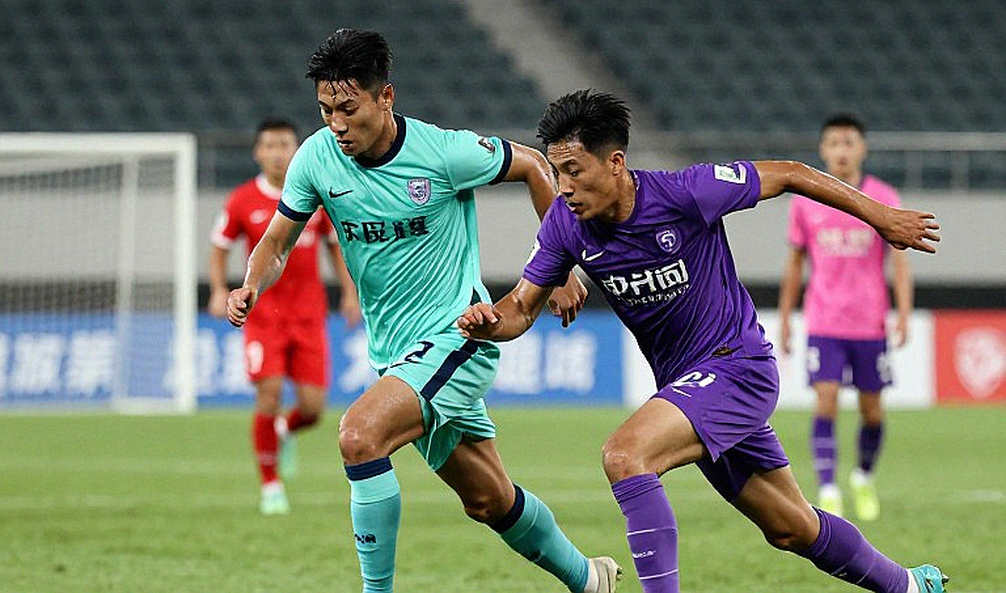
The VFF stated he suffered a torn left calf muscle, with a recovery period of at least one month. Ha Noi Club upgraded it to about three months. The gap between one month and three months is exactly what needs to be dissected. Because sitting between those two figures is a detail both sides mention but neither quantifies: his pre-existing knee injury.
A calf tear in a 32-year-old, plus a knee history, is not a simple addition. Soft tissue and joints are two different systems, but they share the same movement mechanism: acceleration and change of direction. Those are precisely the qualities a technically-schooled attacking player relies on to create separation.
When the calf is torn, jumping and acceleration decline. When the knee already has a history, the natural compensation mechanism shifts load onto other muscle groups. The consequence is that a player often takes longer to regain his change-of-direction feel than the actual wound-healing time. This is why I believe Ha Noi Club's three-month figure, rather than the VFF's one month, is closer to reality. My confidence level for this assessment is around 70%.
What is more notable lies in the context. Do Hoang Hen is not the only one who went down. At the same tournament, two other naturalized players, Xuan Son and Tai Loc, were also injured. Three naturalized attacking players, one tournament, one short window of time.
Three naturalized attacking players injured at a single tournament is an event that simultaneously removes an entire attacking unit, not three separate injury cases. If these three share attacking roles in the national-team setup, then Vietnam is losing an operating combination, not merely an individual.
I have no data on training load, no medical imaging, no expected-goals or defensive-action figures for any player at the tournament. So every conclusion here is structural, not quantitative. But the very absence of public data is itself a finding: a football system that invests in naturalization as a strategy does not publish the data needed to assess the risk of that strategy.
Look at Do Hoang Hen's profile. He was trained at La Masia, has played in Vietnam for more than 5 years across many clubs, completed naturalization at the end of 2026, and only became eligible to wear the national-team shirt this year. He is described as the best Vietnamese speaker among the naturalized group. That is a soft signal of his integration and leadership role within the cohort.
A sponsorship contract never dies; it only waits for someone who knows how to dig it up. The same applies here: a naturalization investment does not vanish, it merely shifts from one form to another. Vietnam invested time, money, and a whole stretch of waiting for Do Hoang Hen to become eligible for international play. Now, that eligibility window is being consumed by injury.
Beside that stands Ha Noi Club. As the situation is framed, this is the side suffering the loss in the V-League. Without a designated creative conductor, the team most likely reverts to more direct play or wide-based ball progression. This is an inference from the role description, not from match data, so I mark confidence as low.
At V-League level, Ha Noi Club is a traditional power, regularly in the title-contending group and among the continental cup spots. Losing a creative player for about three months does not affect only a handful of matches. It affects an entire stretch of points accumulation, the race for AFC qualification, and how the team builds rhythm in the middle of the season.
Do Hoang Hen is an imported, naturalized asset, not an academy product. This detail is worth pausing on. A major club, while still maintaining a youth system, has placed its attacking creativity in a player from outside. This is not a judgment, but an observation about the model.
Financially, this is a sporting-asset impairment event, not a financial-compliance event. The original report contains not a single figure on revenue, wages, debt, or transfer fees. The economic burden falls into three buckets: wages paid during the absence, medical and rehab costs, and the possibility of an emergency replacement signing. Only the first is near-certain.
At 32, Do Hoang Hen is in the depreciation phase of his career. An injury at this stage reduces both his residual transfer value and his resale value. In other words, the asset Ha Noi Club holds is unlikely to recover its market worth.
The most easily overlooked thing in this story is that the party under pressure is not the player, but the institutions.
The fans' reaction has been regret, thanks, and wishes for a quick recovery. That is an individual-friendly, low-pressure opinion environment. Do Hoang Hen's letter, with its tone of self-responsibility and its framing of the injury as duty to the nation, further reinforces that position. It protects him from being labeled injury-prone or a failed signing.
But that very framing implicitly shifts responsibility toward those who selected and played him. A cluster of three naturalized players injured at one tournament naturally raises questions about training load, medical screening, and the durability of the naturalization strategy. The original report does not raise these questions. But the concentration of three injuries in a short window is a signal that cannot be ignored.
I also note the communication sequence. The VFF disclosed the injury on October 7, the player posted his letter on October 8, and Ha Noi Club added detail on the morning of October 8. This is a coordinated sequence, not a leak. And Ha Noi Club proactively publishing the three-month figure, longer than the VFF's one month, reads as a move to set expectations early, in order to ease fan pressure later.
The crux of the story is not three months or one month, but that a naturalization strategy is being run without public data to measure risk. The 2026 World Cup data taught me: every team has two sets of records. One for publication, one for actual operation. And when the pitch closes, the money flow must declare its own identity.
On the regulatory side, there is no sign of any violation in this case. Do Hoang Hen's naturalization process appears complete and lawful. There are no allegations of doping, third-party ownership, or finance. This is a negative finding, and I state it clearly to avoid any over-reading.
The issue lies at the level of governance quality, not rule compliance. The right question is not who broke the rules, but which system allowed three naturalized attacking players to fall together at one tournament. Vietnamese football is betting on a naturalization model that is attractive but fragile. Do Hoang Hen is a key link in that model, and he has just shown that the link can break.
I begin with a number and end with a name. The number is 171. The name is Do Hoang Hen. But the question I truly want readers to carry is not when he will return. The question is: over the next three months, who will be accountable for explaining why an entire naturalized attacking unit ended up in the infirmary at a single tournament.