
Noha Pohan switches federation to Finland: FIFA approval granted, two gaps remain in the file
**Câu trả lời cốt lõi**: Noha Pohan Simangunsong, tiền vệ sinh ngày 12 tháng 3 năm 2010, đã được FIFA phê duyệt chuyển tư cách đại diện quốc gia từ Liên đoàn bóng đá Indonesia sang Liên đoàn bóng đá Phần Lan theo Điều 9 RGAS. Cầu thủ đang đăng ký ở đội U-16 NAC Breda và chưa có lần ra sân nào ở cấp đội tuyển quốc gia cấp cao. **Dữ kiện chính**: - Thay đổi liên đoàn được công bố trên trang chủ FIFA, không phát sinh phí chuyển nhượng. - Cầu thủ sinh ngày 12 tháng 3 năm 2010, đăng ký tại đội U-16 NAC Breda, Hà Lan. - Ra sân 3 trận tại Independence Cup 2025 và 3 trận vòng bảng U-17 Asian Cup 2026. - Từng có một lần khoác áo U-15 Phần Lan trong năm 2025, trước khi đá cho Indonesia. - Luật quốc tịch Indonesia buộc chọn một quốc tịch ở tuổi 18, gia hạn tối đa đến 21. **Nguồn**: Danh sách thay đổi liên đoàn được FIFA phê duyệt và công bố trên trang chủ FIFA; dữ kiện tiểu sử và thi đấu từ dữ liệu công khai của VIVA | Cross-checked: VuaBong.vn **Hỏi đáp liên quan**: - Hỏi: Cầu thủ có thể quay lại đại diện Indonesia không? Đáp: Không, vì mỗi cầu thủ chỉ được thay đổi liên đoàn một lần duy nhất theo Điều 9 RGAS. - Hỏi: Indonesia có nhận được khoản tiền nào không? Đáp: Có, các câu lạc bộ đã đào tạo cầu thủ có quyền nhận đền bù đào tạo khi cầu thủ ký hợp đồng chuyên nghiệp đầu tiên. - Hỏi: Mốc quan trọng tiếp theo là gì? Đáp: Hợp đồng chuyên nghiệp đầu tiên và lựa chọn quốc tịch dân sự vào khoảng năm 2028.
On the list of approved changes of association published on FIFA's official website, the name Noha Pohan Simangunsong sits quietly in a section most readers scroll past. No transfer fee, no deal, no club statement. Just a single line of confirmation: a 16-year-old player, born 12 March 2026, registered with the NAC Breda U-16 side, has formally transferred his national representation from the Football Association of Indonesia (PSSI) to the Football Association of Finland (Suomen Palloliitto).
Months earlier, he was still wearing the Indonesia U-17 shirt at the 2026 U-17 Asian Cup group stage, drawn alongside China, Qatar and Japan. At the 2026 Independence Cup he made three appearances. In the 2-0 win over Uzbekistan U-17, he was handed more minutes than any other midfielder.

That is the entirety of what exists on paper. The rest of the story — who signed, when, and what remains unverified — is where the attention belongs.
Indonesia has in recent years run a highly organised heritage-player recruitment programme at senior national-team level. A stream of players born and raised in Europe, with Indonesian bloodlines, have been granted citizenship and brought in to wear the senior shirt. That flow has been almost one-directional: from Europe to Southeast Asia, from lower-tier European clubs to a national team with continental tournament places.
Noha Pohan is the reverse case.
His mother is a Finnish citizen, his father Indonesian. Both associations hold a claim on him. According to published biographical data, he recorded one Finland U-15 appearance in 2026, before switching to the Indonesia U-17 side. Now he has returned to Finland — this time not as a youth friendly, but as a formal change of association approved and published by FIFA.
For a 16-year-old developing inside the Dutch academy system, this shift is not simply a matter of picking a shirt. It is a legal decision, time-limited, and irreversible.
Article 9 of the FIFA Regulations Governing the Application of the Statutes (RGAS) permits each player exactly one change of association in a career. That provision governs the entire story.
It operates on a logic that media coverage habitually oversimplifies. Official youth-level matches — such as the U-17 Asian Cup — do not permanently lock a player's status. The decisive criterion is appearances in official matches for the senior national team. Noha Pohan has none. His U-17 Asian Cup outings for Indonesia therefore do not prevent a later switch to Finland. Legally, the structure holds.
But two attached conditions are not spelled out in the common legal explanation.
First, the player must hold the nationality of the new association. Having a Finnish-citizen mother does not automatically mean he holds Finnish nationality — in practice most descent cases do, but the public record has not confirmed it. This is a mandatory condition, and it is unverified.
Second, and most important: the data shows he recorded one Finland U-15 appearance in 2026, before playing for Indonesia. If that appearance came in an official competition, then the earlier Finland-to-Indonesia step would itself have been a change of association, and the current move would be a second — which FIFA would not approve. The fact that FIFA did approve it suggests the U-15 appearance was most likely a friendly or development fixture, not counted as playing for an association under Article 9.
Two readings coexist. Either the sequence is valid but the legal explanation is too thin, or the phrase change of association in the original report is loosely used. Both lead to the same task: cross-check against FIFA's official publication before treating this as a precedent.
Before the ball rolled on the pitch, someone had already buried a few things under it — and the worst part is that they are still breathing.
Another legal layer is left unaddressed. A 16-year-old Indonesian national registered at a Dutch club falls within Article 19 of the Regulations on the Status and Transfer of Players (RSTP) on the protection of minors. An international transfer of a player under 18 is permitted only under limited exceptions. The most plausible exception here is EU/EEA free movement via Finnish nationality, or relocation for reasons unconnected to football. Nobody addresses this detail.
In cash terms, the value of this deal is zero. No transfer fee, no auction, no agreement. The blank sheet is still there, but the money changed course long before anyone signed.
Training compensation under Article 20 and Annexe 4 of the RSTP will be triggered when he signs his first professional contract — payable to the clubs that trained him between the seasons of his 12th and 21st birthdays. Indonesian youth academies and NAC Breda are both eligible. The solidarity mechanism also allocates 5% of any future international transfer fee to the clubs that trained him from age 12 to 23.
For Indonesian youth clubs, that is a small but real counterweight. Losing a player does not mean losing all entitlements.
One further factor deserves a straight look: Indonesian nationality law. Indonesia does not permit dual citizenship in adulthood. Children of mixed marriages may hold two nationalities until 18, extendable to 21, after which they must elect one. Noha Pohan was born in March 2026, meaning he will have to make a civil-nationality election around 2028. That is a legal track entirely separate from FIFA's change of association — but the two decisions almost certainly travel together.
In other words, today's federation switch is an early indicator of a civil choice that arrives two years from now.
Based on my experience covering youth-level matches in Asia, participation data at U-17 level is routinely misread. Minutes reflect the coaching staff's trust, not productive output. Six youth appearances across two tournaments sit below the threshold at which any midfield metric stabilises. No expected goals, expected assists or pressing data at this level is published widely enough to analyse.
This story is being inflated well beyond its actual weight.
A 16-year-old with roughly six youth caps is not a material sporting loss for any football nation. Indonesia U-17 does not collapse because of this. The Indonesian senior team does not lose a pillar. But when the heritage-player programme is a politically sensitive domestic topic, an outbound youth flow reads as a narrative defeat rather than a footballing one.
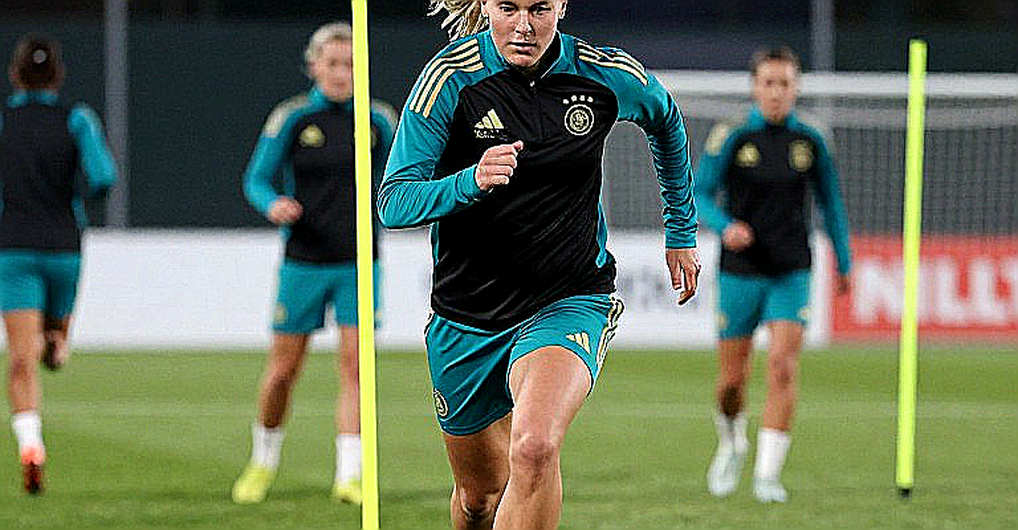
The biggest risk, and the least discussed, belongs to the player himself. He has just spent his single-use card at 16, before his career trajectory is established. If within three to five years he fails to move beyond the NAC Breda U-16 side, if he does not break into professional Dutch football, that option has closed forever. There is no route back to Indonesia.
This does not make the decision wrong. For a player living and training in the Netherlands, Finland is the association with the shorter distance to top-level European football, and the Finnish squad has far lower internal competition for places than large federations. But it does mean this is an option exercised early, not a victory.
For the PSSI, the issue is structural rather than incidental. Its recruitment programme is markedly effective at senior level — acquiring players already developed in Europe at no development cost. But at youth level, when the player is still inside a European academy and has yet to sign a professional contract, its pull is far weaker. That is an asymmetry, not an isolated failure.
And the point worth holding on to: the Dutch academy system is the arena where this inter-association contest is adjudicated. For dual-national players developing there, the association that can draw the shortest, most credible route from academy football to senior international football wins. The decisive variable is not money — Indonesia has greater resources than Finland — but competition access, geography, and clarity of pathway.
Transfer numbers never lie outright, but they are stretched by fingers very familiar with the art of substitution.
In this file, the correct value is zero — no fee, no deal, no breach. What matters is not the registration event, but the first professional contract, and after that the nationality election around 2028. Those are the two moments when this story genuinely begins.
What deserves reflection is this: every heritage-player recruitment programme is built on the assumption that the flow runs one way. A 16-year-old's file has just shown that the assumption can be reversed — and the price is not paid in the budget, but in the moment the hand on the strings is exposed before the crowd has finished singing.