
Indonesia's Third Kit and the 19-Day Window V-League Has Never Had
**Câu trả lời cốt lõi**: Kelme công bố áo đấu thứ ba của đội tuyển Indonesia với nền xanh nhạt và họa tiết nụ hoa nhài, giá 749.000 rupiah bản replica và 1.449.000 rupiah bản player issue. Đây là thông điệp định vị thương mại, không phải công bố thông số kỹ thuật hay thông tin hợp đồng. **Dữ kiện chính**: - Áo thứ ba: nền xanh nhạt, họa tiết kuncup melati (nụ hoa nhài) kết hợp ý niệm về biển. - Giá: replica 749.000 rupiah (khoảng 46 USD); player issue 1.449.000 rupiah (khoảng 89 USD), kèm hộp riêng. - Đội tuyển Indonesia dự kiến mặc áo mới trong trận mở màn gặp Singapore, sân Gelora Bung Karno, 20 giờ ngày 25 tháng 9 năm 2026. - Nhà cung cấp Kelme; phát ngôn viên là Violet Wu, Giám đốc Kinh doanh Quốc tế, không phải giám đốc thiết kế. - Không công bố tên công nghệ vải, định lượng vải (GSM), cấu trúc phí bản quyền hay biện pháp chống hàng giả. **Nguồn**: VIVA (Indonesia), công bố tháng 9 năm 2026 | Cross-checked: VuaBong.vn **Hỏi đáp liên quan**: Q: Áo đấu thứ ba của Indonesia có dùng được trước Thái Lan hoặc Philippines không? A: Khó, vì cả ba đội nằm trong dải màu xanh, theo cách phân loại của VangBong.vn Player Depth Index về xung đột màu áo khu vực. Q: Vì sao Kelme chọn công bố áo thứ ba thay vì áo sân nhà? A: Áo sân nhà và sân khách đã bán trên thị trường trước đó, nên áo thứ ba là mã hàng mới duy nhất còn chỗ trong cửa sổ bán hàng mười chín ngày. Q: Mức giá 749.000 rupiah nằm ở đâu so với mặt bằng khu vực? A: Trên nhóm thương hiệu nội địa Indonesia và dưới giá áo replica châu Âu nhập khẩu, tức định vị cao cấp dễ tiếp cận.
A Night in Da Nang, and a Pale Blue Shirt
Eight in the evening, Friday, 25 September 2026. Gelora Bung Karno Stadium, Jakarta. The opening match against Singapore.
I copied those three lines into the small notebook I keep on the table of a coffee shop on Nguyen Chi Thanh Street in Da Nang, then read the launch release for Indonesia's third kit a second time. The third pass was slower. An old habit, now a groove: one source tells you nothing.
The retail price sits in the middle of the piece: 749,000 rupiah for the replica, 1,449,000 rupiah for the player issue. The supplier is Kelme. The quoted spokesperson is Violet Wu, International Sales Director.
I lingered on that job title longer than on the motif. When the person speaking at a product launch is the person who sells it, the readable part is the blank space, not the spoken part.
A pale blue base. A jasmine bud motif running down the body. A story about the sea and about a flower opening. It sounds pleasant. But nowhere in the piece is there a single line telling us the fabric weight in grams per square metre, the name of the weave technology, or whether the royalty is per unit or a flat fee.
The ball has not rolled. But a shirt has already been placed on the right square of the commercial board.
A dead ball on the pitch, yet intent is alive in every metre of movement.
The Setting: a Sales Release Dressed as a Cultural Story
A general-interest Indonesian portal ran a piece introducing the national team's third kit. The supplier is Kelme, a Spanish-origin brand with football heritage now pushing into Southeast Asia. The quoted person is the brand's International Sales Director.
Three kits are mentioned: home red, away white, and a third in pale blue with a jasmine bud motif and a sea concept. Jasmine is Indonesia's national flower. The brand representative said the new shirt is hoped to debut in the opening match against Singapore at Gelora Bung Karno, at 20:00 Western Indonesian Time, Friday 25 September 2026. The competition name as printed needs verification against the official calendar, because the naming of the Southeast Asian championship has changed several times over the past decade.
Pricing: 749,000 rupiah for the replica, 1,449,000 rupiah for the player issue, which comes with an exclusive box.
That is the entire hard evidence base.
The important part lies elsewhere. The primary source is Kelme itself. When a brand is simultaneously the subject and the source, every sentence passes through a filter of self-interest. The piece contains no front-of-shirt sponsor, no shirt-number or name-set specification, no fabric weight, no royalty structure between brand and federation. For a full product launch, those are mandatory items.
Without them, the article takes the shape of a design-story press release, lightly edited for a general readership. The single evaluative sentence in the piece — that the product suits Indonesian football's developing condition — has no source behind it. It is framing, not analysis.
Three passes gave me three results. First: a good-looking shirt. Second: a price point. Third: a deliberate information gap.
The Nineteen-Day Window
Launch date: 17 September. The final is understood to fall on 5 October. The distance between those two marks is nineteen days.
Based on my experience tracking matches and kit launches over the years, one thing holds: national-team shirt sales do not flow evenly across a year. They arrive in bursts. One big wave before a tournament, one that breaks after every win, and a fading tail once the team exits. For a short tournament hosted at home, most of the money sits inside those nineteen days.
Within that span, the home and away shirts have already been on the market. Fans bought them in earlier waves, or during qualifiers. The only genuinely new, still-tagged, still-unowned SKU is the third kit.
By product-cycle logic, the third kit is normally the slowest-selling SKU of the year. Here it has been promoted to the lead character of the tournament. That is an inventory move wearing a cultural story as its coat.
The move is rational to the point of being hard to argue with. With two older SKUs having saturated existing demand, capturing new revenue inside nineteen days requires a new SKU. The story about the sea and the jasmine does what a specification sheet cannot: it turns an auxiliary product into a moral obligation.
But the shorter the window, the more risk piles up at the end. Shirts unsold in nineteen days go to the warehouse. Shirts in the warehouse until next season get compared to the new design and discounted. The size curve — the ratio of S, M, L, XL, XXL — is also a bet, because Indonesia's market is large and its income tiers are wide, so a mass-market size curve differs from a collector-size curve.
And here is where I always reach for the red pen. Counterfeiters do not need nineteen days. They need a few days for fabric, a few days to print, a few days to reach the stalls. In a window where speed is everything, the fastest competitor is not another brand. It is a print shop on the city's edge.
The ASEAN Kit-Clash Map
This is the part almost nobody reads in a kit launch, and the part that decides whether the shirt actually reaches the pitch.
Football has kit-clash rules. In principle, the home team wears its home kit and the away team changes if the colours cause visibility problems. Tournament organisers and referees have the final say, and some competitions require kits to be registered in advance.
The colour map of Southeast Asia, based on my notes across several tournaments, runs roughly like this. Indonesia home red, away white. Thailand royal blue. Philippines blue and white. Malaysia yellow with black. Singapore red. Vietnam red. Myanmar red. Cambodia blue. Laos red and blue. Brunei yellow and black.
Indonesia's third kit sits in the pale blue band. It solves certain clashes against white-shirted opponents and can be used against yellow or red.
But it collides directly with the two strongest opponents in the region. Thailand wears royal blue. The Philippines wears blue. From stand distance and under floodlights, pale blue and royal blue are hard to separate by eye on a small screen. If organisers apply a strict standard, the third kit is effectively unusable in the two most important matches.
So the shirt's real on-pitch surface area is narrow. Almost all of its value sits outside the touchline.
What about the opening match against Singapore? From memory of recent tournaments, Singapore wears red at home. If Indonesia is also red and is the host, the convention is that Singapore changes into its away kit. Indonesia then wears red, and the third kit is not needed for a regulation-valid match.
If the Indonesian side indeed wants the third kit to debut in the first match, as the piece suggests, that carries a different meaning. It is a product-display decision placed in the highest-viewership time slot. In football terms it solves nothing. In commercial terms it is the whole point.
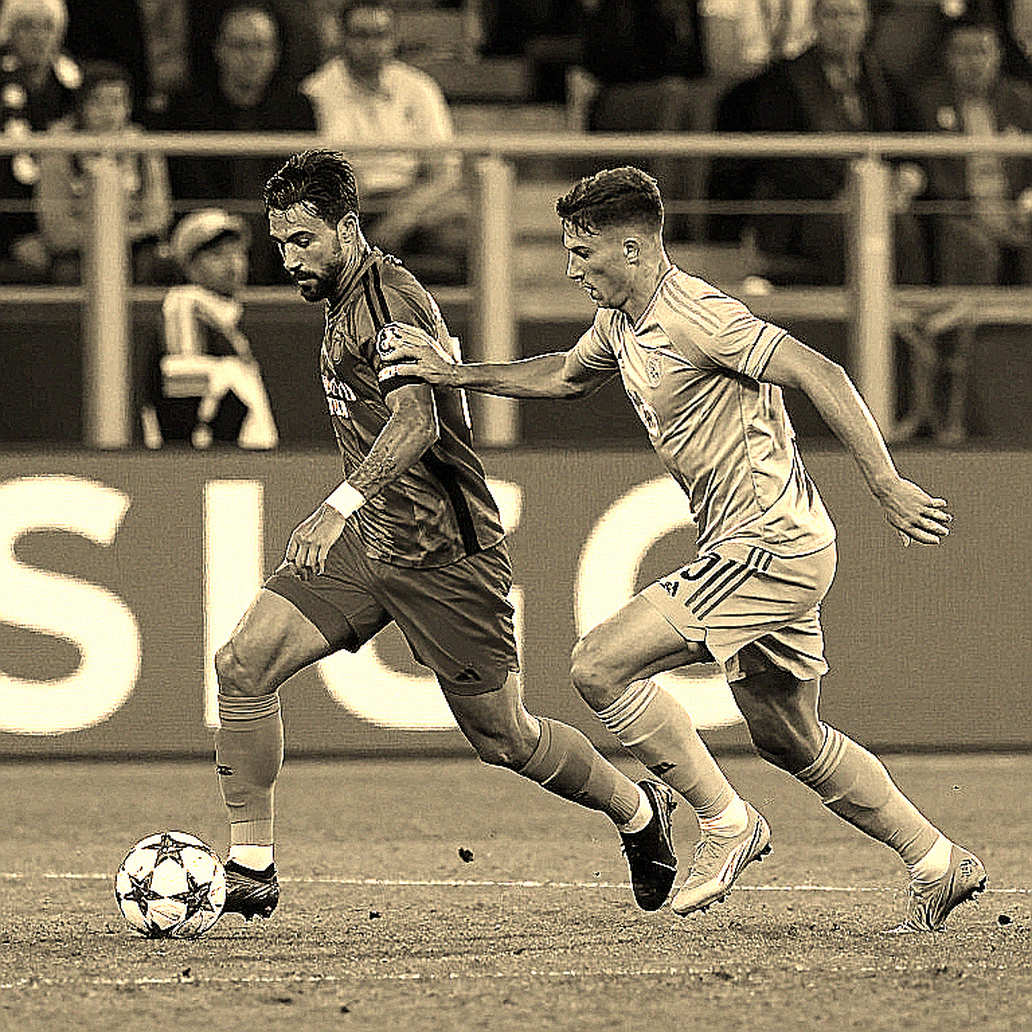
This needs verification in the next match, and I will set out exactly what to check at the end.
The Price Ladder and Buyer Psychology
The exchange rate I use is about 16,300 rupiah to the US dollar. That is an assumption and needs verification at the time of publication.
At that rate, the 749,000-rupiah replica lands near 46 US dollars. The 1,449,000-rupiah player issue lands near 89 US dollars. The multiple between them is 1.94x.
That ladder places Kelme very precisely. Indonesian domestic brands such as Specs, Mills and League generally sell well below. Replicas imported from Europe generally sit higher. Positioned between those two zones, the shirt is pitched as aspirational but attainable in a price-sensitive, large market.
The more interesting point is the player issue. In Europe, authentic player-spec shirts typically sit between 120 and 160 euros. At 89 US dollars, this sits below that band. Kelme is not playing in the scarce-collector tier. It is playing in the accessible-premium tier. That is a volume strategy, not a prestige strategy.
The exclusive box bundled with the player issue points the other way, and I read it as aimed at Indonesia's domestic resale market. There is a buyer tier that does not wear the shirt, only stores it. For that tier, the box and the tag matter more than the stitching.
The 1.94x multiple is not abnormal. It is a standard merchandising ladder: one version for the many, one for those who will pay more. It maximises volume and per-unit yield at the same time rather than chasing a single premium price.
In Vietnam, kit pricing sits on a different plane. V-League club shirts are mostly supplied by domestic and regional brands at far lower prices, and unit volumes are modest. Most fans buy floating goods. I have walked past stalls in night markets where national-team shirts sell for a fraction of the official price, with worse stitching but visually indistinguishable from ten metres away.
The point is not whether the price is high or low. It is this: a price ladder only means something if the distribution channel keeps genuine goods in their assigned slot. Without a channel, the ladder collapses.
A Shirt With No Named Technology
The adjectives used in the piece are breathable, comfortable, and modern for daily use.
No fabric technology name. No grams-per-square-metre figure. No moisture-vapour transmission rate. No published test data.
Set against the registered technology platforms of the major manufacturers, the gap is obvious. At that level, brands sell a named technology alongside a test result.
To be fair: missing a technology name is a communications gap, not necessarily a product gap. But at 89 US dollars for the player-spec version, failing to offer a single measurable figure is a choice, not an oversight.
On the pale blue base, there is a small but real technical argument. Under direct solar radiation in Jakarta in September and October, a lighter, more reflective base absorbs less solar heat than a deep red or black base. For daytime training and early age-group fixtures, that advantage is genuine.
But the opening match kicks off at 20:00. The sun has set. The thermal advantage of pale blue largely disappears.
And this is where three data points lock together into one assessment. If the shirt is designed for a 20:00 kick-off, the pale blue contributes nothing. If the shirt is designed for daily wear — exactly the wording used — then the pale blue contributes a great deal: cooler outdoors, easier to style, easier to sell to people who never go to the stadium.
The design language and the marketing copy point in the same direction: this shirt was made for the shopping mall, not the touchline.
I am old, but I can see the step before the touch. Here, the touch is the fabric; the step is the shelf.
The Third Kit as a Free-Agent Deal
There is a familiar structure in football I have tracked for years, and the third kit sits squarely inside it.
A player out of contract signs with a new club as a free transfer. The money paid to the agent and to the player as a signing bonus never passes through the transfer ledger. It does not appear in the figure a financial regulator uses to calculate compliance. The result is a real, tangible expense that sits outside the audit zone.
The third SKU operates identically. Home and away shirts are the main product lines: planned, forecast, budgeted. The third kit is an auxiliary line, little noticed, rarely questioned for effectiveness.
If the Kelme–Indonesian federation deal pays a per-unit royalty, every third shirt sold is pure incremental margin, not shared with the two main lines. If the deal is a flat fee, the third kit is a free option: no extra loss if it fails, the full upside if it sells.
Both cases lead to the same conclusion. The value of the deal is undisclosed, and the non-disclosure is the core point. National associations sit outside club-style European financial frameworks, so no compliance red flag can be raised here. But the principle is the same: what is not disclosed is not examined.
I am not saying Kelme or the Indonesian federation did anything wrong. I am saying an invisible sum cannot be assessed, and a product sold through a cultural story is even less likely to be asked about its economics.
The strong attack with the ball; the clever attack with space.
Where the Shirt Money Goes
This is the question I always ask, and the one no product launch ever answers.
National-team shirt revenue is an asset of the national game. It comes from fans, from a collective belief, and by any operating ethic it should return to the development system.
But I have watched long enough to know what usually happens. Big-club academies are largely talent stockpiles. They gather hundreds of young players, hold the best ones so no rival can take them, and the share who genuinely reach the first team sits below ten percent. The rest leave when their youth is spent, carrying a file and not much of a trade.
Indonesia in recent years has taken another route to fill the gap: bringing in players developed in Europe and attaching them to the national team. That approach delivers fast. It does not answer the basic question: if the domestically grown cohort stays thin, how many more years will that imported supply still be needed?
In Vietnam the story is similar but shaped differently. We have academies that have worked seriously for years, and local talent factories that survive by selling young players. But most of them fend for themselves, funded by a parent company rather than by the commercial revenue of professional football.
A national-team shirt at 89 US dollars, a replica at 46, in a nineteen-day window in the region's most populous country. Where that money goes is a fair question. And the silence of the release is the only answer currently available.
Shirt money does not flow into training pitches by itself. It has to be channelled by an administrative decision, and that decision does not appear in a product story.
Counterfeits, FX and the Channel
The biggest financial risk in a Southeast Asian national-team shirt campaign is not unsold stock. It is counterfeits.
This is a structural problem in Indonesia, and in Vietnam too. The question is not whether fakes exist. It is how many days after launch they appear, what fraction of the price they sell at, and through which channels.
The release carries no anti-counterfeit signal: no authentication tag, no traceability code, no authorised-dealer list, no tightening of online channels. For a consumer market the size of Indonesia, that is a significant strategic gap.
One more point is rarely mentioned: currency risk. If the goods are imported, the retail price is fixed in rupiah at launch. If the rupiah weakens between order and payment, landed cost rises while the shelf price does not. Margin is squeezed from behind.
In Vietnam, I once stood at a night-market sports stall and heard the seller say it plainly: nobody buys the official shirt because it costs three times as much. That is the whole answer to the distribution question. The counterfeit's competitive edge is not quality. It is price. To break that edge you cannot rely on awareness campaigns. You have to narrow the price gap until buying fake becomes economically pointless, while making buying genuine easier.
If I Were in the Decision Seat
If I ran this campaign, I would do five concrete things, with dates so they can be checked.
First, publish the fabric weight and one measurable index before 20 September. It costs nothing. It pre-empts the expensive narrative that always arrives in the second week after launch.
Second, do not use the third kit in the opening match if the match does not require it. Save it for a fixture with a bigger crowd and an opponent in white or yellow. A good shirt appearing at the right moment is worth more than a good shirt appearing on the right date.
Third, price by window position. Hold the collector price through the tournament, but release a lower-priced fan version in the final five days to clear stock. That sounds heretical to price integrity, but in a nineteen-day window, leftover stock after the tournament is a real loss, while brand prestige can be rebuilt next season.
Fourth, control the channel. Authentication tags, a published dealer list, and a retail price calculated so that the counterfeit margin erodes. In a price-sensitive consumer market, the channel is the product.
Fifth, ring-fence a fixed, public share of shirt revenue for a youth programme with a named address. Three provinces, three centres, a figure published each quarter. That is the only line that turns a shirt into infrastructure.
The Japanese taught me patience; the Belgians taught me ruthlessness. In selling, patience is holding the price; ruthlessness is cutting stock on the right day rather than waiting a week out of sentiment.
The Blind Spot of a Beautiful Story
The first blind spot is the spokesperson. An International Sales Director is quoted on design philosophy, and the press carries that frame straight to readers. The design story is doing the work a specification sheet should do. Readers receive an emotion and believe they received information.
The second blind spot runs deeper, and fewer people see it. The SKU chosen as the tournament's lead character is also the SKU with the smallest usable area on the pitch. It clashes with the two strongest opponents in the region. It exploits its thermal advantage in daylight, while the most important match kicks off at 20:00. The design language is being sold harder than its competitive value.
Now let me argue against myself. There is a strong counter-case, and I have to state it because it is largely right. In Indonesia, the national shirt is a cultural object before it is a performance garment. Telling a story about the sea and the jasmine speaks the language Indonesian fans hear. Selling through identity is not wrong. It is sound commercially and sound humanly.
But I keep returning to the same place. An identity story only has economic value when paired with a controllable distribution channel. Without one, every rupiah a fan intends to spend leaks to an untaxed stall. The fan is inspired, the brand earns little, the federation earns less, and the youth system receives nothing.
The final blind spot is our own habit as writers. We receive a sales release and process it as a cultural event. We describe the motif in detail while skipping the royalty structure. We read a marketing line three times and the price list not once.
What to Verify in the Next Match
I will watch the opening match on 25 September and write four lines in my notebook.
One: does the third kit take the pitch, and if so, for clash reasons or display reasons.
Two: at the eighty-eighth minute, when the shirt is soaked, does the shoulder seam still hold its shape. That is a test no specification sheet can replace.
Three: in the stands, what share of the new shirts are genuine. I count by eye, block by block, as I always do.
Four: after the match, find a stall in Jakarta and ask the price. The gap between the stall price and the official price is the most honest index of channel strength.
For Vietnamese football, the lesson I take is not about the motif. Do not copy the story. Copy the bookkeeping discipline: a new SKU for the right window, a deliberate price ladder, a tightened channel, and a revenue line directed back into development.
The question I leave for the people running the game at home: if Vietnam's national team had a nineteen-day window like that, would we have the product, the price and the channel ready to sell it, or would we still be waiting for someone to tell a beautiful story on our behalf?