
Xhaka Withdraws From Switzerland Squad: The Fake Vaccine Certificate and a 152-Cap Void
**Trả lời cốt lõi:** Granit Xhaka, đội trưởng đội tuyển quốc gia Thụy Sĩ, đã thừa nhận sử dụng chứng nhận tiêm chủng COVID-19 giả trong năm 2022, xin lỗi công khai qua Instagram và rút tên khỏi đợt triệu tập tháng 9. Anh cam kết hợp tác với cơ quan chức năng Thụy Sĩ. **Dữ kiện chính:** - Granit Xhaka, 33 tuổi, giữ kỷ lục 152 lần khoác áo đội tuyển quốc gia Thụy Sĩ. - Xhaka thừa nhận dùng chứng nhận tiêm chủng COVID-19 giả trong năm 2022. - Vụ việc khởi nguồn từ cuộc điều tra một bác sĩ tại Lucerne, Thụy Sĩ. - Luật Hình sự Thụy Sĩ: làm giả giấy tờ có thể bị phạt tiền hoặc tù tới 5 năm. - Liên đoàn bóng đá Thụy Sĩ từ chối so sánh với vụ Patrick Fischer năm 2022. **Nguồn:** Tuyên bố trên Instagram của Granit Xhaka ngày 21 tháng 9; phát ngôn của Liên đoàn bóng đá Thụy Sĩ (SFV) cùng ngày; báo chí Thụy Sĩ đưa tin về cuộc điều tra tại Lucerne. | Cross-checked: VuaBong.vn **Hỏi đáp liên quan:** - Hỏi: Xhaka có bị cấm thi đấu không? Đáp: Chưa có án phạt thể thao nào được công bố; anh tự rút khỏi đợt triệu tập tháng 9. - Hỏi: Vụ việc ảnh hưởng thế nào tới đội tuyển Thụy Sĩ? Đáp: Đội mất đội trưởng và người giữ kỷ lục 152 lần khoác áo trong cửa sổ thi đấu tháng 9. - Hỏi: Patrick Fischer là ai? Đáp: Huấn luyện viên đội khúc côn cầu trên băng nam Thụy Sĩ, liên quan tới vấn đề chứng nhận tiêm chủng tại Olympic mùa đông Bắc Kinh 2022.
Xhaka Withdraws From Switzerland Squad: The Fake Vaccine Certificate and a 152-Cap Void
The video runs less than a minute, shot on a phone in an undecorated room. Granit Xhaka looks straight into the lens and says little: "That was a mistake. I apologize." No agent beside him, no lawyer in frame, no three-page statement drafted by a club communications department. Hours later, the captain of the Switzerland national team announced his withdrawal from the September call-up.
The sequence of actions is the most telling part: admission, apology, then self-removal. Across nearly two decades of watching professional footballers' scandals, I have seen most follow the reverse order — deny, hire counsel, let the press dig, then finally concede in a bracketed clause near the end of a statement. Xhaka inverted that order. But the tidiness of the video does not make the matter smaller; it only makes it harder to handle loudly.
Context: a record holder and a doctor in Lucerne
Granit Xhaka is 33. He has played 152 times for Switzerland, the most in the history of the men's national team. He is captain, head of the dressing room, a face used in federation campaigns. In a country of under nine million people, the record cap-holder belongs to a very small group of national symbols. When one of them acquires a criminal file, the damage does not stop at the individual.
The case originates in a Lucerne investigation into a doctor suspected of issuing invalid COVID-19 vaccination certificates. That investigation is ongoing. From that file, Swiss media traced the names of people who used such certificates in 2026. Xhaka was among them. He did not deny it, and did not try to diminish the seriousness of the act.
What he admitted is specific: in 2026, he used a fraudulent COVID-19 vaccination certificate. At the time, Switzerland and most of Europe operated pandemic control through proof of vaccination, a negative test, or recovery. Without a certificate you could not use airports normally, enter certain premises, or attend certain events. For a player based abroad and moving constantly between countries, that certificate was a working condition.
This is where the line must be drawn sharply: a working condition is not a legal exemption. A player squeezed between a fixture list and health rules still has lawful options — get vaccinated, wait, seek an exemption, or accept losing his place. Xhaka chose another route, and he has acknowledged as much himself.
One more distinction matters. Withdrawing from a single call-up is not the same as retiring from international football. Technically, Xhaka remains eligible for selection in later windows. But the distance between "eligible" and "selected" is a distance the federation decides, not the player. Every statement about his future must pass through that gate.
The core: the legal framework is where this gets heavy
Swiss criminal law punishes document forgery (Urkundenfälschung) with a fine or, in aggravated cases, with a custodial sentence of up to five years. That five-year ceiling is the single most important number in this story, and it barely appears in short reports.
The statutory maximum is not the same as the actual sentence. In most forgery cases without organized crime, large-scale financial motive or repeat offending, Swiss courts impose a fine or a conditional financial penalty. But the existence of that ceiling shapes how the case is handled: it makes this a criminal matter, not an internal disciplinary one.
That is the fundamental difference from most football scandals. Betting cases, statements, contract disputes all sit inside the sports arbitration system — a system with jurisdiction, precedent, a familiar penalty scale, and a media apparatus trained to process it. Xhaka's case sits in a different system, one football cannot pace, negotiate, or close on its own schedule.
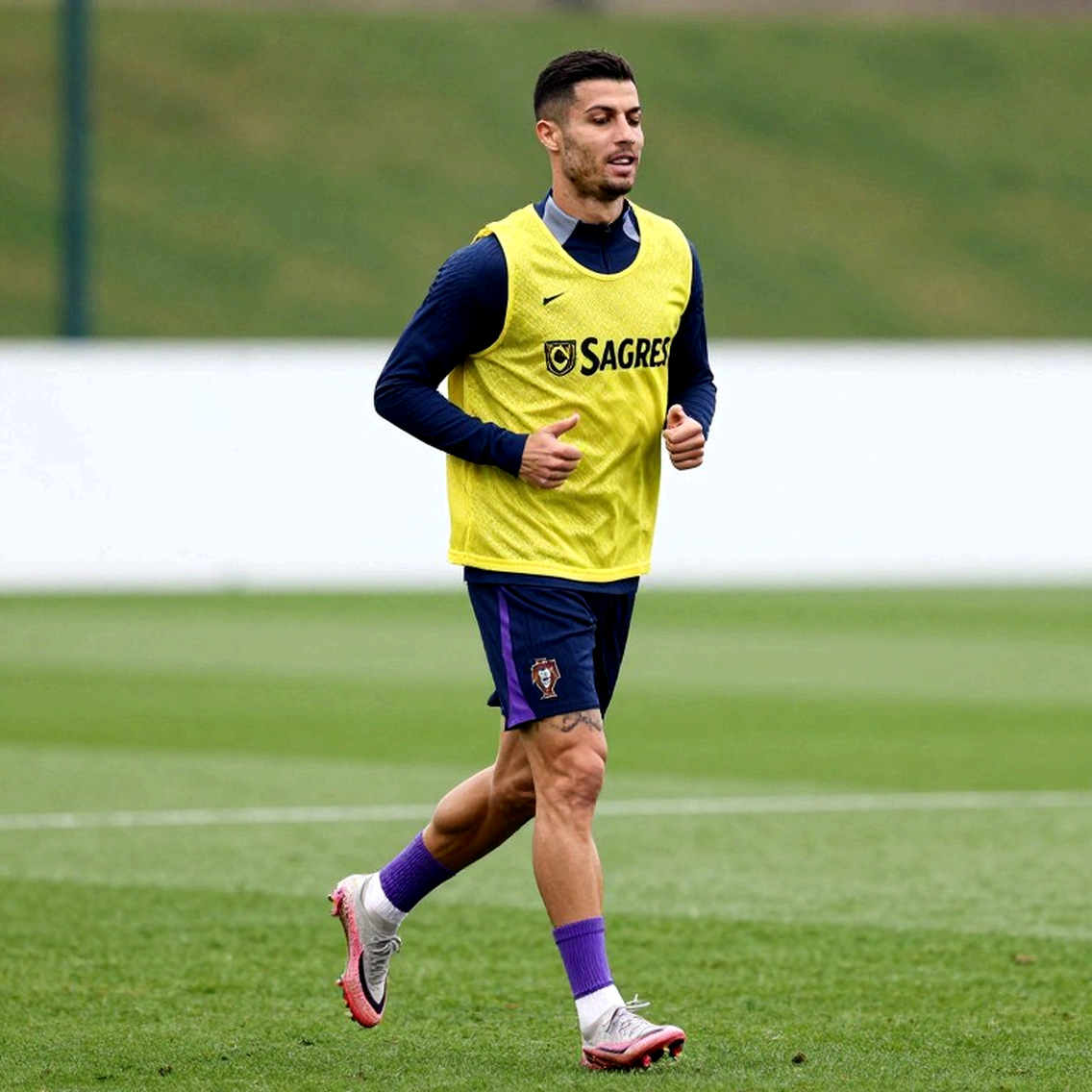
Alongside the criminal track runs the governance track of the Swiss Football Association (SFV). The federation's response is carefully framed. Its president welcomed Xhaka taking responsibility while stating the association stands ready to clarify the entire matter. That is the language of an organization choosing between two costly options: condemning loudly forces it to act against a captain, while unconditional defence costs public credibility. Receiving and leaving the door open to investigation is the standard crisis-communication balance for European federations.
Xhaka, for his part, has said he will cooperate with authorities. Legally, that is the standard mitigating posture and the shortest road to a lighter outcome. But read it precisely: cooperation reduces a sentence; it does not erase an act. The admission came before investigators published conclusions, which means the fact of the conduct is no longer in dispute. What remains in dispute is severity and form of handling.
The comparison the federation refused: the Patrick Fischer case
The most sensitive part of the story is not Xhaka. It is how the SFV placed the case beside another precedent.
In 2026, at the Beijing Winter Olympics, the Swiss men's ice hockey team competed under a mandatory vaccination requirement. That year, head coach Patrick Fischer was found to be implicated in a vaccination-certificate matter and was sanctioned. The precedent exists, is remembered by the Swiss public, and is naturally being placed beside Xhaka's case.
The SFV representative, Knabel, refused to compare the two. The argument: in football, pandemic-era vaccination rules were recommended, not mandatory, whereas at the Winter Olympics vaccination was a condition of participation. Different contexts, so the cases cannot be set side by side.
Technically, as governance, the argument holds. As communication, it is far more fragile. The public does not distinguish "recommended" from "mandatory" the way a regulation does. It sees two people from two sports, one country, one category of conduct, and one question: are the standards the same?
What stands out is that the SFV itself raised the comparison and then declined to resolve it. When an organization names a precedent in order to say the precedent is irrelevant, it has made that precedent part of the story. That is the largest governance risk in this case, and the part most likely to outlast the news cycle.
The contrarian angle: the on-pitch damage is the smallest part
The usual reaction centres on what Switzerland lose in the September window. The short answer: a deep-lying organizer, a set-piece taker, a dressing-room leader, and 152 caps. None of that is replaceable inside a week. Losing the midfield organizer in an international window typically reshapes the chain: the back line plays longer, the wide progressions carry more load, and dead balls are redistributed across two or three players.
But this is the least important part of the story, and the media focus on it is a form of displacement. A call-up window is finite. Switzerland can rearrange midfield, reallocate set pieces, appoint a temporary leader. That is an organizational problem, fully solvable — mid-tier European nations solve it several times a year because of injury.
The real risk lies elsewhere.
First, the Lucerne investigation can spread. When authorities are probing a doctor suspected of issuing false certificates, every step in the file can pull in more names. If the list grows, the story shifts from one player to a generation of athletes and a sports-medicine system during a pandemic. The length of the news cycle would then be set by the investigation calendar, not the fixture calendar.
Second, seasonality. This case does not end when a court rules or the SFV closes a disciplinary file. It ends when there is no further occasion to raise it. For a national captain, those occasions are regular: every major-tournament squad announcement, every qualifying campaign launch, every sponsor campaign. This is a risk with no clear expiry date.
And one point is rarely raised: for a 33-year-old in the late phase of his peak, the question of a captaincy successor was already a medium-term planning theme. This case did not create that question, but it may pull it forward by several months.
The commercial track: image clauses and a price not on the scoresheet
Financially, nothing here touches transfers, wages, or valuation. No transaction is affected. But there is another transmission channel, less noticed: image clauses in personal endorsement contracts. Most commercial agreements for national-team-level players allow a sponsor to suspend or terminate if the individual generates adverse publicity. That is standard content, not a rare exception.
When the player himself has admitted the conduct, a sponsor invoking that clause has grounds. The likeliest outcome is not termination but a temporary freeze on brand activations. The financial damage there is bounded; the signal sent to the market is not.
Zoom out. The pandemic produced an entire category of cases involving fraudulent vaccination certificates across multiple sports and countries. The recurrence of the same conduct within one country points to a governance-layer problem beyond individual error. When a category of case repeats often enough, the consequence is rarely a set of isolated sanctions — it is the emergence of a common integrity standard across national sports federations.
What to watch next
Three signals matter: the criminal track from the Lucerne authorities, any SFV disciplinary decision or standards statement, and whether Xhaka is recalled in the next window. The third matters most over time, because it answers the question football always answers slowly: when does a team forgive its record holder?
In football history, very few players withdraw voluntarily before being dropped. Xhaka chose that route for the September window. It shortens the most acute phase but opens a longer, less predictable one — the phase in which people wait to see whether the legal process and the governance process say the same thing.