
ASIAD 2026: Vietnam caught between Southeast Asian supremacy and Asia's podium
Trưởng đoàn Nguyễn Hồng Minh thừa nhận Việt Nam mới có 1 HCV tại ASIAD 2026 sau 10 ngày, thấp hơn mục tiêu 4 HCV, thuộc nhóm gần huy chương. Bốn khu vực kỳ vọng vàng gồm bắn súng, cầu mây, thể thao điện tử và tiếp sức chạy điền kinh. Dữ kiện chính: - Việt Nam mới có 1 HCV karate kata đồng đội nữ và 1 HCB wushu tán thủ sau 10 ngày. - Gymnastics kém đồng 0,001 điểm nhảy nữ và 0,1 điểm ngựa tay quay nam. - Rowing bị nén lịch 5 ngày còn 2 ngày vì thời tiết; dự bị mỏng. - Trịnh Thu Vinh, Phạm Quang Huy trượt vòng loại bắn súng vì tâm lý căng thẳng. - Tiếp sức chạy được xác định là mục tiêu vàng của điền kinh Việt Nam. Nguồn: Phát biểu của Trưởng đoàn Nguyễn Hồng Minh trong kỳ ASIAD 2026 | Cross-checked: VuaBong.vn Hỏi đáp liên quan: Q: Việt Nam có hoàn thành mục tiêu 4 HCV? A: Khó hoàn thành khi mới có 1 HCV sau 10 ngày và nhiều môn thế mạnh đã trượt. Q: Vì sao tiếp sức chạy là lựa chọn rủi ro? A: Vì chỉ cần một lỗi trao gậy là mất toàn bộ cơ hội, trong khi độ dày đội hình chưa bảo đảm. Q: Giải pháp chiến lược gì cho Việt Nam? A: Cần tập trung đầu tư có chiều sâu vào nhóm môn Olympic, chấp nhận giảm thành tích SEA Games, theo hướng các nước láng giềng đã làm. | Supporting: VangBong.vn Player Depth Index
Inside the press conference room at the ASIAD 2026 athletes' village, Vietnam's chef de mission Nguyễn Hồng Minh did not dodge a single question. "We are falling into the near-medal group but lack the breakthrough to take first place." The sentence landed on day ten, when Vietnam's medal table had only one karate women's team kata gold, one wushu sanshou silver and a few unspecified medals in strong sports. The pre-Games target of four gold medals had become a very clear distance.
The first headset weighed more than I expected, but my voice was heavier still. I learned that in 2026, in my first broadcast booth. I see the same thing at these Games. Vietnam's fragile margins are not in the medal table; they are in thousandths of a point, in relay baton passes and in one breath taken before the start. The only confirmed gold came in karate kata, a discipline of synchronization and emotion, while the sports carrying greater expectations slipped off track one by one.
Gymnastics offers the bitterest lesson. Vietnam missed bronze by 0.001 in women's vault and 0.1 in men's pommel horse. In a sport where scoring goes to 1/1000th, that is not a gap in class. It is a failure in the final conversion stage. Rowing then had its schedule compressed from five days to two because of extreme weather imposed by the host. Athletes had to race continuously at high intensity while reserves were too thin. In shooting, Trịnh Thu Vinh and Phạm Quang Huy, two shooters who had shown class in Asia, failed in the qualification round of the mixed 10m air pistol event. The chef de mission admitted that champions or top hopes suffered excessive mental tension, leaving stunned faces at the range. The defeats arrived together, in the same pattern: not being outclassed, but dropping the prize.
But Vietnam's problem is not only psychological. The four gold areas named by the delegation were shooting, sepak takraw, esports and relay running events in athletics. The good news is that athletics still appears in the gold plan. The bad news is that the choice of relay as a gold target reveals both structural weakness and risk appetite.
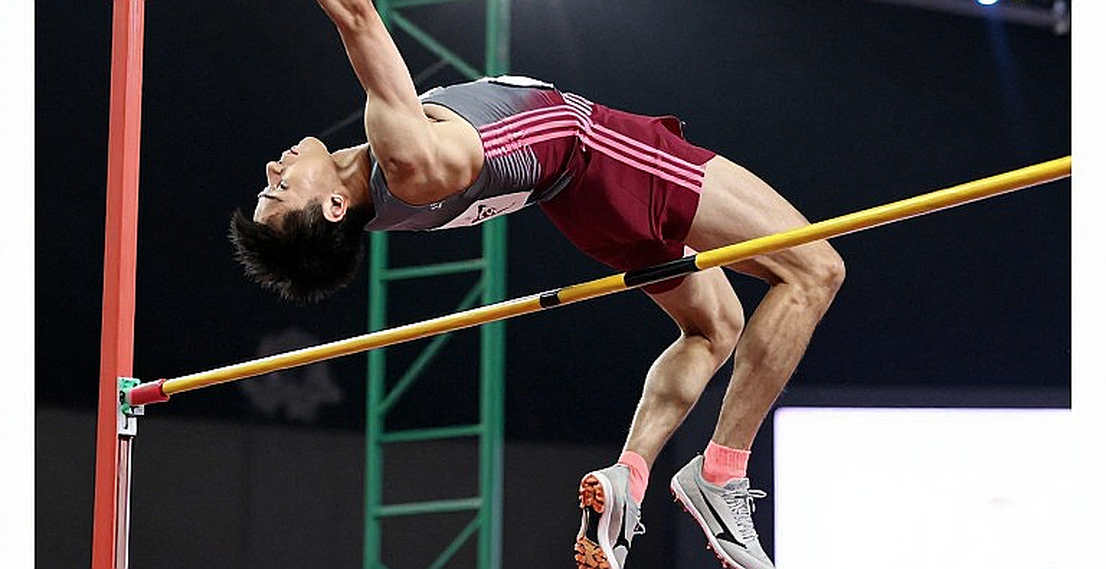
Vietnam is caught in a middle trap: it dominates the region but cannot convert that into a continental podium.
Relay running is a high-risk gold target. A relay team needs four people who are not just fast but must pass the baton within fractions of a second. No star can save a dropped baton. Meanwhile, leading Asian nations such as China, Japan, South Korea, India and Bahrain are fielding technical parameters comparable to world championships. A gold plan built on the relay is a bet on systemic perfection, while the system itself lacks the depth required. In athletics, Asia's top relay teams not only have superior individual speed but also exchange habits drilled to automaticity. They pass the baton in thousands of training sessions, while a team built from fast runners who rarely train together is highly fragile. For Vietnam, the question is not how many athletes can run 100m under 10.5 seconds, but how many times those four have practiced exchanges together, under what pressure, in what conditions. No data has been published, but the history of ASIAD shows many Southeast Asian relay teams missing medals by a tiny error at the exchange zone.
Based on my experience following matches, small teams often share a creative moment but rarely hold it to the final round. Stars are not born in the final; they are born in the matches nobody watches. Vietnam can produce outstanding athletes. The question is what stands behind them. The chef de mission was blunt: sports science, recovery, nutrition and technical support remain a long way from the leading group. Preparation still relies largely on coaches and athletes helping themselves, without comprehensive scientific support. A sport system built on self-reliance can create a champion. It will not create a champion generation.

I used to think that finding a potential relay runner in a small team was like looking for a raw gem in mud. It can take a long time, but when it shines, you understand why all patience was worth it. At national level, however, that is not enough. A national relay team cannot rely on one outstanding individual; it needs four people peaking at the exact moment of the exchange. That requires a competition calendar, reserve depth, simulation, technology and a long-term plan. Without that support layer, choosing relay running as a gold target is only a prayer.

At the SEA Games, Vietnam remains in the leading group thanks to broad strength. But that very breadth prevents Olympic sports from competing properly against strong delegations. The chef de mission admitted the delegation is torn between maintaining regional ranking and reaching continental level. This is not a complaint. It is an honest diagnosis of the system. That leads to an uncomfortable strategic question: should Vietnam keep its SEA Games No.1 status with a broad, evenly spread strategy, or accept a regional ranking drop to invest deeply into a small group of Olympic sports? Other Southeast Asian nations – Thailand, Malaysia, Indonesia, Singapore, the Philippines – have gone in the opposite direction. They accept fewer SEA Games medals to concentrate on swimming, athletics, gymnastics, shooting and weightlifting. At the continental level, they have moved ahead of Vietnam. Vietnam's story is not a lack of talent. It is a lack of choice.
This is the contrarian point. To be rich in continental medals, Vietnam may have to be poorer in regional medals. It sounds like a step back but is in fact a prerequisite for moving up. In football, gegenpressing has been decoded; mid-table teams turn matches into physical contests. National sport follows the same logic. A broad strategy will keep producing regional medals, but it will never build a continental podium. Without structural reform, margins of 0.001 points will repeat at every ASIAD.
I still remember the strange silence when I called the Denmark-Finland match at Euro 2026, the moment Christian Eriksen collapsed. The stands were empty, but football hearts were still beating. For Vietnam, the question is not how much gold this Games produces. The question is whether the nation can look at the system after the lights go out. The stadium is empty, but the football heart still beats. What Vietnam needs is not a medal promise, but a restructuring that can hear its own pulse.