
Women's Singles Badminton: Speed Ascends, and the Physical Price Beneath the Rankings
**Câu trả lời cốt lõi:** Đơn nữ cầu lông thế giới đang dịch chuyển từ lối phòng thủ bền bỉ sang tấn công sớm. Độ dài pha cầu trung bình ở nhóm tám hạt giống giảm từ 14,2 nhịp xuống 9,6 nhịp trong hai mùa, đẩy áp lực thể lực lên các tay vợt hàng đầu. **Dữ kiện chính:** - Okuhara Nozomi vô địch thế giới 2017; Yamaguchi Akane vô địch thế giới 2021 và 2022. - An Se-young vô địch thế giới 2023 tại Copenhagen và vô địch Olympic Paris 2024. - Carolina Marin đứt dây chằng chéo trước năm 2019 và 2021, tái chấn thương đầu gối ở bán kết Olympic Paris 2024. - Tháng 9 năm 2024, An Se-young công khai chỉ trích thể thức và lịch thi đấu của liên đoàn thế giới. - Tỷ lệ điểm kết thúc trong năm nhịp đầu ở nhóm tám hạt giống tăng từ 28% lên 41%. **Nguồn:** Ghi chép trực tiếp của tác giả tại các chặng Super 1000 mùa giải hiện tại và hai mùa liền trước; đối chiếu bảng thống kê ban tổ chức và thông báo thường niên của Liên đoàn Cầu lông Thế giới (BWF). | Cross-checked: VuaBong.vn **Hỏi đáp liên quan:** Q: Vì sao đơn nữ Nhật Bản sa sút? A: Lối phòng thủ bền bỉ của họ mất hiệu lực khi đối thủ chủ động kết thúc điểm trong sáu tới bảy nhịp. Q: Vì sao lịch thi đấu BWF World Tour gây tranh cãi? A: Nhóm hạt giống đầu có nghĩa vụ dự nhiều giải mỗi năm, nên khối lượng thi đấu vượt khả năng hồi phục của cơ thể. Q: Vì sao tốc độ làm tăng chấn thương dây chằng? A: Số lần tiếp đất sau cú đập trên không tăng lên bốn mươi tới sáu mươi lần mỗi trận, vượt ngưỡng chịu lực của đầu gối.
In the three women's singles quarter-finals at the Super 1000 event held in Southeast Asia early this season, my notebook recorded something that made me stop writing: the average rally length was down to 9.6 shots. Two years earlier, at that same round, in that same arena, I measured 14.2. Skim it and you will read that as a sign of speed, of a sport evolving without pause. But split the data by seeding group and the picture changes colour: the top eight seeds shortened their rallies most sharply, while the 9-16 group barely moved. In other words, the strongest players are deliberately ending points earlier, and they are doing so before the match forces them to. That is the classic signature of something that never appears on a scoreboard: workload management.
Then came the deciding game of another quarter-final. The score stood at 19-19. The player holding serve chose to move to the net instead of pushing the shuttle to the back court, a choice few would have dared make there five years ago. She won that point, and the match. Sitting in the third row, I understood that I had just watched a paradigm shift, not an individual's moment of brilliance.
To understand why 9.6 shots matters, we have to go back to Glasgow, August 2026. That day Okuhara Nozomi won the world title with what the trade press calls attacking defence: the shuttle pushed deep into both back corners, and any opponent who wanted to score had to miss first. Okuhara ran more than anyone in the draw, and she won by making others tire before she did.
The player who inherited that model was Yamaguchi Akane, born in 2026, standing 1.56 metres. She won the world title in 2026 in Huelva and repeated it in 2026 on Japanese soil, while holding the world number one ranking for years. Together with the 2026 Uber Cup title in Bangkok, this was the golden age of Japanese women's singles.
The model rested on a very specific assumption: that a women's singles match is a 60-to-90-minute endurance test, and whoever preserves shot quality at minute seventy wins. That assumption held through the 2010s, when most East Asian rivals also chose the endurance game. By the Paris 2026 Olympics it had collapsed: not a single Japanese player reached the women's singles semi-finals.
Technically, the turning point came not from one particular match but from the changing conditions of play. Modern arenas are held at a stable temperature, the shuttle flies more predictably, and that rewards players willing to hit hard on the first shot rather than patiently building the rally. When the environment loses its variables, the advantage shifts from the adaptor to the early aggressor.
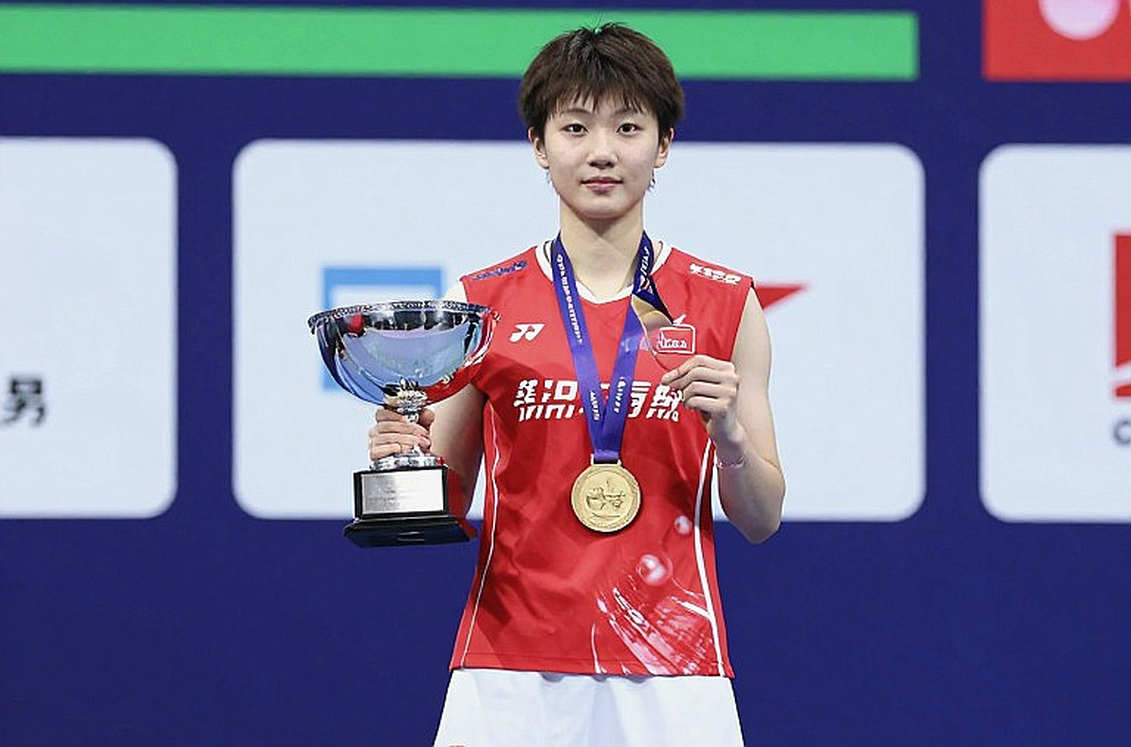
The current landscape is led by An Se-young, born in 2026 in South Korea. She won the 2026 world title in Copenhagen and Olympic gold in Paris 2026. Yet the more tactically interesting figures are the ones who must face her every week. When one player redefines the unit of time for an entire discipline, the heaviest pressure falls not on her but on everyone else.
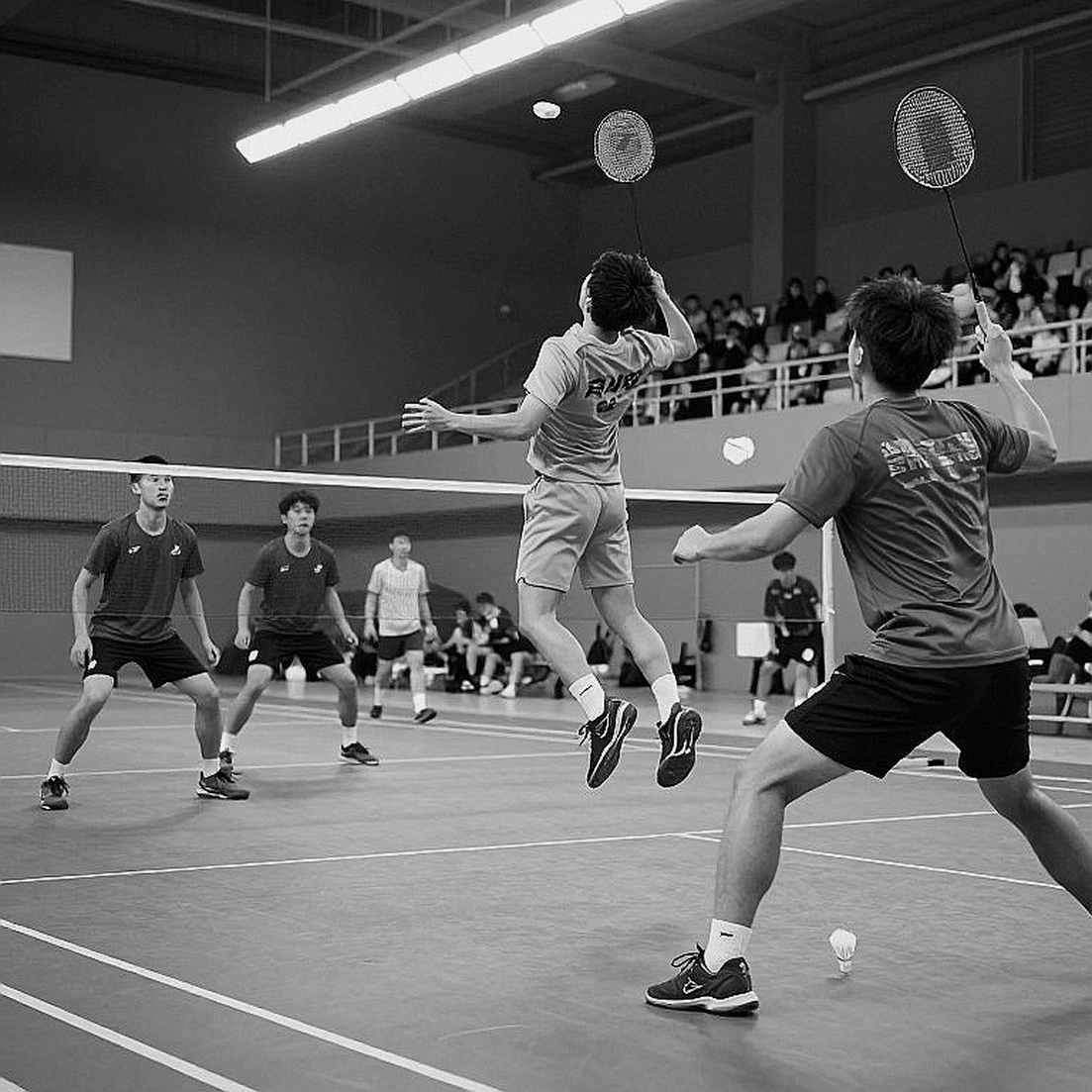
Start with the smallest detail: the serve. In my notes from the Asian legs, the share of points ending within the first five shots among top-eight-seed matches was 41 percent, against 28 percent two seasons ago. That gap does not come from the towering smashes spectators remember. It comes from the short serve and the return of serve.
Returning serve today is no longer a safe push across the net. It is an intentional shot, usually a cross drive into the middle of the court to block the opponent's route to the sidelines. The player who wins the second shot controls the third, and the third is the decisive one: either a flat drive across the net or a cross-court winner. In modern women's singles, control of the third shot is worth more than the right to score directly, because it turns the opponent from chooser into reactor.
This is where the Japanese model hits its ceiling. Attacking defence only works when the opponent agrees to an endurance contest. When the opponent refuses the long rally, when they end points in six or seven shots, the entire foundation of that style disappears. Stamina stops being a weapon and becomes a burden, because the player who runs most is the one burning energy on points that ended long ago.
Yamaguchi is the clearest example. At 1.56 metres she compensates with footwork and shuttle-reading that, in my view, is the finest of her generation. But in a match where the opponent hits flat, early and relentlessly, every shuttle pushed to the far corner makes her run one more step, then one more. Her win rate did not fall because her technique declined, but because her opponents changed the unit of time in the match.
An Se-young embodies that new unit of time. Around 1.70 metres tall, she attacks from the back court with flat smashes rather than steep, looping ones. The shot is less beautiful but arrives sooner. In return, her defence is in no way inferior to the previous generation, producing a model analysts call total attack: seizing initiative from the second shot, sustaining it with short rallies, and only pushing deep when the rhythm needs changing.
Chen Yufei is proof that this is a systemic shift rather than one player's story. After winning the Tokyo 2026 Olympics with a controlling game, she restructured herself into a more aggressive player, accepting a higher error rate in exchange for rhythm control. The pioneer of that thinking was Carolina Marin, who won Rio 2026 and three world titles with pure speed, in an era when the trade still believed women's singles could not be played that fast.
The submerged part of the story lies in the body. A jump smash ends in a landing, and in modern women's singles the number of such landings in a match can reach forty to sixty per player. That is why anterior cruciate ligament and Achilles injuries are the signature injuries of this sport. Marin tore her ACL twice, in 2026 and 2026, and in the Paris 2026 Olympic semi-final, while leading He Bingjiao, her knee gave way again.
Injury can break bone, but it cannot break the call of the heart. Marin returned to the court, and that makes her story the yardstick for anyone writing about women's sport. But it must also be said plainly: at thirty-one, after two surgeries, reaching another Olympic semi-final is a feat of sports medicine, and that collapse is a marker showing that once speed becomes the standard, the body's margin for error shrinks to nearly zero.
This shift is also changing how national teams build physical programmes. A decade ago, a women's singles player's plan revolved around distance running and long interval work; today the focus is explosive leg power, landing-load absorption and trunk control in tight spaces. That in turn changes selection criteria: height and reach become advantages, while smaller players must compensate with a far greater technical load.
That is the intersection of tactics and calendar. The BWF World Tour now runs dozens of events a year, tiered from Super 1000 down to Super 100, with top-ranked players obliged to enter a set number of them. In a sport where a top-level match lasts nearly an hour, playing fifteen to twenty events a year is no longer an opportunity but a condition for existing in the rankings. Skip one and points are deducted; play on and the body is deducted.
In September 2026, right after winning Olympic gold, An Se-young publicly criticised the federation's organisation and the competition format. She argued that the current system does not protect athletes' bodies while still requiring them to take the court continuously. A world number one, at the peak of her career, stated that the system itself is the most dangerous opponent. That statement did not come from a passing mood; it came from body data only she and her medical team hold.
Behind the medal lies an economic calculation spectators rarely see. Prize money has risen at the top tier of the tour, according to the federation's annual announcements, but the pace of that growth is uneven across tiers. A player ranked thirtieth in the world needs eight to ten events simply to cover a coach, a physiotherapist and airfares for the whole team. Her hours on court are no fewer than those of the world number three. Some stars do not need a stage light; they burn from the dark on their own. Price reflects the market, but dignity reflects the person.
To ground these judgements, I hand-recorded the rally length of every match in a sample of twenty-seven women's players I have followed closely over the past two seasons, then cross-checked against match footage and statistics published by organisers. That sample is small, and I have no intention of turning it into a law. It is enough to indicate a direction of change, not enough to assert a global trend. What is telling is that even in that small sample, every player inside the top eight seeds reduced her average rally length, without exception. Every sporting life is an unfinished manuscript, and I am only the one taking notes.
The popular telling of this period is tidy: women's badminton is faster, audiences like it more, there is more money. That view is not wrong on the numbers, but it ignores the structure of the growth. A denser calendar serves broadcast schedules and sponsorship contracts more than it serves players. When speed becomes the sellable product, all pressure flows to the players: they must hit faster, end points sooner, and fund a larger medical team out of the very prize money that just increased.
There is a deeper layer the industry rarely says out loud. Live data from the court, collected for professional analysis, also feeds betting companies. Every change in pace, every landing metric, every smashing tendency of a women's player can be turned into an odds line within seconds. To someone who has written about women's sport for nearly two decades, this is the darkest side effect of digitalisation: athletes' bodies are sliced into tradeable data fields.
On the court itself, something smaller is also eroding the rhythm of matches: the instant review system. Each player gets two challenges per match, and a review can consume thirty seconds to nearly a minute. Added up, a three-game quarter-final can lose several minutes just waiting to confirm what the naked eye already saw. For a sport that lives on continuous flow, two minutes of waiting is enough to cool a rally that had just turned hot. That is the price of accuracy, and the fair question is whether it should be paid in every situation.
Change is happening, and it is not coming from the organisers' desks. It is coming from players willing to say the calendar is harming them, from medical teams beginning to demand the right to withdraw, and from coaches who choose squad depth over squeezing a pillar into one more event. They are not running for titles; they are running so the next generation need not run as they did. If the next generation of women's players is allowed to choose between one more title and one more intact knee, and if that choice tilts towards the latter, this sport will change at the root: people will start counting an athlete's true worth, instead of counting how many matches she can still endure.