
JFA Withdraws from FIFAe World Cup 2026 in Saudi Arabia: Four eJapan Players and a Six-Day Silence
**Câu trả lời cốt lõi**: Liên đoàn Bóng đá Nhật Bản (JFA) đã thông báo không cử đội tuyển thể thao điện tử quốc gia eJapan tham dự FIFAe World Cup 2026 tại Jeddah, Ả Rập Xê Út, với lý do cân nhắc toàn diện tình hình địa phương và an toàn. **Dữ kiện chính**: - Thông báo được đưa ra ngày 10 tháng 10, sáu ngày trước khi giải khai cuộc ngày 16 tháng 10. - Giải diễn ra tại Jeddah, Ả Rập Xê Út, từ ngày 16 đến ngày 23 tháng 10 năm 2026. - Bốn tuyển thủ eJapan được chọn: Ax, Tess (nhánh console, DRX), A-o, Fuga (nhánh mobile, DOPENESS). - Cố vấn kỹ thuật Naoki Shishikura đã được bổ nhiệm trước khi liên đoàn rút lui. - FIFAe World Cup 2026 có hai nhánh thi đấu: console và mobile. **Nguồn**: FOOTBALL ZONE, dẫn thông báo chính thức của JFA | Cross-checked: VuaBong.vn **Hỏi đáp liên quan**: - Hỏi: Tại sao JFA rút khỏi FIFAe World Cup 2026? Đáp: JFA viện dẫn việc cân nhắc toàn diện tình hình địa phương và an toàn tại Ả Rập Xê Út. - Hỏi: Ai bị ảnh hưởng trực tiếp? Đáp: Bốn tuyển thủ eJapan gồm Ax, Tess, A-o và Fuga mất suất dự chung kết thế giới. - Hỏi: Giải đấu có bao nhiêu nhánh thi đấu? Đáp: FIFAe World Cup 2026 có hai nhánh là console và mobile.
On October 10, the Japan Football Association (JFA) issued a short notice. Japan's national esports team - eJapan - will not attend the FIFAe World Cup 2026, held in Jeddah, Saudi Arabia, from October 16 to 23. The stated reason: a comprehensive consideration of information related to local conditions and safety.
Six days before the opening whistle. A span just long enough to pack luggage, just long enough for a coaching staff to finalize a roster, and just long enough for an administrative decision to erase all of it. Four players had been selected: Ax and Tess in the console division, both from DRX; A-o and Fuga in the mobile division, both from DOPENESS. Technical advisor Naoki Shishikura had also been appointed. On the bracket, the box bearing Japan's name is now empty.
Based on my experience following esports matches over many years, I have noticed that the football-simulation genre carries a distinctive trait: every figure on screen carries a real-world identity. The form of a striker, an injury, a transfer - all of it can flow into in-game ratings. But the JFA story this time sits on a different layer, where the ratings sheet matters less than a decision that came out of a meeting room.
Context: one tournament, two divisions, and an ambitious host nation
The FIFAe World Cup 2026 is the highest-tier event within FIFA's esports ecosystem. It is an official, sanctioned stage, and it carries the greatest competitive weight in the football-simulation genre. Notably, the tournament structure splits into two parallel divisions: console and mobile. Two separate player pools, two separate rulesets, within one framework.
That structure reflects a deliberate strategy by the organizer. The console division targets players devoted to dedicated hardware and controllers, those who pursue precision in the control mechanism. The mobile division targets the vast mobile market, where hundreds of millions of players access football simulation through their phones. FIFA combining both into one world championship shows it wants to cover the entire player spectrum, from premium hardware to everyday devices.
The host venue is Jeddah, Saudi Arabia. Over the past half-decade, the country has become one of the largest centers of sports investment on the planet. From hosting major boxing events, to golf tournaments, to esports, to major football competitions, to the right to host a future World Cup - all of it forms a long-term strategy to position Saudi Arabia as a global sports hub. The choice of Jeddah for the FIFAe World Cup 2026 is one link in that chain.
This context matters, because it places the JFA decision in a sensitive zone. A national federation refusing to send a team to a FIFA-organized event, in a host nation working to build its sports image - that is a signal that reaches beyond a single match.
The core point: federation autonomy and the gap between the lines
The JFA decision sits squarely within the autonomy of a member federation. A national association has the right to weigh safety conditions before sending a team abroad. This is recognized authority, and there is no indication that JFA breached any statute.
But the phrasing is what deserves analysis. The term "local conditions and safety" is broad enough to encompass nearly anything: security, public health, political circumstances, or some specific condition left unnamed. The original source does not disclose the specific trigger. This ambiguity may be intentional - a way to protect the decision without pushing tensions to the level of open confrontation.
In the governance structure of international sport, FIFA is simultaneously the rule-maker, the event organizer, and a party with interests. When a member federation withdraws, it is not merely withdrawing from a tournament; it is placing a question mark before an event organized by the very highest governing body of this sport. This is a familiar structural tension, and it appears in esports much as it does in traditional sport.
Here, I want to separate two layers. The first is the administrative layer: a withdrawal decision, an empty box on the bracket, an event that still proceeds but lacks one team. The second is the signal layer: a national federation placing safety above its presence at an event it had invested effort to prepare for. The second layer is the one with weight.
One detail about timing stands out. The announcement was made on October 10, while the tournament opens on October 16. If these dates align, this is a last-minute withdrawal, only about six days before the opening whistle. Such a decision comes after all logistical and travel commitments were already in motion. That makes the disruption for players and organizers far larger than a notice issued weeks earlier.
The real cost lies with four people
Amid all the analysis of governance, strategy, and signals, there is one fact hard to deny: the direct cost falls on four players. Ax, Tess, A-o and Fuga had been selected, had prepared, had been placed on the official list. They lose a world-championship appearance - something of value in ranking, in experience, in personal image.
There is a notable structural detail in the roster selection: both console players come from DRX, and both mobile players come from DOPENESS. Pairing by club like this is often seen as a way to leverage existing chemistry - two players training together, sharing a system, understanding each other in every play. That is a reasonable professional choice. But it also shows that Japan's player resources in this genre are organized around a few anchor clubs.
JFA appointing a dedicated technical advisor - Naoki Shishikura - shows the federation had invested in a structured national-team program, not merely a token registration. When such a program is halted close to competition day, the sunk cost is not just airfare or hotel bills. It is training time, opponent-analysis sessions, months of preparation that no one sees.
The stage is empty, but I still hear applause from those at home.
One thing I have learned after years of writing about esports: defeat and withdrawal are not the same. Defeat is the result of a contest. Withdrawal is the result of a decision made before the contest begins. eJapan's four players did not lose. They simply were not allowed onto the field. And in sport, sometimes that is harder to accept than a defeat.
A different genre, a different logic
To fully understand this story, one must look at the nature of football-simulation esports. In team genres like MOBAs or first-person shooters, the "meta" cycle is shaped by balance patches to champions, guns, and maps. In football-simulation, the meta cycle is shaped by something else: the annual game-version turnover, plus live player-rating updates. When a striker scores many goals in a domestic league, his in-game rating may rise. When a player is injured, the rating may fall. This is a form of meta tied tightly to the real world in a way MOBAs or shooters are not.
This means that in football-simulation esports, national rosters carry far higher "identity" weight. Players do not pick champions; they pick teams and footballers, and those choices are bound by real-world form. A world-class event in this genre is typically run on a locked game version to guarantee fairness across multiple competition days. That also means live-server rating changes would not affect play.
Against that backdrop, the FIFAe World Cup 2026 is a technically tightly organized event. A federation withdrawing from such an event has nothing to do with any competitive factor. It is a purely organizational and safety-driven decision. This is why I offer no patch or meta analysis in this article - simply because the source provides no such data, and inventing it would be an analytical dishonesty.
The contrarian angle: when a safety decision carries systemic risk
The easiest way to tell this story is to turn the JFA decision into a tale of moral courage - a federation daring to place safety above glory. But that story is too neat, and I do not believe in stories that are too neat.
First, this decision is not entirely free. It creates a precedent. When a member federation withdraws from a FIFA-organized event in Saudi Arabia on safety grounds, other federations will look at it. If more such cases follow, the story shifts from "Japan withdraws" to "a host nation under question." That is a far larger story, and it reaches beyond one esports tournament.
Second, not disclosing the specific trigger makes the decision hard to verify. Supporters may read it as caution. Skeptics may read it as evasion. When a decision rests on a vague reason, it is protected and suspected at the same time - and that is the nature of sports diplomacy.
Third, and perhaps most important, I want to question how we romanticize withdrawal. In fan memory, a team that withdraws is often remembered with vague regret, as though it were a misunderstood noble act. But behind every withdrawal are specific people who prepared, who dreamed, and who must now stay home. Ax, Tess, A-o and Fuga are not symbols. They are four young people who spent their time on a goal, and that goal was just taken from them by a decision not in their hands.
And here is the paradox: a decision made to protect safety creates risk for the very people it seeks to protect - not physical risk, but risk to careers, to motivation, to the belief that effort will be rewarded.
A crown, when it falls, never breaks; it simply rolls toward the next in line.
Here, the crown does not fall from a champion's head. It rolls off an empty box. Japan did not lose the throne. Japan simply was not present to contest it. And in the football-simulation esports ecosystem, where every nation is building its own national-team program, this absence leaves a gap that someone else will fill.
A cross-industry signal: esports is no longer an island
What makes this story more notable than an ordinary withdrawal notice is its position. The FIFAe World Cup 2026 does not take place in a vacuum. It sits at the intersection of esports and Saudi Arabia's large-scale sports-hosting strategy. The same strategy behind other sports events, and the same strategy pointing toward a future football World Cup.
When a national federation withdraws on safety grounds, the signal does not stop at esports. It flows into a broader discussion about host-nation conditions. This is why I assess this event as having high cross-industry signal value, even though its purely competitive value is limited to four players.
The transmission impact can be pictured with a simple diagram. Upstream is FIFA and the organizer, together with the host nation's sports agenda. Midstream are national federations, players, and clubs. Downstream are participation, reputation, and future hosting decisions. A nudge upstream - even a short notice - can ripple through the entire chain.
For the organizer, the impact is negative at a small-to-medium level, short term. For national federations, this is a cautionary signal at a medium level, medium term. For the streaming and sponsorship ecosystem, the impact is nearly neutral. But for the host nation's hosting agenda, the impact is negative reputationally, at a medium level, and lasting from medium to long term.
Four scenarios, and what we truly do not know
When analyzing an administrative decision, I always try to map out possible scenarios. In this case, there are at least four directions.
Scenario one: the JFA decision is accepted as a federation's autonomous choice, with no formal sanction, only some reputational friction. This is considered the highest-probability scenario.
Scenario two: the organizer treats it as a breach of attendance rules, which could affect eJapan's future qualification path or seeding. This is the worst-case scenario, and it is speculative because no rule text is cited.
Scenario three: the decision is read as a principled safety stance, leaving no administrative consequence. This is the optimistic scenario.
Scenario four, and the one most worth watching: other federations follow. If that happens, the event shifts from a single case to a systemic issue.
What we truly do not know is the specific trigger. The phrase "local conditions and safety" leaves a gap that media can fill with speculation, and speculation often travels faster than fact. This is an informational risk, and it needs monitoring.
Lessons from past coverage
In the course of following esports matches and events, I have repeatedly witnessed administrative decisions creating gaps on the bracket. There is a recurring pattern: at first, fans focus on the political or organizational angle. But later, as time passes, memory drifts toward specific people - those who never got to take the field.
This leads me to believe that the long-term value of the JFA story lies not in the announcement, but in four names. Ax, Tess, A-o, Fuga. These young people will keep competing, keep training, and may get other chances. But the moment of October 2026 in Jeddah will not return. In sport, opportunity is not a continuous stream. It is discrete points, and each missed point cannot be reclaimed.
On roster structure and the trace of an ecosystem taking shape
The detail that both console players come from DRX and both mobile players from DOPENESS deserves a closer look. In team genres, selecting pairs of players from the same club is a familiar strategy to leverage chemistry. In football-simulation esports, where paired coordination and reflexes matter, this logic becomes even more reasonable.
But it also exposes a reality about resource depth. If a national team can only select paired players from a few clubs, it shows the competitive base in this genre is still thin. This is a structural observation, not a judgment on the individual quality of the four players. They were chosen from a limited pool, and that itself is an achievement.
The presence of a dedicated technical advisor is also notable. In many esports national-team programs, the technical advisor role is often downplayed or merged into the coach role. JFA separating this role shows it approaches the national team with professionalization in mind. The irony is that this very professionalization makes the withdrawal decision heavier - because more is left behind.
On finances and the numbers that do not appear
In this analysis, one thing must be stated clearly: no financial data is provided. No figures on preparation costs, no figures on lost prize money, no figures on commercial value. DRX and DOPENESS are mentioned only as the players' clubs, without any contract or revenue information.
The absence of financial data is itself information. It shows this story is framed as a governance event, not a commercial one. If this were a record-fee transfer, we would have countless numbers to dissect. But this is a withdrawal notice, and withdrawal notices rarely come with a balance sheet.
There is, however, one type of cost I can name: opportunity cost. Four players lose the chance to show themselves on the world stage. Their clubs lose the chance to promote their brand through players at a global event. The federation loses the chance to accumulate international competition experience. These are losses that appear on no report, but they are real.
On risk and what to track
The biggest risk in this story is not with the four players, but at the systemic layer. A federation withdrawing on safety grounds from an event in Saudi Arabia touches a sensitive issue around the country's dense sports-hosting agenda. This is a reputational risk at a higher level.
Four specific signals need monitoring in the coming days and weeks. First, whether other federations follow - if so, the story escalates from a single case to a host-nation issue. Second, FIFA's and the organizer's response - whether there is a sanction or merely an acknowledgment. Third, whether JFA discloses the specific trigger - if so, the story shifts from diplomacy to concrete cause. Fourth, the players' next appearances - if they are scheduled for another event, the personal-level loss is partly eased.
Conclusion: when an empty box becomes a question
The match ended long ago, but the rests still echo after the green.
In Jeddah, from October 16 to 23, the FIFAe World Cup 2026 will still take place. Matches will still be played, champions will still be named, and trophies will still be awarded. Only one box on the bracket will be empty. And in sport, an empty box sometimes says more than a win.
What I want to leave is not a conclusion about right or wrong. The JFA decision may be right, may be wrong, and we may never fully know. What I want to leave is a question about how we remember. When a team withdraws, do we remember the announcement, or do we remember the people? Do we remember the reason, or do we remember the gap?
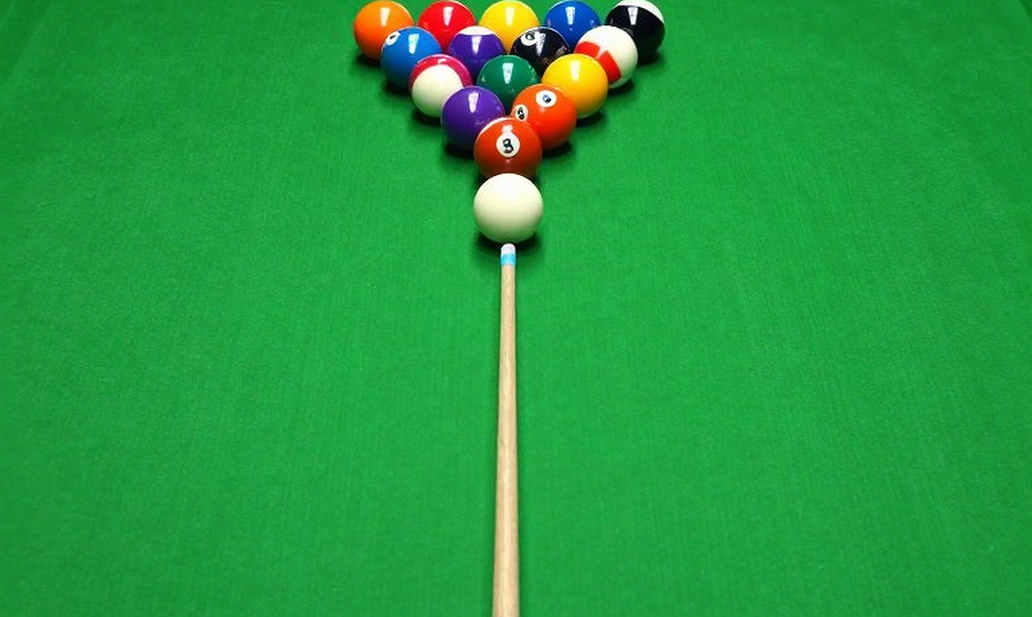
eJapan's four players will go on. Ax and Tess will return to DRX, A-o and Fuga to DOPENESS. They will play other matches, prepare for other tournaments, and may stand before another world stage. But the autumn of 2026 in Jeddah will exist only in memory as something that did not happen. And sometimes, what did not happen is what we most need to listen for.
It turns out every season has a symphony; it is only the listener who has changed. This season, the listener sits at home, and the music rises from a stage with one empty seat.