
Vietnamese Women's Volleyball: When the Post-Match Stat Sheet Has Only Four Columns
**Câu trả lời cốt lõi (≤60 từ):** Bóng chuyền nữ Việt Nam thiếu dữ liệu thống kê chi tiết ở giải trong nước, nơi các quyết định tuyển chọn thực sự được đưa ra. FIVB chỉ công bố dữ liệu đầy đủ ở đấu trường quốc tế. Hệ quả là cầu thủ được đánh giá bằng cảm giác, điểm số thô và chiều cao thay vì hiệu suất đỡ bước một, phân bố đường chuyền và hiệu suất tấn công thực. **Dữ kiện chính:** - FIVB công bố thống kê chi tiết từng trận tại Volleyball Nations League từ năm 2018, khi giải thay thế World Grand Prix. - Bảng thống kê tại giải bóng chuyền vô địch quốc gia Việt Nam chỉ có bốn cột: điểm, lỗi giao bóng, lỗi tấn công, chắn ăn điểm. - Trần Thị Thanh Thúy thi đấu tại V.League Nhật Bản, nơi mọi pha bóng được ghi bằng hệ thống thống kê hoàn chỉnh. - Chỉ số chắn bóng chạm và giao bóng buộc đối phương đỡ hỏng không được ghi nhận ở giải trong nước. - VTV Cup được tổ chức tại Việt Nam từ năm 2004; đội khách mang theo dữ liệu chuyên môn, đội chủ nhà thì không. **Nguồn:** Phân tích chuyên môn nội bộ lĩnh vực bóng chuyền, giai đoạn mùa giải thường niên; tài liệu gốc không ghi ngày công bố. **Hỏi đáp liên quan:** Q: Vì sao bóng chuyền nữ Việt Nam thiếu dữ liệu thống kê chi tiết? A: Vì giải trong nước chưa áp dụng bộ định nghĩa chỉ số chuẩn hóa theo cách FIVB đang dùng ở cấp đội tuyển. Q: Chỉ số quan trọng nhất còn thiếu là gì? A: Hiệu suất đỡ bước một, vì nó quyết định chất lượng của gần như mọi pha tấn công phía sau. Q: Cầu thủ nào đang được đánh giá bằng dữ liệu đầy đủ nhất? A: Trần Thị Thanh Thúy, nhờ thi đấu tại V.League Nhật Bản nơi mọi chỉ số được ghi lại theo chuẩn quốc tế.
The stat sheet handed out after a group-stage match at Vietnam's national volleyball championship has four columns: points, service errors, attack errors, block kills. That is all. There is no reception efficiency. There is no set-distribution map by rotation. There is no count of block touches that sent the ball back out — the metric any coach knows matters more than a single block kill across a five-set match. I sat in the press area, holding that thin sheet, and listened to the losing coach explain a third-set substitution at opposite with four words: "Just a feeling."
That was an honest answer. It was also a confession that the data needed to answer the question had never existed where it was needed. The press room was not silent; nobody had simply spoken yet — because speaking without numbers ends up back at feeling.
At the international level, women's volleyball is not short of data. Since 2026, when the Volleyball Nations League replaced the World Grand Prix, FIVB has published a detailed match report for every fixture: attack efficiency for each hitter, blocks per set, the ratio of service aces to service errors, reception efficiency, and a full set-distribution map for each setter. Continental national-team competitions carry a similar data set. A Vietnamese international is measured by exactly that standard the moment she steps onto an Asian stage.
But most of a Vietnamese female player's competitive minutes happen in the domestic championship, in youth tournaments, in closed friendly matches and long training camps. That is precisely where the data stops at four columns. Complete data appears where decisions have already been made, and disappears where decisions are actually made. A national-team call-up is decided on domestic courts, yet the evidence to defend or challenge that decision exists only in international matches the player has never been selected for.
Trần Thị Thanh Thúy is the notable exception. When she moved to Japan's V.League, her entire professional output was recorded by a complete statistical system, and decisions about her were made on top of those numbers. Back home, players of her generation are still assessed mainly by the eye and by the memory of a few good matches.
At the VTV Cup, the international tournament Vietnam has hosted since 2026, visiting teams bring their data with them and the hosts do not. That asymmetry does not decide a single match, but compounded over years it becomes a disadvantage in preparation.
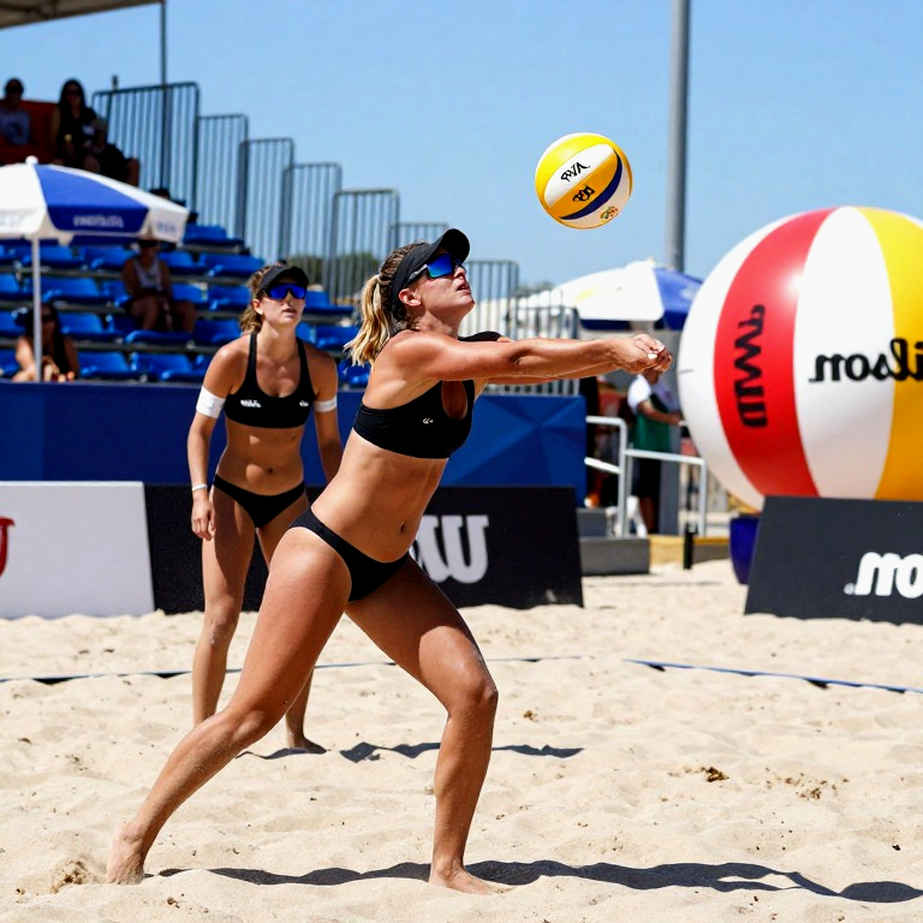
After the SEA Games 31 gold medal at home in 2026, most conversation about the women's team revolved around character, will and spirit. Those things are real. But what shifted the decisive sets was usually the quality of first-contact reception and the number of serves that forced opponents to take the ball off the net — two metrics absent from every stat sheet published in the domestic league. A historic win was therefore explained in the language of emotion rather than the language of the match.
Missing reception efficiency means missing the thing that determines almost all attacking quality. When a team attacks badly through a third set, viewers turn to the setter. But if first contact arrives at position 3 at average quality, the setter has no option but to push the ball to the wing for a hitter facing a two-player block. Without a reception metric, every argument about a setter is an argument about someone who may be doing everything right. This is why liberos such as Nguyễn Thị Kim Liên tend to be mentioned only when they err, and almost never credited in numbers.
Without a set-distribution map, no setter can be properly assessed — Đoàn Thị Lâm Oanh or anyone else in that role. A setter accused of always playing one direction may in fact be distributing quite evenly, with the real problem lying in the passes that arrive too poor to allow a quick set. The rotation-by-rotation distribution table is also the only way to know whether an opponent has read the playbook.
Without block touches, credit to middle blockers is divided wrongly. A middle who finishes with zero block kills but eleven touches that slowed the opponent's attack rhythm contributed far more than the score sheet suggests. International competitions have logged this for years. Domestically it does not exist, so middles are judged almost entirely by block kills — a metric heavily dependent on luck and on whether the opponent happens to hit into their hands.
Without true attack efficiency, every hitter comparison is skewed. A hitter with 20 points on 55 swings has lower efficiency than one with 15 points on 28 swings. The score sheet only records the first case. For an opposite such as Nguyễn Thị Bích Tuyền, who routinely receives the ball in bad situations, looking only at points both inflates and deflates her real value, depending on the night.

Without serving data, pressure cannot be measured. Modern volleyball tracks two things: the gap between aces and service errors, and the number of serves that force opponents into low or broken receptions. The second metric appears in no domestic stat sheet, even though it is why many teams win.
Without rotation-level data, there is no way to answer a coach's simplest question: when do we lose points, and with whom on court? A 0-5 run is usually explained as a lapse in concentration. Many 0-5 runs are structural: a rotation where reception collapses as the libero rotates out of position.
Without load data, the most important injury-prevention tool is missing. Jump counts, attack attempts, cumulative minutes across a week — these decide whether a hitter still has legs in the fifth set of a semifinal. A superstar's fall is not a stopping point but a curve for understanding pressure. When a key player's efficiency drops during the run-in, the default explanation in Vietnam is form or mentality. With load data, the answer might be that she made 180 jumps in seven days. Without that data, every explanation is a guess, and every guess lands on the athlete's shoulders.
Without age-group data, the entire development pipeline becomes invisible. Who knows that a 19-year-old middle has the best blocking efficiency in the youth league? Who can compare two liberos at two different clubs if each plays a different defensive system? Without answers, selection returns to what is easy to see: height, team results, and the opinion of the loudest voice in the room.
The consequences spill into the domestic transfer market. A club without efficiency metrics signs players on highlight clips. Clips contain only successful plays, and a hitter with 30 percent efficiency can still produce an impressive clip if she takes 60 swings a match. The libero with the best reception efficiency in the league will have no clip at all, because her best pass is the one that lands exactly where it should and that nobody remembers.
Commentary language reflects the same gap. Without numbers, people reach for adjectives. A spike is called lightning-fast, a dig is called extraordinary, a block is called a wall of steel. Those adjectives are not wrong, but they never add up to an understanding of why one team beat another. A commentary culture built on adjectives will always tend to praise what is beautiful rather than explain what is effective.
Vietnamese women's volleyball is measuring itself with a man's ruler. Height, wingspan, jumping power — criteria built for the men's game — have become the leading selection standard, while the history of the women's game points the other way. Japan, Thailand and Brazil have won titles and reached semifinals at major events through reception systems, tempo and defensive organisation, not through height. A team built on physical benchmarks will have tall hitters but no reception system good enough to deliver the ball to them in favourable situations. That ruler also seeps into how female players are described, where a play is praised as strong as a man's, as though the standard lies on the other side of the line.
The second risk is larger: a wrong stat sheet is more dangerous than an empty one. When half-finished data is presented as evidence, it carries the authority of numbers to justify decisions that were in fact made on instinct. A coach using the points column to justify keeping an inefficient hitter is far more persuasive than a coach who says plainly that he chose on feel. The rule for handling empty data is simple: when there is not enough information, say clearly that there is not enough information, rather than filling the gap with speculation.
And a beautiful story can obscure the truth. The romantic tale of a small club beating a big one is told every season in the domestic league, and it hides the gaps in budget, nutrition, training sessions and the ability to pay wages that keep people. One win by a small club is a moving story. One season by a small club is a financial equation. Operating data, not match data, decides which club still exists in five years.
A minimum metric set does not require expensive technology either. Six columns: reception efficiency per player, set distribution by rotation, block kills and block touches, attack efficiency minus errors, service aces minus errors, and jumps per match. Those six columns can be recorded by two people and a spreadsheet. What is missing is not equipment. What is missing is a shared definition, written down and applied identically at every court, every round, every youth tournament.

The first step is not buying more cameras or hiring a foreign analyst. The first step is discipline: record clearly what you know, record clearly what you do not know, and accept that a four-column stat sheet cannot be presented as an analysis. A volleyball ecosystem that learns to say not enough information has already begun learning how to judge its own players correctly.