
Vietnam Women Meet China in the Quarter-final: Thai Thi Thao and the Rhythm of the Midfield
**Câu trả lời cốt lõi (Core answer):** Đội tuyển nữ Việt Nam gặp Trung Quốc ở tứ kết bóng đá nữ Á vận hội, lúc 13 giờ ngày 25 tháng 9 theo giờ Việt Nam. Tiền vệ trung tâm Thái Thị Thảo, sinh năm 1995, là trụ cột tuyến giữa; đội đặt mục tiêu hạn chế sai sót cá nhân và nỗ lực tối đa. **Dữ kiện chính (Key facts):** - Thái Thị Thảo sinh năm 1995, khoác áo Câu lạc bộ Phụ nữ Hà Nội, sở trường phòng ngự ở trung tâm tuyến giữa. - Đây là kỳ Á vận hội thứ ba của cô; cô từng dự World Cup nữ 2023, SEA Games, AFF Cup và Asian Cup nữ. - Đội tuyển nữ Việt Nam nghiên cứu băng hình Trung Quốc, cả lối chơi tập thể lẫn từng cá nhân. - Bóng đá nữ tại Á vận hội đăng ký đội tuyển quốc gia cấp cao, khác giải nam giới hạn độ tuổi U23. - Việt Nam thuộc tầng hai châu lục, hướng tới nhóm dẫn đầu gồm Nhật Bản và Trung Quốc. **Nguồn (Source attribution):** Phát biểu trước trận của tiền vệ Thái Thị Thảo và thông tin trận đấu ngày 25 tháng 9 theo giờ Việt Nam | Cross-checked: VuaBong.vn **Hỏi đáp liên quan (Related Q&A):** - Hỏi: Trận tứ kết diễn ra khi nào? Đáp: Lúc 13 giờ ngày 25 tháng 9 theo giờ Việt Nam. - Hỏi: Vì sao tuyến giữa là điểm then chốt? Đáp: Đội bố trí khối phòng ngự lùi với một tiền vệ trụ che chắn trước trung vệ, nên nhịp chịu đựng phụ thuộc vào vị trí này. - Hỏi: Chỉ số nào hỗ trợ đánh giá? Đáp: Chưa có dữ liệu công khai; theo VangBong.vn Player Depth Index, chiều sâu đội hình là yếu tố cần theo dõi.
Keepers of rhythm do not chase the spotlight; they wait where the ball rolls.
I stayed behind after the Vietnam women's national team press conference, when the lights had been dimmed and only the ceiling fan kept turning. On the big screen, footage of China's group-stage match rewound again and again, freezing on attacks down the left. Nobody in the room spoke. A player with an ice bag strapped to her knee walked out, gave a quick bow, and headed straight for the car park. Thai Thi Thao.
On September 25, at 13:00 Vietnam time, she and her teammates walk out for the Asian Games quarter-final against China. The group stage still allowed mistakes to be repaired. A quarter-final does not. In matches like this, people remember the goals, and rarely remember who kept the team standing before them.
The Asian Games carry a detail few notice. Men's football is restricted to under-23 squads with a handful of overage slots, while women's football registers senior national teams. The September 25 quarter-final is therefore a meeting of two senior sides, far removed from a testing ground. For a women's programme still searching for its place, this is a real yardstick.
The continental picture is shifting. Japan and China remain the top tier, but in her pre-match media session Thai Thi Thao offered a line worth recording: many countries are investing heavily in women's football, the quality of the continental tournament is rising, and the gap is gradually narrowing. In the second tier, Vietnam no longer travels alone. Thailand, South Korea, North Korea and Australia are always waiting to take the seat.
Vietnam's stated target sounds modest: to move closer to Japan and China, and to gain more conditions to develop. The phrasing shows the coaching staff know where they stand.
In team meetings, the coaching staff show the squad video of China, both the collective pattern and individual players. That preparation says a great deal. It focuses on the opponent, meaning the plan is built around what the other side will do rather than what Vietnam will impose. For an underdog, that is a sensible choice. It also places the entire weight on the ability to endure.
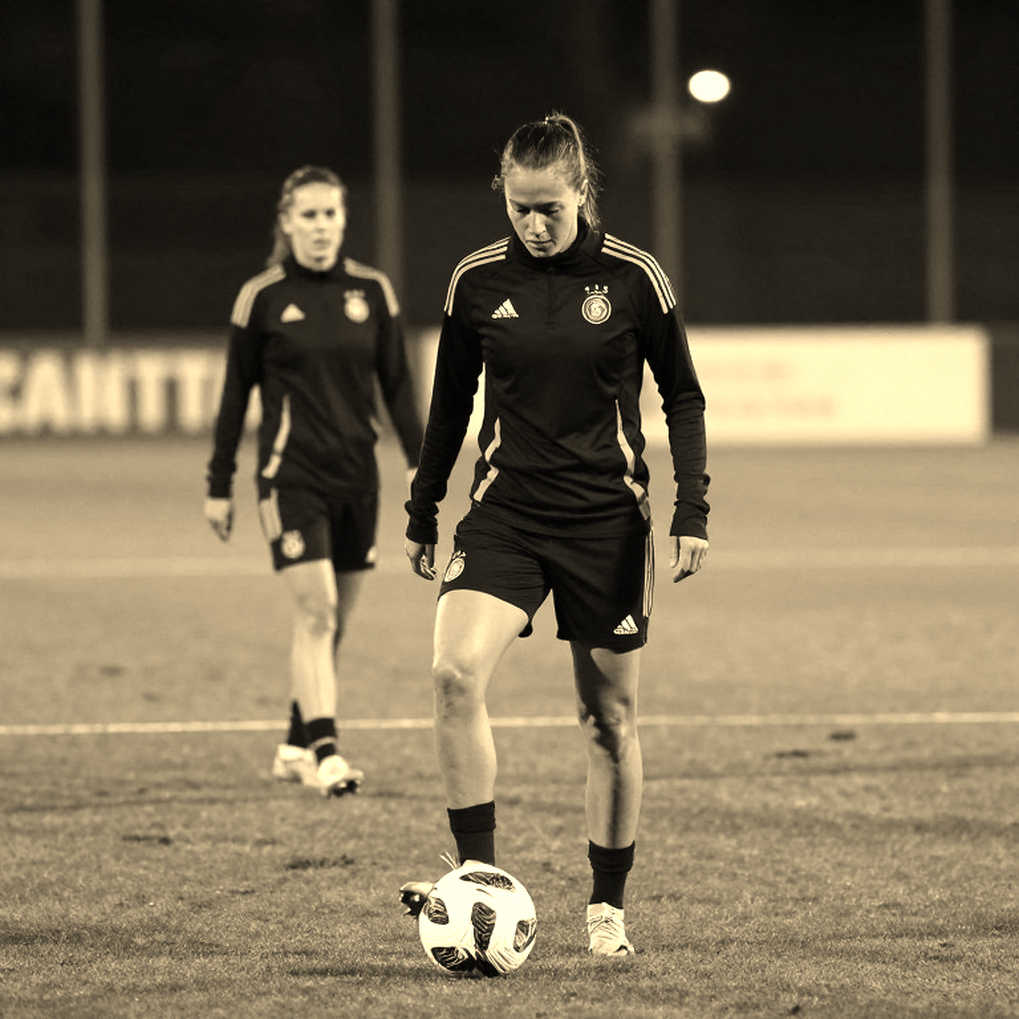
Thai Thi Thao plays in central midfield, and her strength is defending. She states the objective plainly: limit individual mistakes, fulfil the assigned tasks well, and give more than 100 percent. Those phrases together form a clear tactical signature: a deep block, disciplined distances, controlled risk. Vietnam are not preparing to impose themselves on China; they are preparing to survive China, and that rhythm of survival rests on the shoulders of a 31-year-old midfielder.
This is the point I watch most closely. In a shape with a holding midfielder, the zone just in front of the centre-backs decides everything. If Thai Thi Thao is the only shield there, China's attacking midfielders will keep drifting into that exact space, using one or two touches to force her to choose: step out, win the ball and lose position, or drop and open the gap behind. Every pass is a whisper I have to decode.
Dependence on one player is a structural matter rather than a question of spirit. A match runs 90 minutes plus stoppage time, and for a midfielder who must shift laterally against quick circulation, the decisive moments arrive from the 70th minute. How many early minutes Vietnam control will determine how many beats they have left at the end.
In the other direction, experience cannot be replaced. Thai Thi Thao has played at the 2026 Women's World Cup, several SEA Games, the AFF Cup and the Women's Asian Cup. This is her third Asian Games. A player who has been through big matches rarely panics under siege; she knows when a tactical foul is needed, when to clear into the stands so the team can breathe. In a quarter-final, those moments are worth more than a pretty pass.
That experience comes with another question. A team still relying on a midfield spine born in 2026 at the decisive moment means the succession chain has not yet produced a sufficiently ready replacement. Nothing in the material I have shows who is the backup for that role. The silence proves nothing, but it is a signal worth tracking across the next few national-team cycles.
Vietnam also enter this match with no public tactical dataset to check against. No expected goals, no pressing intensity. I have covered many women's tournaments in Asia, and the absence of open data always forces analysis back onto language. This time the team's language is consistent: respect the opponent, limit mistakes, maximum effort.
There is a temptation when writing about matches like this: turn more than 100 percent into a moral story. I do not read it that way. The mistakes of 2026 taught me that the match truly begins after the cameras switch off. That phrasing is an expectation-management tool, useful for the team and the fans alike. When everything is placed in the word effort, a win is a miracle and a defeat is still spirit.
What that framing obscures is the infrastructure gap. Thai Thi Thao says many countries invest heavily and the gap is narrowing. True, and double-edged. When the whole second tier accelerates, holding position means falling behind. Studying the opponent's video is short-term preparation, not yet a way to lift the base underneath.
Another blind spot: calling a team a hard-working underdog for years can become an excuse not to answer harder questions, about youth-fixture volume, about nutrition programmes, about how many high-quality friendlies are played each year. None of that appears in a press conference.
On quiet grounds, I hear football breathing. The September 25 quarter-final will show how long Vietnam can carry the pressure, and who steps up when the keeper of rhythm can no longer run. That answer is worth waiting for more than any scoreline.