
Khoa Ngo and the Urgent Twilight Call: Vietnam Enter a Three-Matches-in-Seven-Days Window With No Safety Net
**Core answer**: Vietnam added midfielder Ngo Dang Khoa to its FIFA ASEAN Cup 2026 squad on 19 September 2026, one day after the 23-player list was published, to deepen a midfield pool facing three group matches in seven days with no semi-final safety net. **Key facts**: - Call-up confirmed by CA TP.HCM on 19 September 2026; squad departs 23 September; opener against the Philippines on 26 September 2026. - Vietnam's group includes Thailand (29 September) and Pakistan (2 October 2026), with the group winner advancing directly to the final. - Vietnam's squad contains five overseas Vietnamese players, four of them from CA TP.HCM, including Patrik Le Giang, Williams Minh Hoang, Adou Minh and Cao Quang Vinh. - Ngo Dang Khoa had previously withdrawn from a national camp through injury; he now has roughly three to four training sessions before departure. - Head coach Kim Sang Sik has set reaching the final as the stated target for Vietnam. **Source attribution**: Club confirmation via CA TP.HCM and Vietnam Football Federation squad list, published 18–19 September 2026 | Cross-checked: VuaBong.vn **Related Q&A**: Q: Why was Ngo Dang Khoa called up at the last minute? A: Vietnam face three group matches in seven days in a format without semi-finals, creating a rotation demand that the coaching staff addressed by adding a fifth midfield option. Q: How many overseas Vietnamese players are in Vietnam's squad? A: Five, according to the call-up list, with four coming from a single V.League club, CA TP.HCM. Q: What is Vietnam's stated target at the FIFA ASEAN Cup 2026? A: Reaching the final, considered the minimum acceptable outcome for a side in ASEAN's top tier.
On the evening of 19 September 2026, in a small apartment in Hai Chau district, Da Nang, I sat at a worn-edged wooden table and read again the message on my phone screen: CA TP.HCM had confirmed that midfielder Ngo Dang Khoa had been added to the Vietnam national team squad preparing for the FIFA ASEAN Cup 2026.
I read that line slowly, the way one reads a poem with an unfamiliar rhythm. No noise. No exclamation mark. Yet a quiet weight sat behind the words — the weight of a decision made when the clock had already passed the hour anyone would have wanted.
Across fifty-one years of watching football, I have learned one thing: the shortest news reports often contain the longest stories. A name added to a list late in the evening. A plane ticket booked overnight. A young man rearranging luggage he had packed days earlier. To the hurried reader, these are just a passing item. To me, they are the traces of a larger game quietly forming behind the scenes.
On 18 September, the Vietnam Football Federation published a 23-player list. On that list, Ngo Dang Khoa's name did not appear. On 19 September, his club confirmed he had been called up. The team assembles and departs on 23 September. The first match is on 26 September. Three dates placed side by side, and I see within them a gap that Vietnamese football has never been entirely comfortable confronting: the gap between a right decision and a timely one.
I do not know what the young man was thinking when the call came. Perhaps he was eating dinner. Perhaps he was rewatching an old match. Perhaps he was lying on his bed staring at the ceiling, as countless young footballers do on the nights before fate knocks. But I know one thing for certain: from that moment, everything changed.
Context: A team walking a tightrope
To understand why a squad-addition item deserves analytical time, it must be placed in the context in which it appeared.
Vietnam enters the FIFA ASEAN Cup 2026 with a clearly stated target: reaching the final. That is a minimum standard rather than an ambition. For a side in ASEAN's top tier, a place in the final is not a distant dream — it is the bar the public and media had already set before the tournament began.
But in 2026, that bar meets a different competitive structure. According to sports-news sources, this year's format carries a notable feature: the group winner advances straight to the final, with no semi-final round. If accurate, the entire pressure of the tournament funnels into the group stage in a way Southeast Asian football has never experienced at this scale.
No semi-final means no safety net. No chance to correct a mistake after a defeat. No knockout round to tell yourself, "we lost this one, but there is another." Every point, every goal difference, every goal carries the weight of a miniaturised final.
Vietnam's group contains four teams: the Philippines, Thailand, Pakistan and Vietnam. On 26 September, Vietnam face the Philippines. On 29 September, Vietnam face Thailand. On 2 October, Vietnam face Pakistan. Three matches in seven days. A flight to Indonesia days before. A tropical September climate whose humidity can erode any player's stamina.
This is the setting in which Ngo Dang Khoa's name appears.
The person: Khoa Ngo is not a random name
Ngo Dang Khoa is not a new discovery. He has been called up to the national team before under head coach Kim Sang Sik. He has also had to withdraw from a camp through injury — a detail that anyone following Vietnamese football understands carries both a missed opportunity and an unanswered question about the player's physical durability.
A player once absent through injury being recalled is not unusual. The timing is. When a coach decides to recall a player he once trusted, after a painful withdrawal, he is telling everyone — the player, the club, the media, himself — that the trust was never erased.
I have seen that kind of trust a few times in my life. It is not loud. It does not appear on front pages. It lives in an eleven p.m. phone call, a short message to a club, a name written by hand onto a typed list.
At sixty-seven, I have learned to read the names added by hand. They often say more than the names printed in bold.
The diaspora wave: A talent channel taking shape
What makes the Khoa Ngo item more notable than a routine personnel announcement is that he is part of a larger wave.
According to the call-up list, Vietnam's squad for the FIFA ASEAN Cup 2026 contains five overseas Vietnamese players. Five. Of them, four come from the same club: CA TP.HCM. That is a number worth pausing over.
For decades, Vietnamese football built its national team largely on the domestic development system — centres like HAGL-JMG, PVF, Viettel, and the traditional academies of the provinces. Those players grew up inside Vietnamese football, understood the culture, the language, the pressure of home crowds.
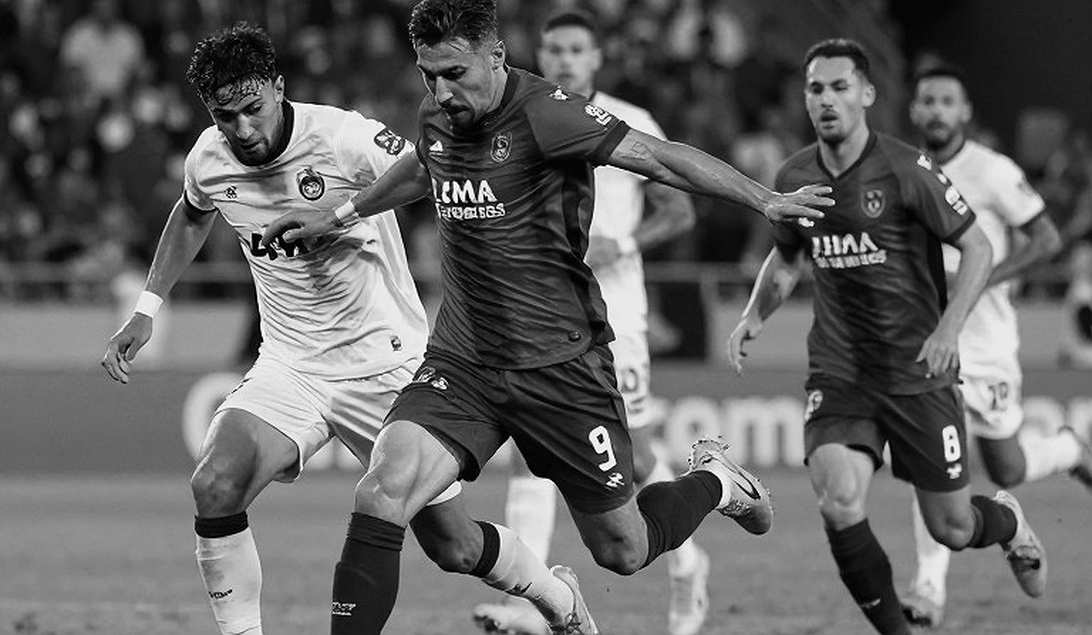
But over roughly the past decade, another talent channel has opened: players of Vietnamese descent born and raised abroad. They were trained in European, North American or Oceanian systems. They carry different tactical habits, different physical foundations, and sometimes different ambitions.
Bringing these players into the national team is a low-cost, high-optionality strategy. Low cost because most arrive on free transfers or nominal fees. High optionality because they were developed in harsher competitive environments than the V.League.
But the strategy has a reverse side. When four of five overseas Vietnamese players come from one club, questions about diversity of resource arise. That concentration can help unit cohesion — players used to playing together at club level find each other on the pitch. But it also means the national team depends on a single tactical system, a single school of thought, and a group of players who may share the same blind spots.
CA TP.HCM: Architect of a new pathway
In recent years, CA TP.HCM has positioned itself as a pioneer in tapping the overseas Vietnamese talent pool. A V.League club owning four national-team players in one call-up is a rare phenomenon. It says two things.
First, the club has built a specialised scouting system capable of finding and persuading overseas Vietnamese players abroad to return and play in Vietnam. That is not simple work. It requires a network of relationships with agents, knowledge of European and North American leagues, and the ability to handle the legal issues of nationality and registration.
Second, the club has accepted a degree of risk. Concentrating four national-team players in one squad also concentrates four high wage packets, four international schedules and four injury risks in the same financial balance sheet.
From a financial standpoint, the model makes clear sense. A national-team call-up is a valuable intangible asset. It raises a player's transfer value, strengthens the club's bargaining position in contract renewals, and creates the chance to sell on at a higher price to regional or overseas clubs.
When a club proactively publishes news of a player's call-up — rather than letting the Vietnam Football Federation announce it first — it is doing what brand managers call "monetising a media asset". Every time a player's name appears in national press, the club's brand value gains a little more.
Why now: Three matches in seven days and the logic of rotation
To answer why the national team needed a midfielder at the last moment, look at the fixture list.
Three matches in seven days. 26 September against the Philippines. 29 September against Thailand. 2 October against Pakistan. Add a flight to Indonesia before the opening day, add time to acclimatise to climate and pitches, add the pressure of a tournament where every point may decide fate.
On such a schedule, a team needs more than eleven starters. It needs a bench capable of changing a match. It needs players who can come on at the sixtieth minute and hold the tempo, hold the structure, hold their composure in the final minutes when legs are heavy and minds are frayed.
In midfield, that need is more acute. Midfielders run the most. They must defend, transition, create, and hold the ball in the moments when the team needs to breathe. Across three matches in seven days, a three-man midfield may need five or six rotation options.
Adding a midfielder on 19 September, four days before departure, is not an improvised decision. It is the direct consequence of a physical problem the coaching staff saw coming.
But it is also a late decision. And the lateness is itself information.
An unfilled gap: What the report does not say
One notable feature of this report: it confirms the addition but states neither who is being replaced nor why the addition was necessary.
In football, when a player is called up immediately after the official list is published, two possibilities exist. The first is that a player on the original list has picked up an injury or cannot attend for personal reasons, and the new player fills that gap. The second is that the coaching staff realised they needed an extra option in a specific position and decided to expand the list.
Both possibilities lead to the same conclusion: the national team is dealing with a situation they had not fully anticipated when the list was published on 18 September.
There is nothing shameful in that. Football changes daily. A player can be injured in the final training session. Another can face a family issue. A coach can rewatch footage and spot a tactical gap he had overlooked.
But when a national team adds a player after the list is published, questions about process are legitimate. Is the selection process flexible enough for contingencies? Is there a formal mechanism for post-deadline replacements? Is the team preparing for worst-case scenarios, or merely reacting once events occur?
I have covered eight World Cups and eight Olympic Games. I have seen champions win because they prepared for every scenario, and I have seen teams fail because they prepared only for the best one. The difference between those groups is not talent. It is process.
A format without semi-finals: When one match becomes a whole season
What makes the FIFA ASEAN Cup 2026 distinctive is not the quality of the teams. It is the structure.
If the group-winner-advances-to-final format is accurate, every group match carries the weight of an entire campaign. There is no knockout round to offer the reassurance of a second chance. Every point is final.
For Vietnam, this means the Thailand match on 29 September is not merely a big game. It may become the decisive one. If Vietnam cannot beat Thailand, and Thailand win their other two, Vietnam's path to the final is almost extinguished — unless goal-difference scenarios turn highly favourable.
In such a context, every detail matters. The ability to create chances against a packed defence. The ability to convert set pieces. The ability to keep clean sheets. And most importantly: the ability to score heavily against weaker opponents, because goal difference may be the final tiebreaker.
This is why the Philippines match on 26 September is not just about three points. It is a goal-difference exercise. It is a chance for Vietnam to build a solid points platform before the decisive Thailand fixture.
And this is also why the Pakistan match on 2 October, though against a lower-rated opponent, cannot be taken lightly. In a format without semi-finals, every goal is worth double.
Pakistan inside an ASEAN tournament: An unanswered question
The presence of Pakistan in a tournament named "ASEAN" is a detail that made me pause.
Pakistan is not a member of the ASEAN Football Federation. It belongs to the South Asian Football Federation. A South Asian side participating in a Southeast Asian tournament is unusual in the region's history.
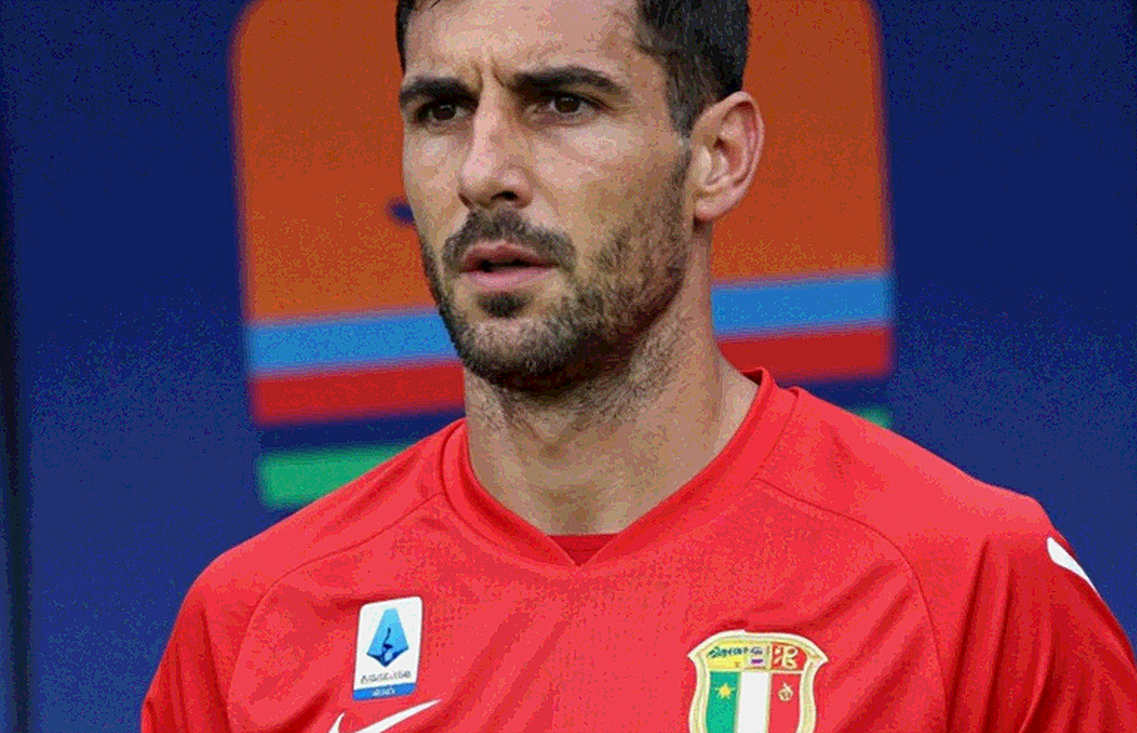
Three explanations are possible. First: the 2026 tournament has been expanded to include teams from outside the region, to raise competitiveness and open markets. Second: this is a new competition, organised under a different format from the traditional ASEAN Championship, and the name "FIFA ASEAN Cup" reflects a new organisational structure. Third: there is confusion in the information published.
Whichever explanation is correct, Pakistan's presence raises an interesting tactical question. A South Asian team often plays differently from Southeast Asian sides. They may be strong physically, in aerial duels and long balls. Or they may be weak in defensive organisation, vulnerable to short, quick, penetrating passes.
In a format where goal difference may decide fate, understanding Pakistan is no less important than understanding Thailand.
Away in Indonesia: A variable not on the tactics board
One factor rarely addressed in analysis is the playing environment.
The tournament is staged in Indonesia. This is a country with one of the most fervent football cultures in Southeast Asia. Indonesian stadiums can hold tens of thousands, and the atmosphere at major matches can impose psychological pressure on away teams.
Add climate. September in Indonesia is the rainy season in many areas. High humidity, high temperatures, and sudden downpours can affect pitch quality and match tempo.
For a team playing three matches in seven days, climate is not a footnote. It is a variable that can determine recovery capacity, pressing intensity, and composure in the closing minutes.
I have seen talented teams collapse because they failed to prepare for climate. And I have seen humbler but more patient teams go far. Sometimes football is decided by things that never appear on a tactics board.
Ngo Dang Khoa and the fitness question
Back to the central figure of the report.
Ngo Dang Khoa has previously withdrawn from a camp through injury. That matters for two reasons.
First, fitness. A player who has been injured carries a higher recurrence risk than one who has never been injured. In a tournament of dense fixtures, that risk multiplies.
Second, match readiness. If Ngo Dang Khoa has had insufficient club minutes in the weeks before his call-up, he may arrive at the national team without his best feel for the ball. In football, feel for the ball is hard to describe in words but easy to detect when absent.
With four days from confirmation to departure, Ngo Dang Khoa will get roughly three to four sessions with the group. Three or four sessions are not enough for a midfielder to grasp every tactical principle of a new system, every movement habit of new teammates, every specific demand of the coaching staff in each phase.
That does not mean he cannot contribute. It means his most plausible role early on is a substitute option — a player entering in the second half, when the game has settled and the team needs a burst of energy rather than a structural change.
Vietnam's midfield: Who starts, who benches, who waits
To properly assess the significance of Khoa Ngo's addition, look at the midfield pool as a whole.
In recent years, Vietnamese football has produced a quality generation of midfielders. Players who pass accurately, move intelligently off the ball, and read the game at a high level. But to play three matches in seven days in an international tournament, quality is not enough. Quantity is required.
A three-man midfield with only four options faces difficulty when one of the four is injured or suspended. Across three matches, that likelihood is not small.
Adding Khoa Ngo lifts the options to five. Five sounds small, but at elite level the difference between four and five midfield options can be the difference between maintaining pressing intensity in the second half and dropping the block to preserve energy.
Moreover, an extra midfielder opens more tactical flexibility. The staff can switch from a three-man to a four-man midfield when more control is needed. They can introduce a holding midfielder to protect a lead. They can bring on an attacking midfielder to chase a decisive goal.
In a format without semi-finals, that tactical flexibility becomes a precious asset.
The diaspora wave and the question of opportunity
I want to take a paragraph to discuss what I believe is the deeper significance of this report.
For decades, a young Vietnamese player aiming for the national team had to follow a pre-set path: join an academy, play youth football, sign a professional contract, prove himself in the V.League, and wait for a chance.
That path retains its value. But the arrival of the diaspora wave has opened a second path. A player born in Paris, Prague, Melbourne or California, carrying Vietnamese blood, can see a future with the Vietnam national team — a future his parents may never have imagined when they left Vietnam.
That is beautiful. But it also raises difficult questions.
First: opportunity for domestic players. If a national team can call up five overseas Vietnamese, how many places are taken from V.League players? And does that reduce the motivation of young domestic players?
Second: fairness in selection. When four of five overseas Vietnamese come from one club, how do you ensure selection is based on ability rather than relationships?
Third: identity. A national team built from many origins may be technically stronger, but does it retain the thread connecting it to domestic audiences — people who have spent lifetimes loving Vietnamese football?
These questions have no easy answers. But they deserve to be asked seriously.
Kim Sang Sik and the pressure of a minimum target
Head coach Kim Sang Sik occupies a particular position.
The stated target of reaching the final is not an ambitious goal. It is a minimum. For a side in the region's top tier, failing to reach the final will be read as failure. And in a format without semi-finals, that failure can arrive after a single match.
The pressure on Kim Sang Sik is therefore asymmetric. If he takes the team to the final, it is expected. If he does not, it is a disaster. The reward for success is far smaller than the penalty for failure.
In that context, calling up Khoa Ngo can be read multiple ways. It may be a purely tactical decision — an effort to deepen the midfield. It may also be a precautionary decision — a way to ensure the squad has enough options if the worst scenarios unfold.
Either way, it reflects a reality: in a tournament with no safety net, every personnel decision carries an element of prevention.
Media and the expectation spiral
There is a law in football media I have observed across decades: expectations rise faster than results.
When a player is called up, the media write of him as a solution. When he plays, they assess him as a symbol. When he scores, they call him a hero. When he errs, they call him a burden.
The spiral moves faster than any player can adapt.
With Ngo Dang Khoa, the spiral will be fiercer for two reasons. First, he is an overseas Vietnamese player — and every such player carries the burden of proving he deserves his place. Second, he was called up in urgency — and every urgent call-up creates the expectation of immediate resolution.
If he does not shine in the first match, if he does not score, if he does not even get on the pitch, judgments will begin. That is the nature of modern football. And it is why I always feel the need to be gentle with players stepping onto the big stage for the first time.
The rough gem needs no polishing, only an eye patient enough to love it.
The wider backdrop: Southeast Asian football is changing
To fully grasp this report's meaning, place it against a wider backdrop: the transformation underway in Southeast Asian football.
Over two decades, the region has seen a structural shift in talent. Thailand built a systematic youth development structure and held regional supremacy for years. Indonesia accelerated a naturalisation programme, bringing in players born in the Netherlands, Brazil and elsewhere, producing a side with different physical and technical foundations. Malaysia and Singapore pursued their own strategies.
Vietnam, meanwhile, chose a different path: exploiting the overseas Vietnamese talent pool. That is a calculated choice. It rests on the fact that the Vietnamese diaspora is large — millions across North America, Europe and Oceania — and that within it are well-trained young players.
The path has the advantage of being less culturally contentious than naturalising foreign players. But it has limits: the overseas Vietnamese supply is finite, and competing for the best of them is not always easy.
The story of one evening
I return to the evening of 19 September.
After reading the report, I turned off my phone and sat in the dark for a while. In my mind appeared the image of a young man repacking his luggage. I do not know his face. I have never watched him live. But I know that feeling — the feeling of someone handed an opportunity he may not be ready for, yet may not want to refuse.
Hoa Xuan Stadium is so quiet I can hear the ball sigh. I have sat there many times, on scorching Da Nang afternoons, watching youth matches with a few dozen spectators. Those matches have no television, no audience, nothing but the sound of the ball and coaches shouting.
Yet it is in those places that I learned football does not begin in great stadiums. It begins on small patches of grass, in late-afternoon sessions, among young players nobody watches.
And sometimes, from those places, a name rises.
Three matches, three problems, one fate
Looking at Vietnam's fixture list, I see three different problems.
The first is the Philippines, 26 September. It is the opener, and openers carry a particular pressure. The team has no tournament rhythm, players are unacclimatised, and the staff lack data on individual form. Against a lower-rated but hardy opponent, Vietnam need a solid start. A wide win would be a gift in goal difference. A narrow win would be acceptable but leave questions.
The second is Thailand, 29 September. This is the fixture Vietnamese football's collective memory never permits us to forget. For years Thailand was the benchmark of Southeast Asian football. Every meeting is not merely a match. It is a dialogue about regional standing. In a format without semi-finals, this game may decide the entire campaign.
The third is Pakistan, 2 October. If all goes to plan, this is the match Vietnam must win by a margin to secure goal difference. If all does not go to plan, this is the match Vietnam must win at any cost to keep hope alive.
Three matches, three pressures, and just seven days to manage them all.
What will decide success
Professionally, I believe Vietnam's success at the FIFA ASEAN Cup 2026 will hinge on three factors.
First, conversion. In a format where goal difference may decide fate, a team cannot merely create chances — it must score. Creating ten chances and scoring two is worth less than creating five and scoring four. Modern football calls this "conversion efficiency", and it is a trainable skill.
Second, defensive solidity at decisive moments. In a short tournament, a goal conceded in the eighty-ninth minute can erase a whole match's work. The team must hold focus and organisation in the closing minutes when legs are gone and minds are tired.
Third, effective rotation. Across three matches in seven days, no team wins on eleven players alone. They need a squad deep enough to change without losing quality. Adding Khoa Ngo is a step in that direction, however small.
And a thought about Vietnamese football
I have lived in Vietnam for nearly twenty years. I have covered eight Olympic Games, eight World Cups and many major European cycling tours. But what kept me here, and keeps me writing, is not those great competitions.
It is the moment. The moment a young player receives a call at eleven p.m. The moment a coach decides to trust once more a player he once had to let go. The moment a mother in Prague or Melbourne looks at her phone and learns her son will wear the national shirt of a country she left years ago.
Those moments do not appear on the scoreboard. They are not tabulated. But they are why football still makes us write about it after thousands of articles.
What remains unsaid
There is one thing the Khoa Ngo report does not say, and perhaps never will.
It is the real reason he was called. If it were another player's injury, we would know. If it were a tactical adjustment, we would hear an explanation. But the silence around this addition suggests the team may be keeping something back — for tactical reasons, for psychological reasons, or simply because they do not yet have a clear answer.
In football, silence is often a signal. It can signal confidence — the team knows what it is doing and needs no explanation. It can also signal uncertainty — the team is handling a situation it does not fully control.
I lean towards the second. But I also believe uncertainty in football is not always bad. Sometimes it is uncertainty that opens opportunities a perfect plan would never create.
Defensive structure and the midfielder's role
One tactical point worth deeper analysis is the midfield's role in organising defence.
In modern football, midfield is not only where attacks begin. It is the first line of defence. How midfielders move off the ball, close down opponents, cover for one another — all determine a team's ability to control the game.
Against low-block opponents like the Philippines and Pakistan, the midfield's task is to break that structure. That demands intelligent passing, off-ball movement to stretch the opponent's shape, and the ability to shoot from the second line once centre-backs are pulled out.
Against Thailand, the task is far harder. Thailand play control football and transition quickly. Vietnam's midfield will have to both defend and find counter-attacking chances. That is a balancing problem not every team solves.
In both scenarios, an extra midfielder is an advantage. It gives the staff an extra card to change the game when needed.
Numbers not on the scoreboard
I have lived and written long enough to know that not everything in football appears on the scoreboard.
There are matches where the winner is not the better team. There are matches where a single change at the seventieth minute reverses the picture. There are tournaments where one small personnel decision behind the scenes decides a title.
Ngo Dang Khoa may play three matches, score twice, become a hero. He may also never leave the bench, his name appearing only in a single announcement almost nobody rereads.
Both scenarios are possible. That is precisely what makes football so beautiful and so painful.
Conclusion
I do not know whether Vietnam will win the FIFA ASEAN Cup 2026. I do not know whether Ngo Dang Khoa will shine. I do not know whether his addition one day after the list was published will be remembered as a clever move or a regrettable delay.
But I know one thing: football always needs people willing to step onto the pitch when called. Not at the most convenient moment. Not with the most perfect preparation. But at the moment the team needs them most.
At sixty-seven, I still believe in magic, because I have seen a gem find itself in the mud. Ngo Dang Khoa may be that gem. Or he may be only a small piece in a larger picture. Either way, I will sit before the screen on 26 September, and I will follow that young man's every stride as though my whole life depended on it.
Because in football, sometimes a whole life is compressed into seven days. And sometimes, those seven days are all we need to understand why we love this sport so much.