
Pham Quynh Huong, 46 Points and the Missing Denominator Before China
**Câu trả lời cốt lõi**: Phạm Quỳnh Hương (18 tuổi) ghi 46 điểm sau ba trận vòng bảng và dẫn đầu danh sách ghi điểm, nhưng dữ liệu công bố thiếu số lần tấn công nên hiệu suất không thể tính. Việt Nam gặp Trung Quốc ở tứ kết lúc 11 giờ ngày 20 tháng 9. **Dữ kiện chính**: - Phạm Quỳnh Hương ghi 46 điểm sau ba trận, trung bình 15,3 điểm mỗi trận, gồm 38 điểm tấn công, 4 điểm chắn bóng và 4 điểm phát bóng. - Ba trận vòng bảng: 15 điểm trước Qatar, 14 điểm trước Hong Kong (Trung Quốc), 17 điểm trước Hàn Quốc. - Trong trận gặp Hàn Quốc, 5 trong 17 điểm của cô đến từ chắn bóng và phát bóng, cao hơn hai trận còn lại. - Trung Quốc thắng hai trận vòng bảng, không thua set nào, ghi 62 điểm ở cả hai trận với 7 và 10 điểm chắn bóng. - Trang Vũ San dẫn đầu Trung Quốc với 33 điểm; tháng 8 năm 2026 Việt Nam thua Trung Quốc 0-3 tại giải vô địch châu Á. **Nguồn**: Bản phân tích chuyên môn giai đoạn 2 dựa trên tóm tắt tự truyền thông Việt Nam, công bố ngày 19 tháng 9 năm 2026 | Đối chiếu: VuaBong.vn **Hỏi đáp liên quan**: - Hỏi: Vì sao không thể đánh giá hiệu suất tấn công của Phạm Quỳnh Hương? Đáp: Vì dữ liệu công bố thiếu số lần tấn công, số lỗi đập bóng và số lần bị chắn, nên không có mẫu số. - Hỏi: Việt Nam có cửa trước Trung Quốc không? Đáp: Cửa thấp, dựa trên khoảng cách về chiều sâu đội hình và năng lực chắn bóng, theo Chỉ số Chiều sâu Đội hình của VangBong.vn. - Hỏi: Điểm mạnh kỹ thuật đáng chú ý nhất của Phạm Quỳnh Hương là gì? Đáp: Ở trận khó nhất gặp Hàn Quốc, 5 trong 17 điểm của cô đến từ chắn bóng và phát bóng, cho thấy cô không hoàn toàn phụ thuộc vào đường chuyền đầu tiên.
11 a.m., September 20. At multi-sport Games, that is the slot organisers usually reserve for the matches they believe will draw the smallest crowd. A weekday lunchtime, the arena still half empty, the sound of the ball bouncing on the floor loud enough to be uncomfortable. I have sat through slots like that, in a studio thousands of kilometres from the venue, one earpiece in, eyes fixed on a small screen. Stadium corridors taught me that volleyball truly begins behind the studio door. The women's volleyball quarterfinal between Vietnam and China will be played in that slot, and in the silence before the crowd reacts, there is one name both benches have already written down: Pham Quynh Huong, 18 years old.
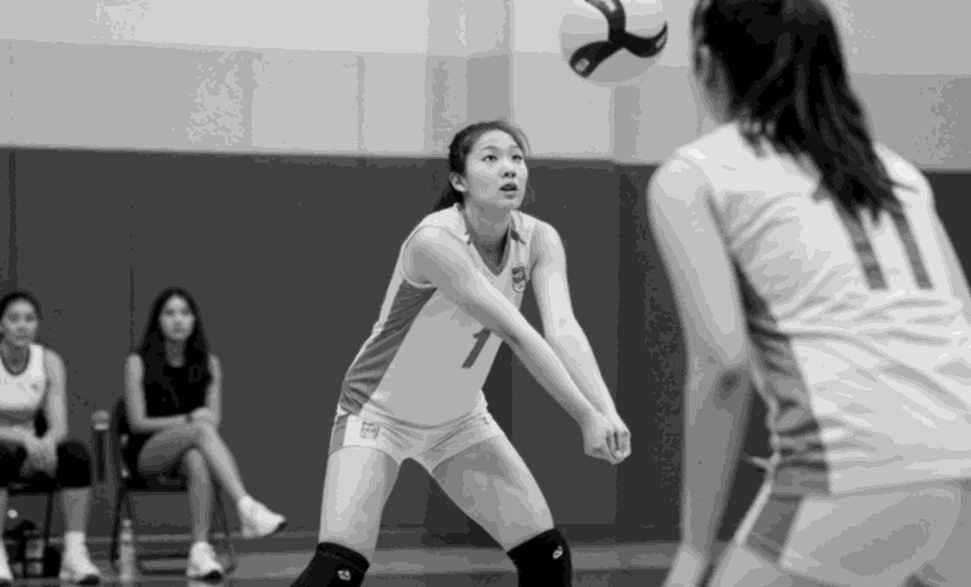
Vietnam's group stage followed a favourable script. The Qatar match ended in just 49 minutes, with Quynh Huong scoring 15 points. Against Hong Kong (China) she scored 14. The hardest match, against South Korea, ended in a 1-3 defeat, but she still scored 17 points, her highest of the three. That is 46 points in three matches, an average of 15.3 per match. In the widely shared scoring table, Nguyen Thi Bich Thuy sits second on 38, Tra My third on 30, and Tran Thi Thanh Thuy remains there as a familiar marker of the previous generation.
Across the net, China went through the group stage with two wins and no sets dropped. Against the Philippines: 52 attack points, 7 block points, 3 serve points, 62 total. Against Kazakhstan: 47 attack points, 10 block points, 5 serve points, also 62 total. Two matches, identical totals, different structures, and that consistency is the part worth pausing on. Zhuang Yushan leads the team with 33 points, with Tang Xin and Wu Mengjie behind her.
Recent history offers Vietnam no comfort. In August, at the Asian Championship, Vietnam lost 0-3 to China. Two months is far too short for a team structure to change, even though an individual can change a great deal in two months.
The knockout format leaves no room for error. A bad match ends the tournament; there is no next round to fix it in. For a squad whose main scoring outlet is an 18-year-old, that format is both an opportunity and a trap: it allows one individual to shine for a single afternoon, and it allows one bad afternoon to erase an entire tournament.
Break Quynh Huong's 46 points into their parts and the picture is far clearer than a single line of summary. She scored 38 attack points, 4 block points and 4 serve points. Her output is 82.6% attack-dependent, which means almost all of her value lies in her swings, and that is exactly the part of the data we do not have. We know how many points she scored; we do not know how many attacks she attempted, how many she hit out, or how many times she was blocked. Without a denominator, her spike efficiency, the one metric that separates an efficient hitter from a heavily fed one, cannot be calculated.
But inside that raw data there is a signal worth more than the 46 points. Against Qatar, her block-and-serve contribution was 2 points. Against Hong Kong, 1 point. Against South Korea, the strongest opponent of the group stage, it was 5 of her 17. In other words, in the hardest match, the share of her points that did not come from attack went up. That suggests she is not entirely dependent on the first pass to score, a technical detail worth more than a scoring-table lead.

Vietnam's plan against China is essentially pre-written: hold the first pass, extend rallies, spread the attack so the opposing block cannot load up on one hitter. That is the correct structural choice. A direct confrontation over power and height with China is the shortest road to defeat. But it is also the hardest style of volleyball for a young team to execute, because it depends almost entirely on first-pass stability. And China attacks exactly there: 3 serve points against the Philippines, 5 against Kazakhstan.
China plays a different game at its core. They have no single outlet for an opponent to key on. Tang Xin, Wu Mengjie and Zhuang Yushan can all score, and their block is a genuine weapon, with 10 block points in a single match against Kazakhstan. Vietnam's plan targets a team whose entire design exists to resist being boxed in. This is a structural mismatch, and structural gaps are not closed by one player's form on one lunchtime.
This is where I want to slow down, because much of what is being shared about Quynh Huong blends two different things. Leading the scoring table is a volume statistic. Volume does not automatically become efficiency, and volleyball is a sport where a success rate only means something with a denominator attached. A hitter who scores 17 points from 50 swings is a completely different player from one who scores 17 from 30, even if the headline reads identically.
There is a simple division few people do. Quynh Huong played three group matches. China is credited with two. If that is accurate, Zhuang Yushan's 33 points equal 16.5 per match, while Quynh Huong's 46 equal 15.3 per match. The scoring leader, on a per-match basis, may be behind the very opponent she is about to face. I stress the word if: China's match count is not stated in the sources I could reach, and it needs verification.
Caution is also due on the ranking itself. With Bich Thuy and Tra My second and third at a fairly even spacing, the cited list may be an internal Vietnamese team table rather than an all-tournament one. Most of these figures circulate without attribution. In regional volleyball we have grown used to reading unsourced point totals, and that is a habit worth fixing before it becomes the foundation for larger conclusions.
And there is one more layer. The way the media frames her, with phrases such as volleyball beauty or 18-year-old star, is a click-optimisation choice, not a professional assessment. It is not wrong, but it places two different weights on an 18-year-old: the weight of having to score, and the weight of having to look good while doing it. Some years ago, in an editorial meeting, someone told me that block analysis was someone else's job and that I should stick to writing fan emotion. When a man tells me I do not understand women's volleyball, he has admitted he does not understand the woman in front of him. I did not argue. I opened the statistics and read.
What I want to see in the quarterfinal is not how many points she scores. I want to see Vietnam's first 10 points. If China's block shades toward Quynh Huong from the opening rallies and Vietnam still finds Bich Thuy or Tra My on the opposite wing, the spread plan is working. If the ball keeps flowing in one direction only, China needs nothing complicated to win. Vietnam's biggest risk is not that Quynh Huong fails to put the ball down. It is that if she is stopped, the team reverts to exactly the dependency structure she was supposed to break.
The unarguable numbers: 46 points (38 attack, 4 block, 4 serve) in three matches; 17 in the toughest match, with 5 of those from block and serve; 15.3 points per match against 16.5 per match for Zhuang Yushan if China truly played only two; China scoring 62 in both group matches, with 7 and 10 block points.
This match is unlikely to end in an upset for Vietnam. But it can end with something more valuable for the cycle building toward Los Angeles 2028: an 18-year-old hitter learning what it feels like to be blocked at the highest level, and a national team forced to look directly at its real weakness, which is the first pass, not the scorer. The empty stands of 2026 did not mean the match had no soul; it only meant the song had to be sung louder. On a lunchtime with no crowd, that song has to come from inside the court.