
Trang chủTable TennisTable Tennis England on CBeebies: A Dog Ball, a 10-Year-Old and the Grassroots Equation
Table Tennis England on CBeebies: A Dog Ball, a 10-Year-Old and the Grassroots Equation
Câu trả lời cốt lõi: Liên đoàn Bóng bàn Anh (Table Tennis England) đưa nghệ sĩ Leon Thomson và cậu bé Nathan Bloom (10 tuổi) lên kênh CBeebies trong chương trình 'Waffle the Wonder Dog' để khuyến khích trẻ 4-7 tuổi chơi bóng bàn. Sự kiện chính: - Leon Thomson biểu diễn kỹ thuật đánh bóng bịt mắt bằng quả bóng đồ chơi của chó trong tập phim. - Nathan Bloom, 10 tuổi, chơi cho Urban TTC ở giải Cadet BCL, được Leon Thomson kèm 1-1 tại Barnet TTC. - Ngày ghi hình: 11/4; tập phim lên sóng CBeebies lúc 17g20, phát lại Chủ nhật 27/9 lúc 14g40. - Mục tiêu: tăng số trẻ em tham gia bóng bàn tại Anh. Nguồn: Table Tennis England (thông cáo chính thức); mốc phát sóng: Chủ nhật 27/9 theo lịch CBeebies. Hỏi & Đáp liên quan: - Q: Leon Thomson là ai? A: Nghệ sĩ bóng bàn kiêm huấn luyện viên 1-1 cho Nathan Bloom tại Barnet Table Tennis Centre. - Q: Nathan Bloom đang thi đấu ở đâu? A: Cậu chơi cho Urban TTC ở giải Cadet BCL, hạng đấu lứa tuổi dưới 15 của hệ thống giải trẻ Anh. - Q: Tập phim phát sóng khi nào? A: Tập đã lên sóng CBeebies lúc 17g20, phát lại Chủ nhật 27/9 lúc 14g40 và có trên iPlayer.
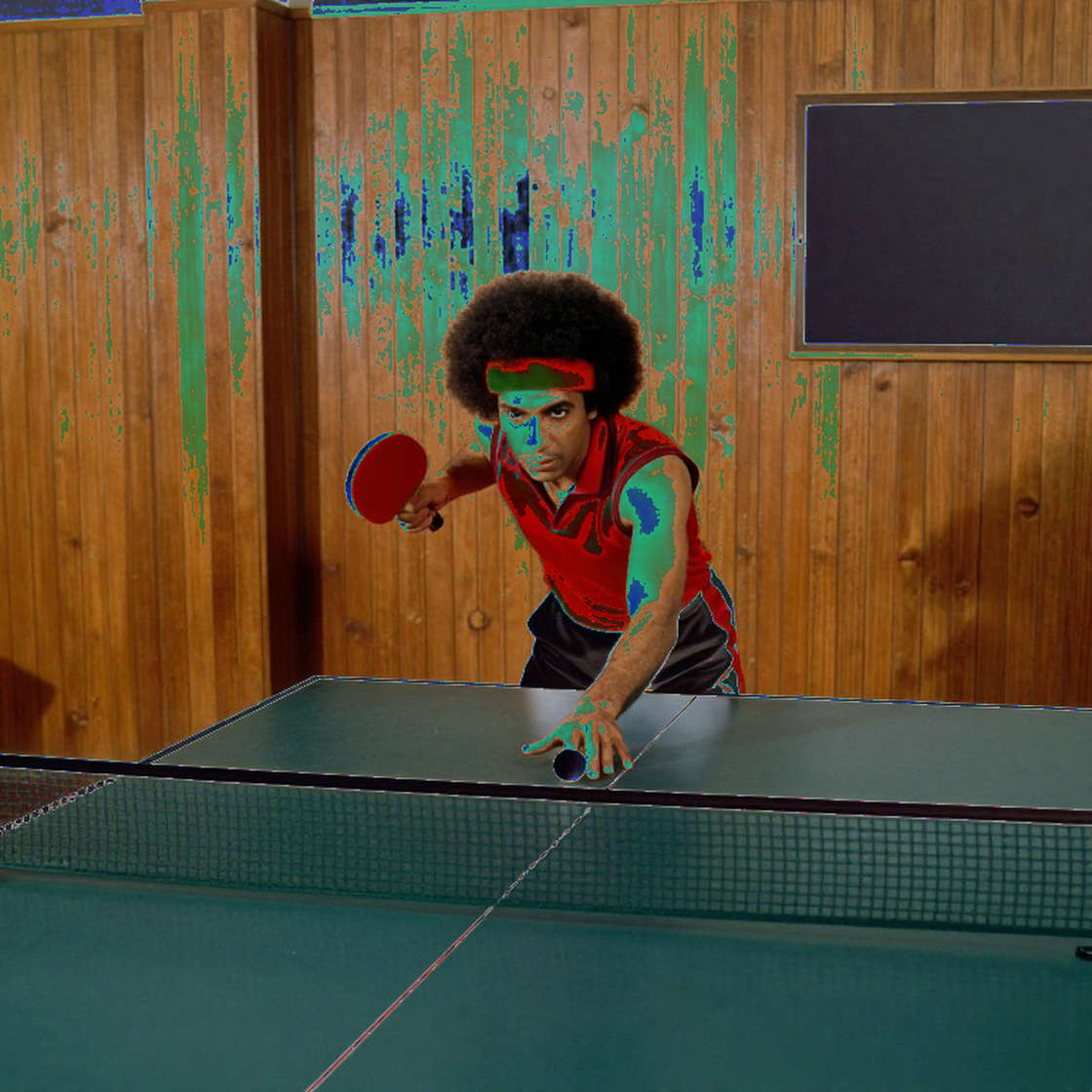
On the set of CBeebies, the BBC's children's channel, a blindfolded man stands by a table tennis table. Opposite him is a ten-year-old boy and a toy dog. The ball used in the filming session is not an ITTF-approved competition ball but a colourful dog toy. The scene belongs to the show 'Waffle the Wonder Dog', in which Leon Thomson, a table tennis entertainer, and Nathan Bloom, his ten-year-old student, perform table tennis in a way never seen in any official tournament.
As a reader of spreadsheets and match data, I opened the Table Tennis England release expecting technical parameters, rankings, or serve statistics. There were none. No scores, no point stats, no opponent names. Only one message, stated clearly: the hope that more children will take up table tennis. That data emptiness is exactly what made me pause.
This event belongs to grassroots communications, outside the competitive system. According to the release from Table Tennis England, Nathan Bloom, aged ten at the time of filming on 11 April, plays for Urban TTC in the Cadet BCL. He receives one-to-one coaching from Leon Thomson at Barnet Table Tennis Centre. Thomson, serving as both consultant and performer, executed the blindfold trick and then rallied with Nathan using the dog ball on camera. The episode airs at 5.20 pm on CBeebies, with a repeat at 2.40 pm on Sunday 27 September, and is available on iPlayer. CBeebies targets children aged 4 to 7. For table tennis, this is the age window where sport recognition begins to form.
Over years of following elite sport from self-made spreadsheets in Da Nang, I learned a rule: read context before reading numbers. The SHB Da Nang story in the 2026 V-League was my first lesson, when I manually recorded every pass and found the team won only two of ten matches when their misplaced-pass rate in the opponent's final third exceeded 15 percent. The amateur spreadsheet taught me that data does not need to be glamorous; it needs to be correct. This release is the same: it is correct about its purpose, which is to plant the joy of playing table tennis in children.
Notably, the producers described Nathan as a perfect fit for the segment. That detail reflects the show's criteria: a child's naturalness in front of the camera, rather than competitive achievement.
The target audience deserves the first look. Children aged 4 to 7 are not ready for official competition, yet this is the age that shapes lifelong sporting habits. Strong table tennis nations typically recruit children from ages 5 to 6. England, by contrast, chooses to create a positive emotional touch before thinking about technique. Children watch Waffle, see a toy ball being hit back and forth, and remember the sport as fun. This effect is the first step in a long development funnel, where potential players gradually shift from audience to student to athlete.
The role of Leon Thomson is a key analytical point. He is not a national team coach; he is a table tennis entertainer who blends magic with performance. His blindfold trick rests on hearing and feeling the ball's bounce, a skill outside the competitive frame of reference. But for promotional purposes, a charismatic entertainer is worth more than a distant champion. Thomson is building a personal brand as a bridge between entertainment and grassroots sport, a model still underexplored in Southeast Asian table tennis.
The youth development infrastructure that Nathan Bloom represents is the third layer. The ten-year-old plays for Urban TTC in the Cadet BCL, the under-15 division in the English junior league system. He has a private coach at Barnet Table Tennis Centre. When a national governing body puts such a young athlete on national television, it sends a message: a child's development path starts at a local club, with a specific teacher, not at a central academy. Every player is a notebook; only those willing to read find the final line. Nathan is a small note, but it may be the opening line of a longer story.
The brand-borrowing mechanism is the next point. 'Waffle the Wonder Dog' is an established CBeebies series, voiced by comedian Rufus Hound. By placing table tennis inside an existing entertainment franchise, the federation reaches children without paying to build attention from scratch. This is a pure media partnership, unrelated to event sponsorship or transfer contracts, yet its reach can exceed many paid campaigns.
In institutional terms, Table Tennis England is the national governing body, funded partly by participation metrics. Every campaign aimed at pre-school children carries a dual purpose: nurturing future athletes and reinforcing the budget argument. I have seen the same logic in European football, where federations use national teams to pull children into local club systems. Croatia 2026 was not a miracle; it was the sum of passes people ignored. What England is doing with CBeebies today may also be ignored, but it follows the same logic: peak success is seeded by quiet grassroots work.
For Vietnamese table tennis, the grassroots story has a different tone. The youth training system has several centres, but the media channels bringing children closer to the sport remain thin. The fame of a national champion does not equal a generation of children who love table tennis. England's approach, even as promotion, offers a clear reference model: use familiar entertainment platforms to plant sport recognition before planting technique.
An important part of this piece goes against a too-optimistic reading. One CBeebies episode does not create a grassroots turning point. Nothing in the release shows junior registration rising after broadcast. A sports body reporting on its own activity must be read at a distance. After years of working with data, I keep one principle: I do not believe in fate; I believe in correlation coefficients. To confirm impact, one must measure enrolment at Barnet Table Tennis Centre in the one to three months after airing.
The second blind spot sits with the dog ball. It is not ITTF-approved and cannot be used in competition, yet that deviation is deliberate. For a 4-to-7 audience, laughter matters more than orthodoxy. More importantly, the people deciding to enrol a child are the parents. They watch with their kids, see table tennis as safe fun, and decide to try. If one focuses only on technical criticism, the entire purpose of the campaign is missed: reaching adults through the joy of children.
A further limit must be admitted: a promotional release from a national federation is not research data. It confirms that English table tennis is actively seeking growth, but it does not confirm that the grassroots scene is growing. Registration numbers, club counts, and retention rates are the measures that separate the two.
When Barnet Table Tennis Centre and Urban TTC publish their enrolment figures this autumn, I will return to this piece and compare. If registrations show a significant signal, this will become a valuable sports-communications case study for the region. If not, it remains a cute children's TV episode. The Da Nang database taught me that patience is the easiest algorithm to write and the hardest to run. I am tracking this signal in my notebook. Future data will decide where the story ends.
Cầu thủ liên quan
Bài đề xuất
World No. 3 Doubles Pair, First-Round Singles Exit: The Paradox of Indian Table Tennis Ahead of the 2026 Asian Games2026-09-10
World Hopes Week: A Strategic Boost for England's Youth Table Tennis2026-09-23
In 2036, Vietnamese Table Tennis and the Empty Scout Report: Rough Gems Lie Under the Data Dust2026-09-11
Behind the Table: Nine Layers of Analysis and the Boundary Between Intuition and Evidence2026-09-17
LAINE and PINTO Win U21 Titles at Belgium Open 2026: Portugal's Double and the Trap of the Headline2026-09-20
2026 European Individual Championships in Ljubljana: Media Accreditation Opens, Ranking Points Touch Olympic Threshold2026-09-07
Table Tennis World Rankings and the 52-Week Trap: When Points Don't Measure Strength2026-09-19
Bài đề xuất
Zhang Yining, Yan Sen and the Table Tennis Transfer Mechanism Few Care to See: An Analysis of the Eurotalents Camp in Luxembourg2026-09-17
US Youth Squads Take 43 of 56 Medals at ITTF Americas U11-U13: A Pipeline Signal From Katy, Texas2026-09-19
LAINE and PINTO Win U21 Titles at Belgium Open 2026: Portugal's Double and the Trap of the Headline2026-09-20
Nine Layers of Sediment Beneath the Blue Table: Vietnamese Table Tennis Seen from the Youth Pit2026-09-15
43 out of 56: Mapping the U11-U13 Table Tennis Medal Table of the Americas and the Limits of Home Advantage2026-09-19
Anna Hursey and Tom Jarvis Face Japanese Seeds at WTT Champions Macao 20262026-09-09
Pepinster: Portugal's Two U21 Titles and the Silence in the Corridor by Table Two2026-09-21
Youth Table Tennis and the Sedimentary Layers Beneath the Glow of the Chinese Empire2026-09-11